Finance teams choose Datarails. IT departments choose Adaptive.
Adaptive is established and widely used—but that comes with rigidity, partner dependence, and enterprise complexity. Adaptive’s focus shifted from FP&A innovation to cross-selling HR solutions. What’s left? A roadmap that doesn’t prioritize your needs. Datarails is purpose-built for finance teams who want true ownership without the enterprise complexity.
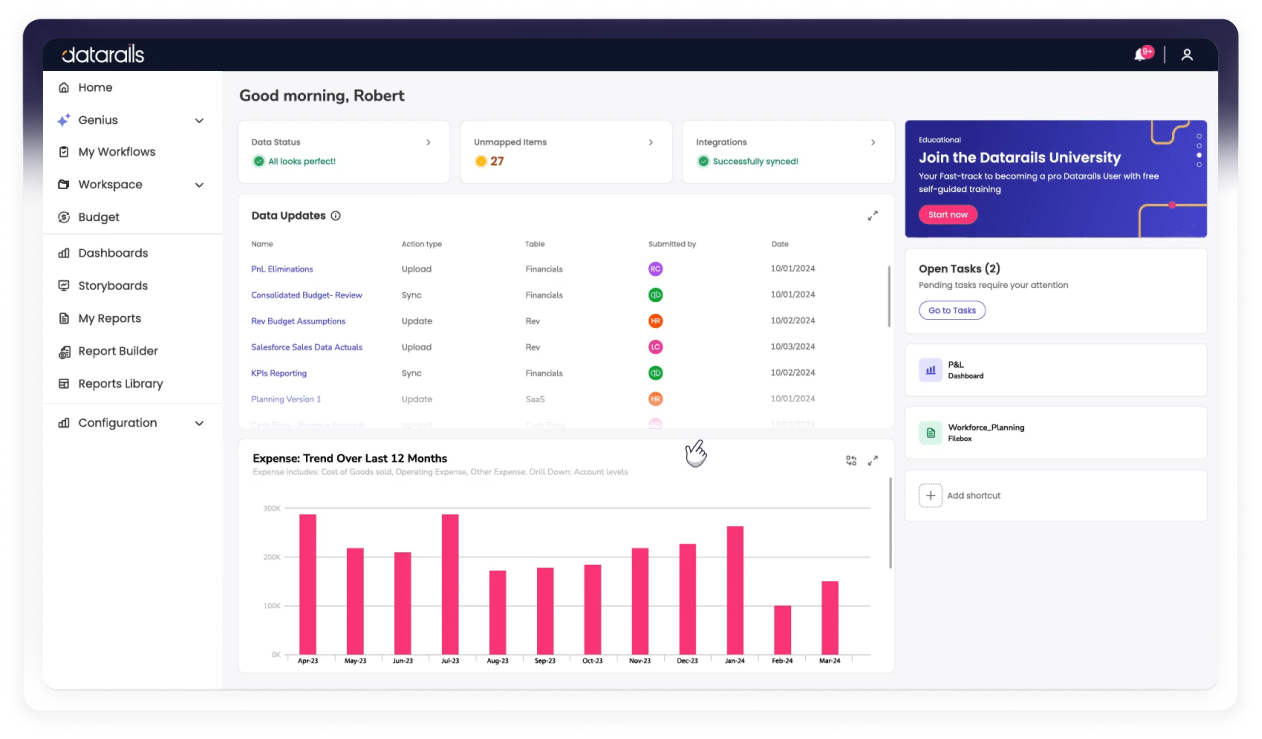
What happens when FP&A isn’t the priority

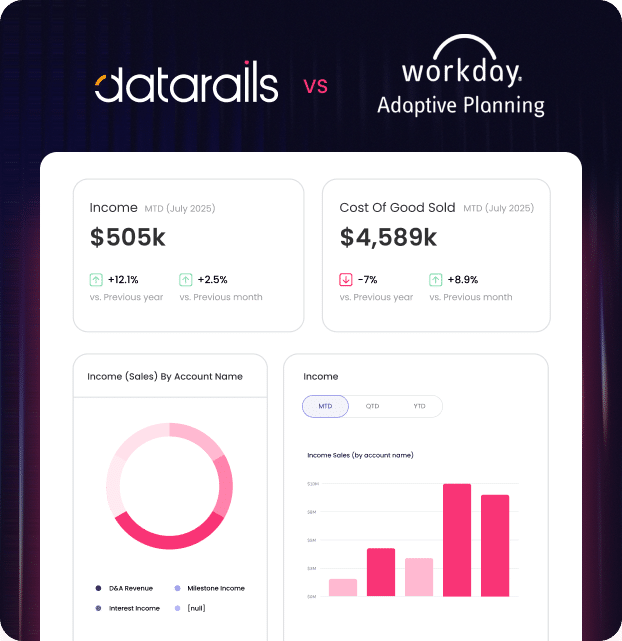
The hidden costs
Adaptive has been around since 2003—and yes, that gives them brand recognition and a large customer base. But longevity doesn’t equal the right fit for your team. Adaptive was built for Workday ERP customers and thrives in enterprise environments with dedicated IT support and unlimited budgets. If you’re an Excel-centric finance team looking for flexibility and true ownership, Adaptive will slow you down and cost you more than you planned.
Key Differentiators: Where Adaptive struggles

Built for Finance teams, not IT departments

Self-service vs partner-led

Templates that flex, not break

Excel functionality that’s stuck in 2011

Roadmap built for Finance, not workday customers

Transparent pricing without any surprises
Don't just take our word for it
“I think choosing Datarails was the greatest decision ever for our company.”


“Thank goodness we went ahead with Datarails, because there’s no way we’d be where we are as a team without it.”


“We’re a small company…I’ve worked with a number of [systems] and know the complexity that can happen with some of them. I was very pleasantly surprised when I saw Datarails and how it was put together and was so easy to use.”


“It just works. As we grow, that kind of reliability is invaluable.”


“Everything is live and interactive. We can switch views, track trends over time, and drill down where needed. It’s really easy and flexible for the team to use.”


FAQs
We’re not a Workday customer. Does that matter with Adaptive?
A: It shouldn’t, but it does. Adaptive’s roadmap heavily favors Workday ERP customers. Users users often find themselves waiting for integrations and features that aren’t prioritized.
Our team lives in Excel. Will Adaptive work for us?
Adaptive is cloud-first with limited Excel integration. If your finance team is Excel-native, you’ll face a steep learning curve and workflow disruption. Datarails works directly in Excel while adding enterprise-grade automation, version control, and collaboration.
Can we migrate from Adaptive to Datarails?
Absolutely. We’ve helped several teams transition from Adaptive to Datarails. Most migrations happen with minimal disruption to your FP&A processes.
What if we need enterprise-grade scalability?
Datarails is built to grow with you—from small finance teams to mid-market and enterprise organizations. We handle complex consolidation, multi-currency, intercompany eliminations, and hierarchical structures. The difference? You can scale without needing a dedicated IT team or partner consultants.
How hands-on is Datarails’ support compared to Adaptive’s partner model?
Datarails’ support is 100% in-house with FP&A experts who understand finance workflows, not just technical issues. You get direct access to our team for both product and process questions—no middleman partners.
“Adaptive is more established and widely used.” How do you respond?
Adaptive has history, but that comes with legacy complexity and partner reliance. Being “established” doesn’t mean it’s the right fit for Excel-centric finance teams at organizations who need flexibility for custom models. Datarails is purpose-built for finance to own and operate without needing IT or costly consultants. Longevity doesn’t equal the best solution for your needs.
Learn why finance teams choose Datarails