Datarails vs. Planful

Planful makes planning painful.

Datarails powers finance.

Planful looks comprehensive.
Runs on consultants.

Planful is positioned as an enterprise performance management platform spanning planning, reporting, and consolidation. On paper, it looks comprehensive.

In practice, it combines multiple legacy technologies behind a single interface. Separate backend systems, cube logic, and siloed modules create administrative overhead and heavy reliance on consultants.

Datarails delivers the same functional breadth inside one unified Excel native platform, so you can avoid stitching together separate systems behind the scenes.

Where Planful gets painful

Architecture
✓ One unified platform
✗ Multiple legacy systems under one interface
Modeling flexibility
✓ Fully flexible Excel modeling
✗ Structured OLAP cube modeling
Consolidation
✓ Automated multi-entity with eliminations and FX
✗ Consolidation within cube framework
Cash visibility and management
✓ Direct bank integrations and 13-week cash flow forecasting
✗ Forecast-driven cash only, no embedded bank integrations
Integrations
✓ Direct APIs managed in-house
✗ Middleware or connector dependent
Implementation ownership
✓ Fully in-house, finance-led
✗ Combined in-house and partner-led
Time to implement
✓ Typically live in weeks
✗ ~5 months depending on configuration and integrations
Cost trajectory
✓ Transparent, all inclusive
✗ Enterprise subscription plus consulting services
Operational independence
✓ Finance updates models and reports directly
✗ Changes depend on cube and hierarchy reconfiguration

Why Planful creates friction for finance teams

Cube logic limits flexibility

Planful relies on OLAP cube structures with predefined dimensions and hierarchies. As models grow, simple changes often require structural updates, making planning less flexible than real-world finance work demands.

Modules don’t always sync

Planning, reporting, and consolidation appear unified but run on separate backend technologies. Data often needs to be synchronized across modules, adding extra publishing steps to everyday workflows.

Integration complexity and errors

Connecting finance systems frequently rely on middleware or external connectors. These extra layers result in prolonged integration timelines, recurring integration errors, and package-based pricing due to connector complexity.

Implementation can stretch for months

Planful deployments frequently involve partners, consultants, and long setup cycles. Finance teams can wait months before models are fully operational.

Administration becomes a full-time job

Managing cube logic, hierarchies, and planning structures requires specialized expertise. Over time, ownership of the environment shifts away from finance teams toward system admins or consultants.

Excel still fills the gaps

Finance teams still export data into spreadsheets to complete modeling or analysis before re-uploading results into Planful. When systems can’t handle real finance logic, Excel becomes the workaround.

Finance should not need system administrators

Planful brings together planning, reporting, and consolidation. But behind the interface, multiple backend systems, cube logic, and siloed modules introduce administrative overhead.

Over time, finance teams often rely on specialized expertise to manage dimensions, hierarchies, and workflows.

Datarails takes a different approach.

Planning, consolidation, reporting, dashboards, and cash forecasting run on a single unified Excel native platform. Finance teams keep the flexibility of Excel while gaining automation, governance, and a single source of truth.

No cube administration. No consultant dependency. Just finance running faster.

Datarails: The platform finance actually owns

Build complex models without formula limits
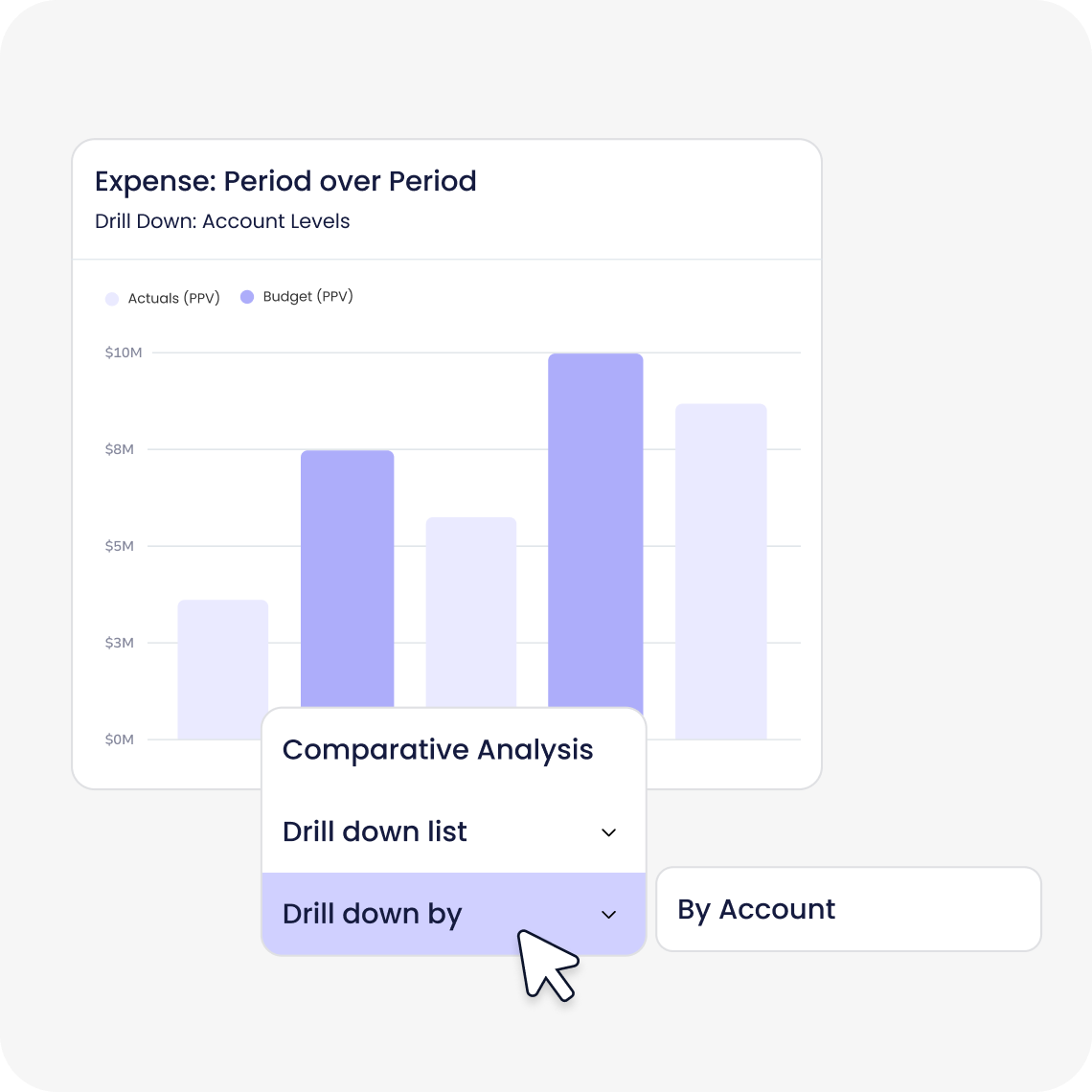
Driver frameworks often restrict advanced financial logic. Datarails keeps modeling fully native in Excel so teams can build multi-sheet models, layered formulas, and custom calculations without platform constraints.
Build complex models without formula limits

See the full financial picture instantly
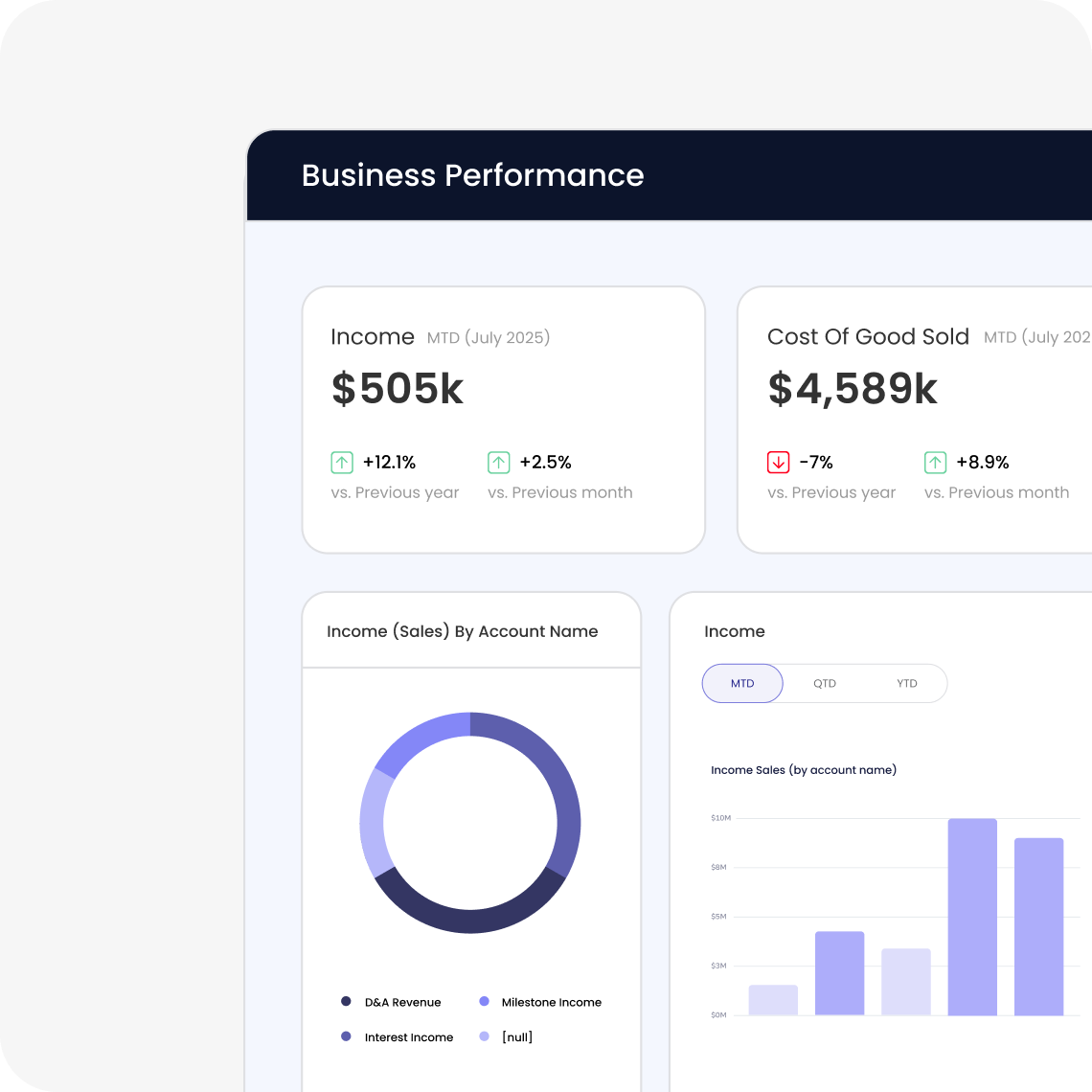
Finance leaders should not toggle between dashboards to understand performance. Datarails brings actuals, forecast, budget, and prior year together in one view so teams can analyze performance without assembling reports manually.
See the full financial picture instantly

Eliminate consolidation workarounds

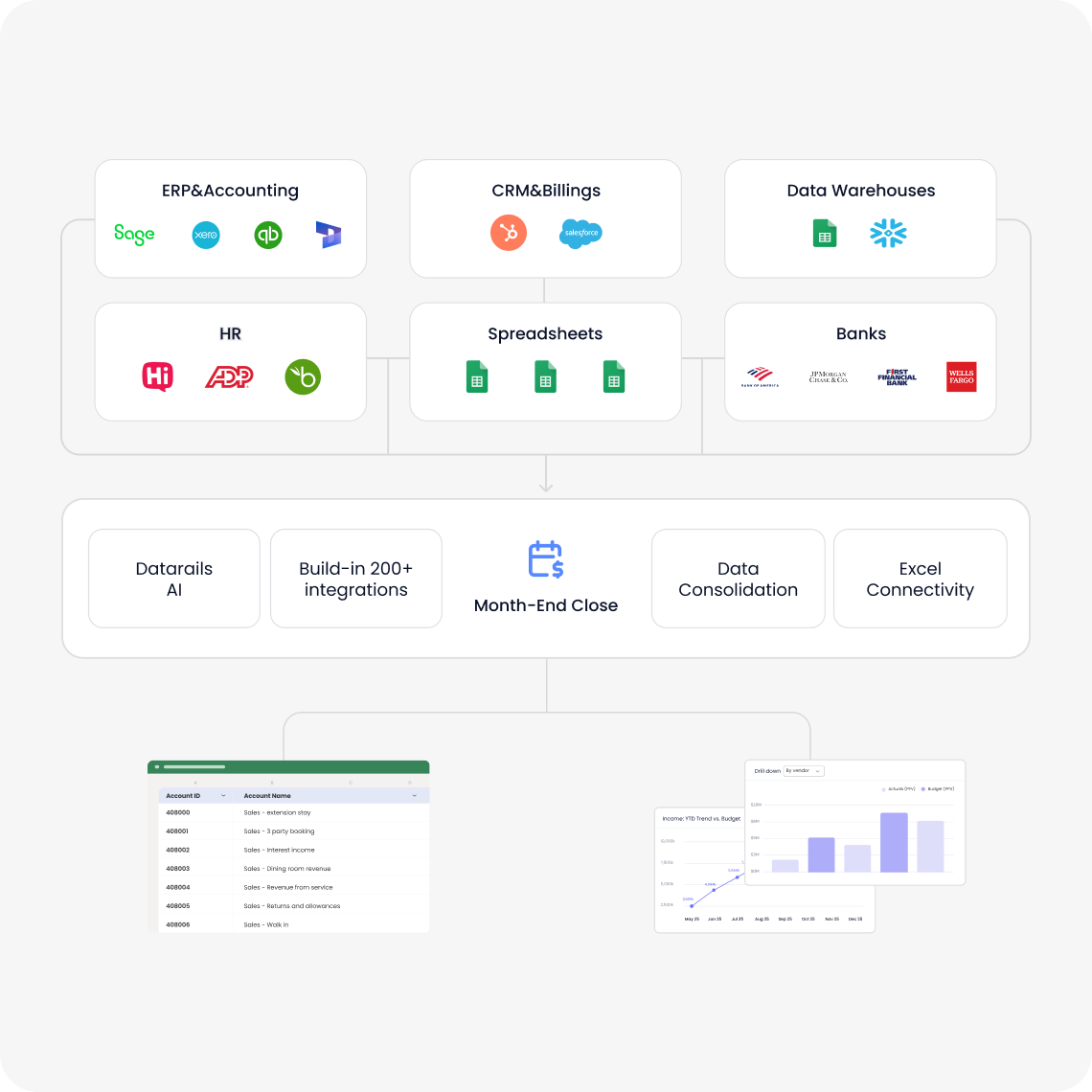
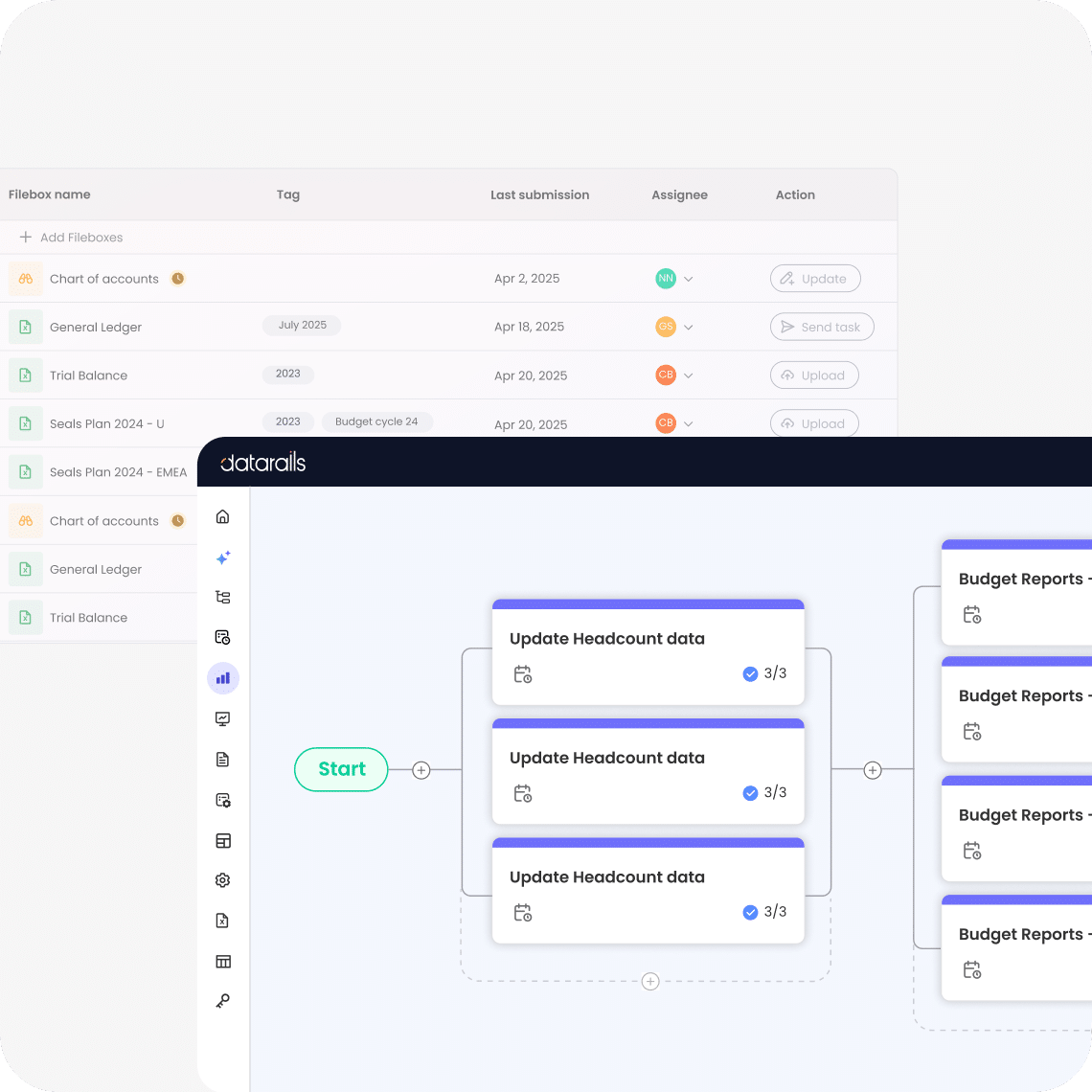
Automate data collection and consolidation across entities, systems, and spreadsheets. Instead of manually merging files or rebuilding reports, finance works from one unified data model that updates automatically.
Eliminate consolidation workarounds

Control access and workflows with precision

Basic access controls are not enough. Datarails provides granular permissions at the department and account level, along with built-in workflows to manage planning, approvals, and close processes. Everyone works from the right data while finance maintains full control.
Control access and workflows with precision

Turn analysis into board ready reporting

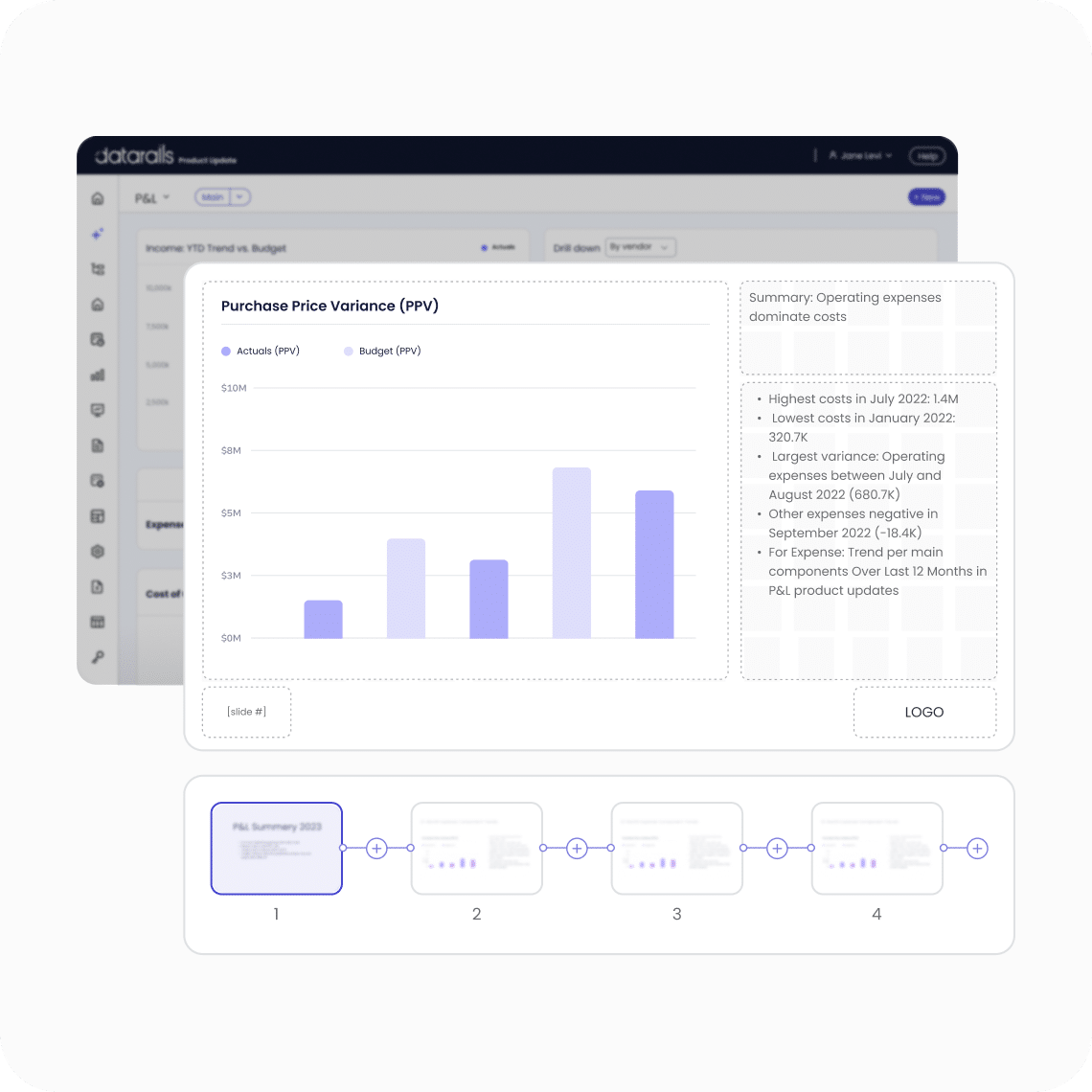
Instead of exporting data and rebuilding reports in spreadsheets, Datarails transforms live financial models into dashboards and presentation ready outputs automatically, keeping reporting fast and consistent. Zero manual formatting.
Learn more
Turn analysis into board ready reporting
Build complex models without formula limits
See the full financial picture instantly
Eliminate consolidation workarounds
Control access and workflows with precision
Turn analysis into board ready reporting
Trusted by 1000+ finance teams

“We went from four days just to prepare Budget vs Actual reviews to less than one. Datarails has added a new level of speed and data transparency we never had before.”

Gal Lazar
FPu0026A Manager, Augury

“We can move quickly, trust the numbers, and actually spend our time analyzing the data instead of wrangling it. That’s been a game-changer for the team.”

Joel Jesselsohn
CFO, Tangoe

It’s a huge time saver. Instead of spending days compiling reports, I can now generate them instantly and focus on helping the company grow.

Alyssa Rambeau
VP Finance, OrthoSynetics