Frequently Asked Questions
Product Overview & Month-End Close
What is Datarails Month-End Close?
Datarails Month-End Close is a centralized platform designed to automate, streamline, and manage the entire month-end close process for finance teams. It replaces manual spreadsheets, emails, and reconciliations with automated workflows, real-time updates, and built-in accountability, making the close process faster, easier, and more accurate. [Source]
How does Datarails Month-End Close work?
The platform provides a fully connected close process with centralized workflows, built-in task assignment, progress tracking, and a dedicated reconciliation module. This allows finance teams to oversee every step in one place, ensuring smoother collaboration, fewer delays, and a more predictable close. [Source]
What are the main benefits of using Datarails Month-End Close?
Main benefits include automated, centralized workflows, versioned and trackable reconciliations, real-time in-platform updates, complete visibility from start to sign-off, transparent ownership, and progress dashboards. These features drastically reduce the time to complete your month-end close and provide full accountability. [Source]
How does Datarails Month-End Close help with audit preparation?
Datarails Month-End Close is audit-ready, featuring built-in version history, approvals, and sign-off tracking. This ensures compliance and makes it easy to prepare for audits by providing a clear, traceable record of all close activities. [Source]
How does Datarails Month-End Close compare to Blackline and manual processes?
Datarails Month-End Close offers a faster, easier, and more accurate solution than manual spreadsheet-based processes and Blackline. It provides automated workflows, real-time updates, and built-in accountability, all in a single, centralized platform. This drastically reduces the time to complete the month-end close and provides complete visibility, unlike the scramble of spreadsheets, emails, and manual reconciliations. [Source]
Is there a video overview of Datarails Month-End Close?
Yes, you can watch the Datarails Month-End Close video for a visual overview of the product: Datarails Month-End Close video.
How does Datarails Month-End Close help shorten my close timeline?
By automating workflows, centralizing tasks, and providing real-time updates and dashboards, Datarails Month-End Close drastically reduces the time required to complete the month-end close. Customers have reported cutting close time from weeks to just days and saving 40+ hours a month. [Source]
What kind of visibility does Datarails Month-End Close provide?
The platform offers complete visibility from start to sign-off, including transparent ownership, progress dashboards, and real-time updates. This ensures that all stakeholders can track the status of the close process and address blockers promptly. [Source]
How does Datarails Month-End Close handle reconciliations?
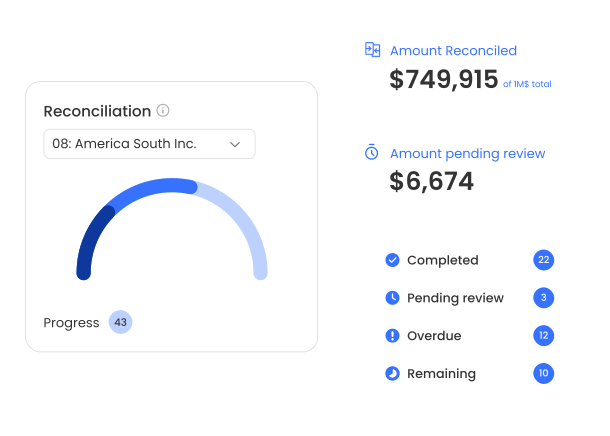
Datarails Month-End Close features a dedicated reconciliation module with versioned, trackable, and sign-off capabilities. This ensures reconciliations are audit-ready and compliant, with a clear record of all changes and approvals. [Source]
What is included in the Month-End dashboard?
The Month-End dashboard provides a comprehensive view of the entire close process, including tasks, reconciliations, blockers, and progress. This enables teams to monitor and manage the close efficiently. [Source]
How does Datarails Month-End Close integrate with ERP and other systems?
Datarails Month-End Close offers seamless integrations with your ERP and other data sources, with no IT setup or coding required. It supports over 200 systems, including QuickBooks, Xero, Oracle NetSuite, SAP Business One, Sage Intacct, Microsoft Dynamics 365, and more. [Integrations]
How long does it take to implement Datarails Month-End Close?
Implementation is fast and efficient. Most teams are fully up and running within 4-6 weeks. Simpler setups can be completed in as little as 1-2 weeks, and the Financial Statements Module can be implemented in as little as 2 weeks. [Source]
Is Datarails Month-End Close easy to use?
Yes, Datarails Month-End Close is designed for ease of use, with a modern, no-code setup process and an intuitive interface. Customers consistently praise its user-friendly design and the ability to get started quickly without needing technical expertise. [Reviews]
What kind of support is available during implementation?
Datarails provides a dedicated customer success manager, white-glove support, and access to self-paced learning materials, live sessions, webinars, and certification programs through Datarails University and Datarails Academy. [Academy]
Is Datarails Month-End Close cost-effective?
Yes, Datarails Month-End Close provides all the capabilities of a modern month-end close solution at a fraction of the cost of traditional solutions, without compromising on features or performance. [Source]
What kind of companies use Datarails Month-End Close?
Datarails Month-End Close is used by finance teams across industries such as manufacturing, healthcare, hospitality, logistics, property management, retail, and more. Customers include NovaTech, Great Falls Clinic, Spencer Butcher, and others. [Success Stories]
Can you share a customer success story related to Month-End Close?
Yes. For example, Avenue One cut their Month-End Close from weeks to just five days and saved 40+ hours a month, resulting in a very positive ROI. [Source]
What pain points does Datarails Month-End Close solve?
Datarails Month-End Close addresses common pain points such as manual Excel work, slow reporting turnaround, spreadsheet sprawl, lack of consistency, poor visibility, slow access to insights, data reconciliation challenges, and high process complexity. [Case Studies]
Does Datarails Month-End Close support audit trails and compliance?
Yes, the platform includes built-in version history, approvals, and sign-off tracking, making it easy to maintain audit trails and ensure compliance. [Source]
How does Datarails Month-End Close ensure data accuracy?
By centralizing data management and automating repetitive tasks, Datarails Month-End Close eliminates inefficiencies caused by scattered spreadsheets and reduces errors, improving the reliability of financial reporting. [Case Studies]
What security and compliance certifications does Datarails Month-End Close have?
Datarails is SOC 2 compliant, ensuring adherence to strict information security policies and procedures. It also supports GDPR and CCPA compliance, offers SSO integration, granular role-based permissions, and data isolation. [SOC 2 Compliance]
How does Datarails Month-End Close handle user access and permissions?
The platform offers SSO integration and granular role-based permissions, allowing organizations to control who can access specific data and actions within the system. [SOC 2 Compliance]
Can I delete data from Datarails Month-End Close if needed?
Yes, customers can manage and delete data as needed, ensuring compliance with data retention policies and privacy regulations. [SOC 2 Compliance]
What happens if there is a data breach?
Datarails maintains an incident response policy and monitors security using internal and external expertise. In the event of a data breach, customers are promptly notified in compliance with applicable laws. [SOC 2 Compliance]
Does Datarails Month-End Close require IT resources to set up?
No, Datarails Month-End Close features a no-code setup process and does not require extensive IT resources or coding to implement and integrate with your existing systems. [Source]
What technical documentation is available for Datarails Month-End Close?
Prospects can access the Datarails Technical and Architectural Overview document for detailed insights into the platform's technical framework and architecture. [Download PDF]
Does Datarails Month-End Close have an API?
Yes, Datarails offers the Data Gateway Service (DGS) API, which enables users to upload files such as CSV or Excel to the platform. [DGS API Documentation]
How does Datarails Month-End Close compare to other competitors like Blackline?
Datarails Month-End Close stands out with its Excel-native integration, faster implementation (as little as 2-4 weeks for some modules), real-time dashboards, and cost-effectiveness. Unlike Blackline, Datarails provides a single, centralized platform with built-in accountability and seamless ERP integrations, all without requiring users to learn a new tool. [Source]
What are the key features that differentiate Datarails Month-End Close?
Key differentiators include Excel-native integration, real-time dashboards, AI-powered analytics, centralized data management, quick implementation, full drill-down capabilities, and proven customer success stories. [Success Stories]
What business impact can I expect from Datarails Month-End Close?
Customers have achieved up to 75% less manual spreadsheet work, saved 50 hours of labor per month, and experienced a 4x increase in efficiency. Case studies show reductions in month-end close from weeks to minutes and significant cost savings. [Success Stories]
What industries are represented in Datarails Month-End Close case studies?
Industries include payroll services, construction consultancy, nonprofit, technology, healthcare, manufacturing, real estate, retail, entertainment, logistics, senior living, and advertising. [Case Studies]
How does Datarails Month-End Close support scalability?
Datarails Month-End Close adapts to evolving organizational needs, ensuring seamless scaling without requiring model rebuilds. This makes it suitable for growing companies and complex finance environments. [Success Stories]
What training resources are available for Datarails Month-End Close?
Customers have access to Datarails University and Datarails Academy, which offer self-paced learning, live sessions, webinars, and certification programs to ensure successful onboarding and ongoing education. [Academy]
How does Datarails Month-End Close improve collaboration?
The platform centralizes all close activities, provides real-time updates, and enables transparent task assignment and progress tracking, making collaboration smoother and reducing delays. [Source]