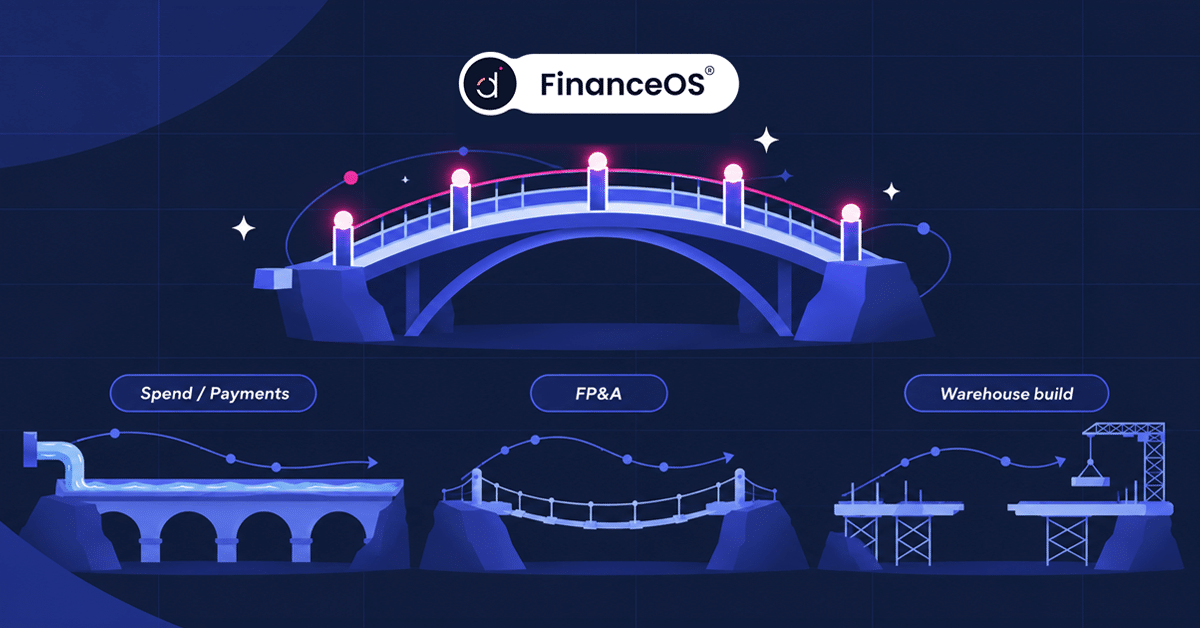
Spend control connects contracts to budgets, purchase approvals, invoices and payments, while a contract repository stores the documents and their key dates. A repository tells you what you signed. Spend control tells you what you committed against the plan, what you have paid, and whether each invoice matches the terms you agreed.
Is a contract repository enough on its own?
For storage and legal reference, often yes. For financial control, usually not. A repository holds the signed agreement, the parties, the term and the renewal date. It does not know the budget line the contract belongs to, what has been invoiced against it, or whether this year’s price matches the agreed uplift.
The gap shows up in renewals and invoices. Picture a company with 220 software contracts in a shared repository. Renewal dates are tracked, and legal gets alerts 60 days ahead. Finance does not. A $96,000 analytics tool renews automatically in March with a 7 percent uplift that was never in the budget, and the first time finance sees it is the invoice.
Repositories also tend to drift from reality. Amendments live in email, order forms sit with the requester, and price changes are agreed on calls. The repository holds the master agreement while the commercial terms that drive spend sit elsewhere.
A repository still answers legal questions well: what are our obligations, when does this end, who signed it. Spend questions need the contract linked to money.
A useful check is to pick five recent invoices from your largest vendors and find the contract terms each one should match. If that takes more than a few minutes per invoice, contract checks are probably being skipped.
What changes when contracts are connected to the ledger?
Finance can see committed spend before it posts, compare each invoice against agreed terms, and forecast renewals as budget events. Each contract becomes a commitment against a budget line, with actuals recorded against it.
Commitments change the budget conversation. If marketing has signed $400,000 of agency and software contracts for the year against a $600,000 budget, the remaining capacity is $200,000. Actuals to date alone might suggest $450,000. Budget owners who see commitments make fewer surprise requests in the fourth quarter.
Invoice checks catch billing errors. A contract priced at $12 per seat for 500 seats should produce a $6,000 monthly invoice. An invoice for 540 seats, or at $13 per seat, is a question to raise before payment, while the quarter is still open.
Renewals become forecastable. With contract end dates, notice periods and uplift terms linked to budget lines, the forecast can show next year’s committed spend and the decisions due in each month.
Timing is the real gain. Overbilling often surfaces only at renewal, when someone finally compares the invoice to the contract. Connecting the two finds it the month it happens.
Can FP&A software replace a contract management tool like Tropic?
Usually only in part. FP&A (financial planning and analysis) software plans and reports, and it rarely manages contract negotiation, intake or vendor workflows. Procurement platforms such as Tropic cover intake, contract and renewal management, and vendor negotiation. A spend management platform connected to the plan sits between them.
Map your use cases first. Legal review, redlining and signature are contract lifecycle functions. Intake, vendor comparison and negotiation support are procurement functions. Budget checks, commitments, invoice matching and renewal forecasting are finance functions. Few tools do all three equally well, which is also why the FP&A automation evaluation framework separates them.
The question to ask is where the budget decision happens. In many procurement tools, the approval checks whether a purchase is allowed and routed correctly. Finance also wants to know whether it fits the budget, what is already committed against that line and what the decision does to the forecast.
Some companies run both: a procurement tool for intake and negotiation, and a finance platform for budget, commitment and spend control. That works when vendor and contract data flow between them and each has a clear owner.
Evaluate with real contracts. Take three recent purchases, follow each from request to payment in the candidate tool, and see where the budget check happens and who sees it.
Is spend control software worth it if my contract process already works?
It can be, because a working contract process and controlled spend are different things. A process can produce signed, well-filed contracts while spend still drifts through renewals, uplifts, duplicate tools and invoices that nobody checks against terms.
Software spend is where drift is easiest to see. Departments buy tools on cards, renew them automatically and add seats without a budget conversation. AI tools have added a new layer: 32 percent of the 270 US CFOs and finance leaders in Datarails’ 2026 CFO Sentiments Survey said their organizations exceeded AI budgets by at least 10 percent in the past 12 months.
Run a quick test on your own data. Pull last year’s vendor payments, group them by vendor, and list any vendor paid by both card and invoice, any vendor with overlapping products, and any renewal paid at a higher price than the prior year. Each list is spend the contract process did not catch.
The answer also depends on scale. A company with 40 vendors and one approver may manage well with a repository and a spreadsheet. A company with 400 vendors, several entities and many budget owners usually cannot, because the work of matching contracts, invoices and budgets grows faster than the team.
Weigh the effort as well. Spend control works when budget owners use it, so adoption matters more than features.
Where does procurement stop and finance start on contract data?
Procurement usually owns vendor selection, negotiation and the contract terms. Finance owns the budget, the commitment against it, payment and the comparison of actual spend with the plan. The handoff point is the approved commitment: the moment a purchase is agreed against a specific budget line.
Shared data needs clear owners. Procurement maintains the vendor record, contract terms and renewal strategy. Finance maintains the budget line, the cost center and the accounting treatment. Both need to see the same contract, the same dates and the same amounts.
Problems appear at the edges. A contract with a usage-based component has a committed minimum and a variable portion. Procurement negotiated both. Finance forecasts both, but only the minimum is a firm commitment.
Datarails Spend Management, on the Datarails FinanceOS® platform, is built around that handoff, following a cycle of plan, purchase, pay and back to plan. Every purchase request, approval, purchase order, contract, invoice, payment and card transaction connects to the same budget line, scenario and version. Before approving, a budget owner sees available budget, existing commitments and the impact of the new request. When the expense posts, the actual flows back to the same line.
That gives procurement and finance one record of each vendor and contract, with each team working its own part.
Can I mass-import existing contracts?
Yes, in most platforms, though quality depends on what gets extracted. Bulk upload brings the documents in. Extraction turns each contract’s key terms, such as dates, notice periods, pricing and renewal clauses, into structured fields. A review pass confirms the fields before they drive alerts or invoice checks.
Extraction is where AI helps most. Reading hundreds of agreements by hand to capture renewal dates and uplift clauses takes weeks. AI extraction does the first pass quickly, and reviewers focus on the contracts where confidence is low or terms are unusual.
Amendments are the main risk. If the import includes the master agreement but not the amendment that changed the price, extracted terms will be wrong. As an illustration, an import of 140 software agreements might include 18 with amendments stored separately, six of which change pricing. Gather amendments and order forms before importing.
Link each contract to a vendor record and a budget line during import. Contracts without a budget line cannot support commitments or budget checks later.
Ask any vendor to import twenty of your real contracts during evaluation, including some with amendments, and check the extracted fields against the documents.
Can I automate contract renewal notifications?
Yes, and the useful version notifies the budget owner and finance as well as legal, early enough to decide. Alerts should key off the notice period: with a 90-day notice clause, the real deadline is three months before the contract ends.
Auto-renewals need the most attention. A contract that renews unless cancelled is a commitment the company makes by doing nothing. Track every auto-renewal with its notice deadline, the owner who decides and the expected price after uplift.
Make each alert carry a decision. The notification should show current spend, usage if available, the renewal price and the budget line. A budget owner who sees that a $48,000 tool has 30 active users out of 120 licensed seats can decide in minutes.
Datarails Spend Management centralizes contracts, subscriptions and agreements, with contract extraction using AI. Its renewal and expiration alerts sit alongside the budget and commitment data, so a renewal decision shows its effect on the plan. Contract-to-invoice checks then confirm that the renewed price is the one billed.
Review the renewal calendar quarterly with budget owners, and build next year’s software budget from it. The same commitments can feed the cash forecast, since renewals are among the largest predictable outflows.
Where to start
List every contract that renews automatically in the next six months, with its notice deadline and budget line. Gaps in that list are where spend escapes control. A Datarails demo shows what that looks like on your own data.