
The difference between a company’s current assets and current liabilities is its working capital. The practice of overseeing and controlling these resources (assets and liabilities) so the business has sufficient liquidity to meet short-term obligations is what’s known as working capital management.
Considering the necessity of liquidity for a business’s ongoing survival, strong working capital management practices are indispensable, and we’re going to discuss those in detail in this article.
When assets exceed liabilities, working capital is positive, which indicates financial flexibility, this is good. When liabilities exceed assets, working capital is negative, signaling potential liquidity issues, a big red flag.
The concept of working capital management involves carefully managing receivables collection, controlling inventory levels, and scheduling payments in a way that balances solvency with efficiency. If a company holds too much cash or stock, it reduces profitability by locking up resources. If it holds too little, it risks missing payments.
In turn, managing working capital means maintaining an optimal balance: enough liquidity to avoid crises but not so much idle cash that opportunities are missed.
In the following sections, we’ll talk about how to strike this delicate balance and why it’s important to do so.
Why Working Capital Matters for Business Health
Working capital is vital because it underpins day-to-day solvency. A business can be profitable on paper and still fail if liquidity is poorly managed. In fact, more than 8 out of every 10 small businesses that fail cite cash flow problems as a leading factor.
When a company applies strong management of working capital, it ensures payroll clears, suppliers are paid, and creditworthiness is protected. Lenders and investors often evaluate working capital metrics before extending credit, so good practices go a long way in boosting a company’s financial reputation.
On a practical level, working capital management and finance are linked through opportunity.
When liquidity is strong, companies fund growth projects internally instead of having to rely heavily on loans. This also allows businesses to respond to sudden opportunities, whether that be something like buying raw materials at a discount or launching new initiatives.
Conversely, weak working capital leaves businesses reactive, often forcing them into short-term borrowing at less-than-desirable terms.
CFO surveys consistently show liquidity among top priorities. One recent survey found that nearly nine in ten CFOs believed improving working capital was critical to balancing stability with expansion. This illustrates why working capital planning sits at the heart of sustainable business management.
Key Components of Working Capital: Current Assets and Liabilities
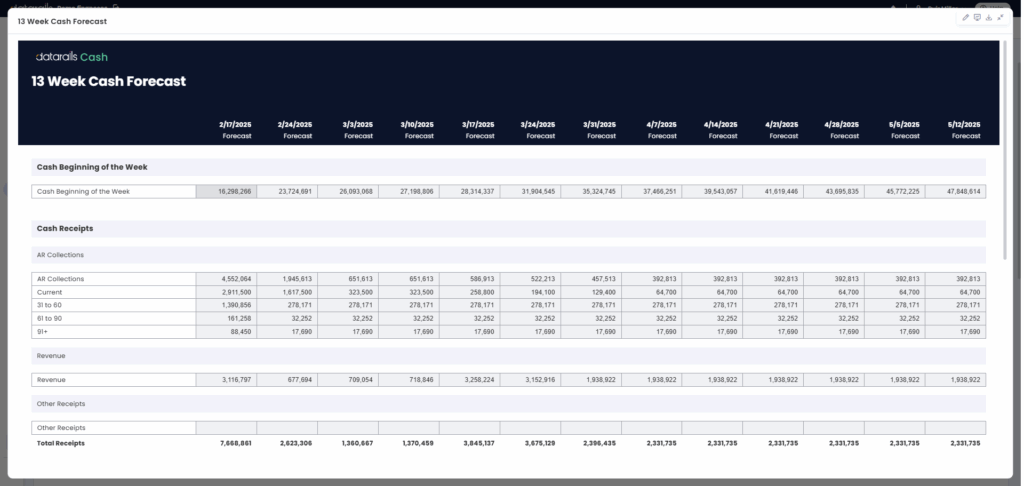
An overview of working capital management starts with its building blocks: current assets and current liabilities.
- Current Assets: These are resources convertible into cash within a year. They include cash, securities, accounts receivable, inventory, and prepaid expenses. Receivables are particularly important because they represent sales not yet realized in cash. Inventory also matters since unsold stock ties up cash.
- Current Liabilities: These are obligations due in the same period. They include accounts payable, accrued taxes and wages, the current portion of long-term debt, and other short-term borrowings. Payables, for instance, represent supplier invoices that must be settled soon.
Working capital management of a company requires balancing these components. If receivables collections are slow, liabilities may outpace cash inflows. If inventory is too high, resources are locked in warehouses. If payables are mismanaged, relationships with suppliers may become strained.
Positive working capital indicates a cushion. Negative working capital is not automatically fatal. But for most businesses, it raises concerns about liquidity.
Effective working capital planning and management, therefore, means constant monitoring of these moving pieces.
How to Calculate Working Capital and the Working Capital Ratio
Calculating working capital is done with a straightforward formula:
Working Capital = Current Assets – Current Liabilities
If current assets are $600,000 and liabilities are $400,000, the company has $200,000 in working capital. This positive figure signals a cushion.
The working capital ratio (current ratio) is another way you can measure liquidity:
Current Ratio = Current Assets ÷ Current Liabilities.
A ratio above 1.0 means that assets are at least equal to obligations. Many industries view 1.5 to 2.0 as healthy. A ratio below 1.0 is a warning sign, while an excessively high ratio may suggest underutilized resources.
Other useful metrics include:
Quick Ratio: Similar to the current ratio but excludes inventory, offering a stricter liquidity test.
Cash Conversion Cycle (CCC): Measures how long cash is tied up from paying for inventory to collecting from customers. Shorter cycles mean more efficient use of cash.
Combined, these metrics provide an analysis of working capital management, helping you benchmark liquidity against both history and your industry peers.
Types of Working Capital Management Strategies
A business can adopt a few different strategies to balance risk and return, or a combination:
- Aggressive Strategy: Keeps current assets lean and uses short-term liabilities extensively. This frees cash for investments but heightens the risk of liquidity shortages if collections lag or expenses spike.
- Moderate Strategy: Matches short-term assets and liabilities sensibly. The firm maintains enough liquidity to cover obligations but avoids excessive idle cash. It’s the “middle ground” strategy used by many companies with moderate risk tolerance.
- Conservative Strategy: Holds high levels of current assets and minimizes reliance on short-term borrowing. This reduces liquidity risk but may depress profitability because too much capital sits idle.
The concept of working capital management varies across industries. A high-growth software startup may favor aggressive tactics, while a utility provider may lean conservative.
Most companies shift along the spectrum as conditions change, underscoring that working capital planning and management are dynamic rather than static.
Benefits of Effective Working Capital Management
When firms excel at working capital management in financial management, they see benefits across liquidity, profitability, and reputation:
- Liquidity assurance: Enough cash is available to pay obligations, preventing crises.
- Operational continuity: Bills, payroll, and supplies are handled on time, avoiding disruption.
- Profitability gains: Reduced excess inventory and faster receivables improve return on assets.
- Lower borrowing costs: Better liquidity reduces reliance on high-cost short-term loans.
- Funding growth internally: Cash released from working capital subsidizes expansion and innovation.
- More trust: Suppliers and lenders favor companies known for disciplined liquidity.
These benefits show why working capital business management is central to financial leadership. On top of avoiding insolvency, working capital management is also about freeing resources to support the company’s broader mission.
6 Common Challenges in Managing Working Capital
Despite its advantages, companies face recurring hurdles in managing working capital:
- Seasonal demand: Retailers purchase inventory in anticipation of peak seasons, which ties up cash before the sale is even secured.
- Late customer payments: If receivables collections stretch to 60 or 90 days, liquidity suffers in turn.
- Supplier demands: If vendors shorten their terms, companies are left needing to pay sooner than originally planned.
- Rapid growth: Companies that are growing quickly can burn cash faster than it is coming in, resulting in strain on working capital.
- Operational inefficiencies: Companies that rely on manual processes, delayed invoicing, or siloed data will have a longer cash cycle.
- Economic pressure: Inflation and interest rates are increasing working capital demands because it’s more expensive to finance new initiatives.
Overcoming these challenges requires a combination of policy discipline, process improvements, and sometimes outside financing. Analysis of working capital management often starts with identifying which of these pain points are most pressing.
Working Capital Optimization Techniques
Companies can shorten their cash cycle and unlock liquidity if they implement certain practices.
Here are six proven working capital optimization techniques:
- Accelerate receivables: Invoice quickly, enforce payment terms, and use incentives for early payment. Automated reminders reduce overdue balances and shorten days sales outstanding.
- Manage payables smartly: Negotiate longer terms where possible and pay on the due date rather than early, unless there are compelling discounts for early payment. Supply-chain financing can extend flexibility without straining suppliers.
- Optimize inventory: Apply just-in-time practices, forecast demand carefully, and clear out your obsolete stock. Monitoring turnover ensures capital is not tied up unnecessarily.
- Control costs: Eliminating unnecessary overhead directly boosts working capital.
- Forecast cash flow: Rolling forecasts help anticipate crunches or surpluses, so management has time to adjust.
- Use automation: To prevent liquidity leaks, AR and AP processes are automated, reducing errors and ensuring timely action.
These techniques form the backbone of working capital planning. When applied consistently, they reduce the days cash is trapped in operations and increase liquidity available for growth.
Role of AI and Automation in Working Capital Management
AI and automation are increasingly widespread in working capital management, just as they are in many other financial arenas.
Here are a few ways AI and automation are utilized in working capital management and finance strategies:
- Forecasting accuracy: Machine learning reduces cash flow forecast errors since it isn’t vulnerable to human error.
- Receivables management: Algorithms predict which customers may pay late, so you can intervene early on.
- Payables optimization: Systems can schedule supplier payments to preserve cash while simultaneously maximizing discounts.
- Inventory forecasting: Predictive models improve sales accuracy, which means you’re less likely to hold onto excess stock.
- Routine automation: Tasks like reconciliation and invoice matching are handled faster and more accurately with the help of AI.
AI also enables scenario modeling. With it, finance teams can see the impact of changing payment terms or demand fluctuations on liquidity. By reducing manual workloads and providing insights, automation supports better decisions and makes working capital planning and management more agile.
Examples of Working Capital Improvements in Real Companies
Here are a couple of examples that highlight the tangible value of strong working capital practices:
- Alcoa: During the 2008 crisis, Alcoa prioritized liquidity. By reducing its working capital cycle by 23 days, the firm unlocked $1.4 billion in cash. This provided stability during turbulent markets and demonstrated how disciplined inventory and receivable management can create liquidity equal to major financing rounds.
- Apple: Apple consistently operates with a negative cash conversion cycle. This means it collects from customers faster than it pays suppliers. In 2022, its cycle was around –62 days. By keeping inventory extremely lean and negotiating favorable payables, Apple effectively finances operations with supplier credit.
- Industry surveys: Analysts from The Hackett Group, Inc. estimate U.S. companies could free more than $1 trillion in liquidity if they improved working capital to leading-practice levels. This indicates that even established companies often have considerable cash tied up in receivables, inventory, and payables that could be released with better management.
These cases show how analysis of working capital management in practice can deliver enormous value without external funding.
7 Working Capital Management Best Practices for CFOs and FP&A Teams
CFOs and FP&A teams set the tone for how seriously an organization treats its liquidity. They have the opportunity to shape habits across departments and build a culture where cash awareness is second nature, and the following best practices help them do that:
- Prioritizing KPIs: Consistently track metrics like current ratio, quick ratio, DSO, DPO, and inventory days.
- Integrating into planning: Build working capital assumptions into budgets and forecasts.
- Aligning departments: Educate sales, operations, and procurement on how their actions affect cash.
- Leveraging technology: Dashboards and automation deliver real-time visibility of working capital metrics.
- Setting and enforcing policies: With standardized credit, inventory, and payables rules, you prevent ad hoc decisions.
- Regular benchmarking: How does your financial performance hold up against that of your peers? Use this information to identify where you might improve.
- Maintaining safety nets: It’s helpful to keep credit lines in place even if you don’t use them frequently. Should you need them, you’ll be glad to have them.
Embedding these habits ensures that the working capital management of a company is proactive rather than reactive. Companies with disciplined FP&A practices enjoy smoother operations and greater financial flexibility.
Key Takeaways for Working Capital Management
Here’s a quick recap of the information we’ve covered in this article:
- Working capital is the difference between a company’s assets and liabilities.
- Businesses have to be careful to keep enough liquidity that they can weather any financial storms that come their way, but not so much that they don’t have enough capital to take advantage of opportunities as they arise.
- The two fundamental components of working capital are current assets and current liabilities.
- Current assets (including cash, accounts, and inventory) are convertible into cash within 12 months
- Current liabilities are financial obligations due within 12 months, including things like long-term debt and accounts payable.
- The working capital formula is Working Capital = Current Assets – Current Liabilities
- Businesses can choose between aggressive, moderate, and conservative working capital management. They might shift between these strategies depending on market conditions and industry norms.
Take Control of Your Working Capital Today
Working capital is often the most accessible form of liquidity for a business. Unlike raising equity or debt, businesses don’t have to obtain outside approvals or make interest payments. Instead, it’s all about managing existing resources better, and we’ve covered several ways to do that in this article.
Datarails gives CFOs and finance teams the financial modeling tools they need to do just that. With automated data consolidation, AI-driven analysis, and real-time dashboards, you can see exactly where cash is tied up and model the impact of changes instantly. With this clarity, you can shorten receivable cycles, optimize inventory, and manage payables strategically.
Strong working capital management translates to lower financial stress, improved profitability, and flexibility to act when opportunities arise. Instead of reacting to cash crunches, give yourself the valuable opportunity to plan with confidence.
Take control of your working capital today. Request a Datarails demo and see how technology can support liquidity, efficiency, and growth for your business.
FAQ
Working capital management is the practice of overseeing a company’s current assets and liabilities to assure it has adequate liquidity for daily operations. Under this umbrella, finance teams are tasked with controlling receivables, inventory, and payables to maintain solvency while avoiding excess idle funds.
Done well, it balances stability with profitability, supporting growth without creating liquidity risk.
Capital investment decisions, or capital budgeting, deal with long-term projects. This can include things like buying equipment, building facilities, or acquisitions. These decisions lock up resources for years and are evaluated with ROI or NPV metrics.
For its part, working capital management is all about short-term liquidity. AKA: Do you have sufficient cash flow within a 12-month window?
Working capital directly impacts solvency. No matter how profitable a company looks on paper, it will struggle to pay its bills and meet other financial obligations without enough working capital.
Conversely, solid working capital management practices ensure liquidity, ease borrowing needs, and improve profitability by reducing waste.
Good working capital management practices also support relationships with suppliers, employees, and lenders, all of whom depend on timely payment. In short, it’s foundational to both stability and growth.
There are three broad types: aggressive, moderate, and conservative.
Businesses might shift between these strategies depending on market conditions and industry norms.
The overarching goal is to ensure liquidity so a business can meet financial obligations without interruption or stress. And secondary to that, the objective is to maximize efficiency: keeping resources productive rather than idle.
Effective management prevents crises, improves profitability, and supports growth. In practice, it means balancing solvency and efficiency to sustain healthy operations and create value.