Click for Takeaways: Global Profitability & Sector Trends
- The Big Three Sectors: Energy, Finance, and Technology collectively generate 63% of global profits ($1.8 trillion), with Saudi Aramco leading the pack for three consecutive years.
- Operational Cost Advantage: Saudi Aramco’s $3-per-barrel production cost creates a profit margin that Western competitors cannot match, allowing for $97.8 billion in annual dividends.
- The Services Shift: Apple’s transition from hardware-only to a Services-led model (13% growth) has solidified its position as the world’s most valuable brand.
- The AI Multiplier: Microsoft’s Azure Cloud and AI agents have driven a 24% increase in operating income, positioning the firm to lead the $1 trillion AI market.
- Search Dominance: Google Search still commands 84% of the global market, allowing Alphabet to record an all-time quarterly profit record of $26.3 billion in late 2024.
- Compound Success: Berkshire Hathaway has nearly doubled the S&P 500’s returns over 60 years, proving that diversified, long-term asset management remains a premier profitability strategy.
A recent study uncovered the top five most profitable companies in the world. These industry giants flaunt their financial strength, with Saudi Aramco leading the list, boasting an impressive profit of $247.43 billion in 2023.
With their ongoing triumphs, people are curious: What’s the secret behind their success?
Fortune’s 2024 analysis of the world’s 50 most profitable companies revealed that Saudi Aramco maintained its position as the most profitable company globally with $120.7 billion in profits, securing the top spot for the third consecutive year.
The Fortune Global 500 companies collectively made $2.98 trillion in profits in 2024, representing their second-most-profitable year ever, with $1 trillion of that total generated by companies in the finance sector alone.
According to sector analysis, the top three fields (energy at 24.56%, finance at 23.07%, and technology at 15.54%) collectively contributed 63% of total global profit, amounting to $1.8 trillion. The top 10 most profitable companies accounted for 24% of the Fortune 500’s total profits, demonstrating the concentration of wealth among industry leaders.
How do organizations create so much revenue? This article will break down the top five most profitable companies and the strategies these companies use to maximize profits.
Ranking the Most Profitable Companies
1. Saudi Aramco – $247.43 Billion
In 2023, Saudi Aramco, the Saudi Arabian oil giant, generated the highest net revenue globally, with profits of over $247 billion U.S. dollars.
Led by its current CEO, Amin H. Nasser, this company, which started in 1933, thrives in the oil and gas industry.
With the third-highest market cap worldwide and the backbone of Saudi Arabia’s economy, Saudi Aramco’s massive oil reserves and strategic Middle East location keep it at the forefront of the global market.
It’s important to note that Saudi Aramco is not the most valuable company in the world; instead, it’s the most profitable.
The difference between the most profitable and valuable companies is that profit is simply revenue minus expenses, while value considers stock, future earnings, market share, and many other factors.
Another way of looking at “value” is if the company were put up for sale, how much would it cost to buy it? In that case, the potential buyer would look at all of the company’s aspects, especially future earnings and potential.
According to this, Apple would be the most valuable company in the world (with a value of $3.441 trillion USD as of September 2024).
Still, this article only talks about profit – simply which company “took home” the most money in 2023.
How Saudi Aramco Maximizes Profitability
Saudi Aramco has a complicated history of public, private, and government-run stakes in the company, but it made its financials public for the first time in 2019 as part of a $10 billion bond sale.
In fiscal 2020, Aramco faced challenges due to the COVID-19 pandemic, resulting in a drop in net income to $49 billion from $88 billion in 2019.
Fluctuating demand and energy prices impacted its performance, though there was a slight improvement in the year’s second half.
In the same year, Aramco acquired a 70% stake in Saudi Basic Industries Corporation for $69.1 billion (a big reason they had the bond sale), further solidifying its position in the market.
This Saudi oil giant is ramping up its big data and artificial intelligence unit to enhance profitability by making informed decisions in areas like trading and acquisitions.
The focus is on optimizing investments to better align with Aramco’s extensive operations and adapt swiftly to market dynamics. This includes conducting asset-specific reviews to increase returns.
Aramco is also actively pursuing various deals, such as acquiring a stake in Gas & Oil Pakistan and refineries in Asia while exploring opportunities like investing in Shandong Yulong Petrochemical in China.
Utilizing advanced commercial models like the Global Optimizer, Aramco anticipates an additional $1.5-$2 per barrel in earnings before interest and taxes compared to traditional methods.
Despite market volatility, Saudi Aramco reported $121.3 billion in profit for 2023, marking its second-highest annual result despite a 25% decline from the record-breaking $161.1 billion earned in 2022 when energy prices surged following geopolitical events. The company’s production costs are just $3 per barrel, a fraction of what Western oil producers pay, giving the company an enormous competitive advantage. The organization paid total dividends of $97.8 billion in 2023, representing a 30% year-over-year increase, while capital investments reached $49.7 billion, a 28% increase from 2022.
With the largest proven oil reserves globally and operating income of approximately $232 billion in 2023, Saudi Aramco demonstrates how strategic resource management and operational excellence drive sustained profitability.
Summary of Why Aramco is So Profitable
In summary, what makes the most profitable company in the world so successful is its ability to innovate when necessary.
Even in a conservative business environment such as oil and gas, Aramco does an incredible job of finding ways to lower costs, invests in new industries and expansions, and adapts itself to challenges.
2. Apple – $121.62 Billionqu
Under the leadership of its current CEO, Tim Cook, Apple creates and produces mobile gadgets, computers, and digital music players. It also offers software, services, accessories, and more. Apple is famous for its iPhones, iPads, and Macs.
As of September 2024, Apple is the world’s second-largest company by market value, although Microsoft has taken this spot before, including in January 2024.
Apple is known for its revolutionary products but is also known for pushing tech boundaries.
Apple’s focus on innovation and top-notch design has won over consumers, making them a top player in the market.
How Profitable Is Apple?
Apple’s financial results in the last quarter of 2023 were impressive. Revenue was $119.6 billion, a nice 2% increase from the previous year. Earnings per diluted share also increased 16% to $2.18.
Apple generated $391 billion in revenue for fiscal 2024, with the iPhone business accounting for over half of total revenue at $201.2 billion. The company’s Services segment brought in $96.2 billion and experienced the fastest growth, with revenue rising 13% year-over-year, making it Apple’s most profitable business line.
Apple’s net income reached approximately $100 billion in each of the past four years, demonstrating consistent profitability performance. As of 2024, Apple is the most valuable brand worldwide , and the company’s stock price has grown more than tenfold over the last decade. With over 2.2 billion active devices worldwide and Services revenue that includes the App Store, iCloud, Apple Music, and advertising, Apple demonstrates how product ecosystem integration drives sustained profitability.
Tim Cook said the revenue growth was all thanks to strong iPhone sales and some serious record-breaking moves in Services.
He was pretty proud of hitting over 2.2 billion active devices worldwide, which shows how much Apple is about pushing boundaries and keeping customers happy.
Luca Maestri, Apple’s CFO, made sure to discuss the company’s strong financial stance. He mentioned a big jump in operating cash flow and how much they give back to shareholders.
Apple announced a cash dividend of $0.24 per share of common stock, showing they’ve got faith in what’s coming next.
Apple has kept its profits up and shown it’s putting money into smart long-term growth plans. Apple makes money because it is involved in a bit of everything.
It rakes in cash from selling iPhones, iPads, and Macs and offering services like the App Store, Apple Music, and iCloud. This mix helps it play it safe and keep the money flowing in steadily.
Summary of Why Apple is So Profitable
Nobody does innovation, forward-thinking, and marketing as well as Apple.
Their combination of always thinking ahead and constantly coming up with new and cool products makes them the second most profitable and most valuable company in the world.
Prior to 2024, they were the most valuable company for many years, and they managed to regain their status as most valuable global company as of October, 2024. As long as they keep up with innovation, it does not look like they will disappear anytime soon.
3. Microsoft – $107.78 Billion
In early 2024, Microsoft surpassed Apple as the most valuable public company, reaching a market valuation of over $3 trillion.
As of September 2024, Microsoft is back in third place.
As Satya Nadella approached his 10th anniversary as CEO, Microsoft faced pressure to maintain its position and deliver results.
Investors are particularly interested in Microsoft’s advancements in artificial intelligence (AI). The company has heavily invested in AI, including a significant stake in OpenAI, the creator of the ChatGPT chatbot.
Last year, Microsoft focused on integrating AI across its product offerings. While AI implementation was anticipated to yield results in 2024, investors have been eager for early indications of its impact on sales.
Profitability Strategy Highlight
Microsoft’s profitability strategy revolves around innovation, in this case, leveraging artificial intelligence at scale across its product ecosystem.
By investing in AI technologies and integrating them into its offerings, Microsoft aims to drive revenue growth, enhance operational efficiency, and maintain its competitive edge in the market.
The successful implementation of AI solutions, as evidenced by Azure‘s growth and commercial cloud revenue, underscores the effectiveness of this strategy in delivering tangible financial results.
Microsoft’s recent financial report demonstrated promising signs. Revenue for the last quarter of 2023 reached $62 billion, marking an 18% increase from the previous year, with profits rising to $21.9 billion, a 33% increase.
Satya Nadella emphasized the shift from discussing AI to its widespread application.
The company forecasts continued growth, expecting sales of $60-61 billion in the current quarter, up 13-15% from the previous year.
Despite investments in expanding data centers for cloud computing and AI, Microsoft anticipates higher operating income for the fiscal year.
Microsoft’s commercial cloud offerings, generating $33.7 billion in revenue, saw a 24% increase. Its flagship cloud computing product, Azure, experienced a 30% growth, partly driven by its generative AI products developed in partnership with OpenAI.
Nadella highlighted Azure’s continued market share growth, attributing it to Microsoft’s AI advantage. Commercial subscriptions to Microsoft’s cloud productivity suite, including Teams, Word, and Excel, rose by 17%.
Summary of Why Microsoft is So Profitable
Microsoft delivered over $245 billion in annual revenue in fiscal 2024, up 16% year-over-year, with operating income exceeding $109 billion, representing a 24% increase. Microsoft Cloud revenue increased 23% to $168.9 billion in fiscal 2025, driven primarily by Azure’s 34% revenue growth. And according to quarterly results, overall revenue reached $62 billion, with profits of $21.9 billion and earnings per share of $2.93, up 33% by both measures.
Microsoft’s Azure AI now serves over 60,000 customers, increasing nearly 60% year-over-year, while GitHub Copilot has been adopted by 77,000 organizations, up 180% year-over-year. The company’s strategic focus on AI infrastructure, including its partnership with OpenAI, positions Microsoft to capitalize on the estimated $1 trillion AI market opportunity.
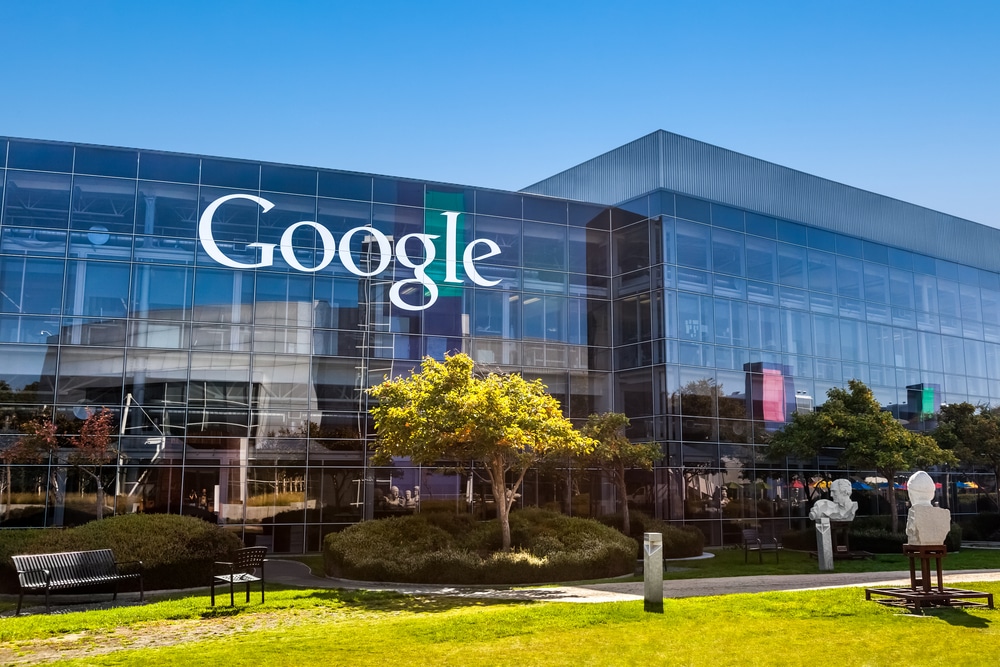
4. Alphabet (Google) – $101.82 Billion
Alphabet is the big umbrella company over Google and other businesses. Google, known for Search, Ads, Maps, YouTube, and more, is its main gig. They do ads, sell digital things, have cloud services, and even gadgets.
Ever heard of Nest or Waymo? That’s Alphabet, too.
By the end of 2023, the company had a cool $78.78 billion net revenue and was even able to trim expenses on tech gear. Alphabet looks like it is in great shape.
They’re all about AI, new tech, and finding cash beyond ads for long-term success. But they do have their challenges. Dealing with more rules from the government and fierce tech rivals keeps them busy.
Alphabet’s Financial Strength to Dominate the Market
Alphabet Inc. is doing extremely well financially, mainly because of smart changes in handling its assets. Its assets are worth over $1.3 trillion, which shows that it’s a big deal in the tech world.
Most of their money comes from Google, which makes up 99% of its revenue from online ads.
Because it is so financially strong and dominates internet search, Alphabet can invest in big plans for the future and handle the economy’s ups and downs.
Even though they have many different things going on, Alphabet still depends a lot on ad money.
In 2023, more than 75% of Alphabet’s money came from ads. This means they’re at the mercy of how much companies spend on advertising, which can change based on how the economy’s doing or what companies want to do.
Alphabet increased revenues by $42.6 billion in 2024, reaching $350 billion total revenue with a 14% growth rate, driven by advertising spending growth and cloud services expansion. Google Search remains the dominant revenue driver at $198.08 billion (56.63% of total revenue), while Google Cloud revenue increased 30.65% to $43.23 billion, making it the company’s highest growth segment.
According to advertising revenue analysis, $237.86 billion of Alphabet’s 2023 total revenue came from Google advertising, representing 77.4% of overall revenues. Alphabet’s net income for Q3 2024 reached over $26.3 billion, the highest quarterly net income ever recorded by the company. With over 84% of global desktop search traffic and net income totaling $100.1 billion in 2024, Alphabet secures its position as one of the most profitable companies worldwide.
Plus, getting rid of third-party cookies and people using ad-blocking tools could also hurt their ad business.
Summary of Why Alphabet is So Profitable
Despite being the newest company in the top five (established in 1998), Google became the dominant force in internet searches. And when you are the main tool the whole world uses for information, there is a lot of money to be made.
Google, too, is constantly innovating by creating better user experiences and investing in new tech, such as AI.
5. Berkshire Hathaway – $88.9 Billion
Berkshire Hathaway Inc. is a conglomerate with interests in insurance, transportation, energy, services, manufacturing, and retail, among other sectors.
In 2024, Berkshire’s profit dropped 28.97% (TTM), but it is still the fifth most profitable business in the world.
Its diverse investment portfolio includes equity securities and derivatives, significantly influencing its financial performance.
Berkshire was co-founded by current CEO and legendary investor Warren Buffet. He is often used as an example of long-term investing, compound interest, and longevity. He started investing in the stock market at age 11 and real estate at age 16.
His earnings compounded over time, and he continued to invest in innovation and smart business transactions until he now leads the fifth most profitable company in the world.
While Berkshire Hathaway is a significant player in various industries, it’s worth noting that one-fifth of its assets are invested in Apple Inc. When Apple wins, so does Berkshire, which is also a testament to Buffet’s belief in innovation.
Berkshire’s Rising Revenues and Falling Fortunes
In the third quarter of 2023, Berkshire raked in $93.2 billion in revenue from its core business operations, showing a solid 21.2% bump from last year.
However, when you consider the $29.8 billion hit from investments and derivatives, the revenue dropped to $63.4 billion.
The company’s net loss for shareholders shot up by a whopping 356% to $12.8 billion in Q3 2023, with earnings before taxes (EBT) taking a hit of $17 billion, up 298% from the same period last year.
These losses mostly stemmed from investments, especially a big drop in Apple stock, despite strong revenues from other sectors like insurance, railroad, utilities, and energy.
Changes in GAAP back in 2018, including unrealized gains and losses from investment portfolios, have led to more earnings ups and downs for Berkshire.
Berkshire Hathaway’s annual revenue for 2024 was $371.4 billion, representing a 1.91% increase from 2023’s $364.5 billion, which itself marked a 20.68% increase from 2022. Between 1965 when Warren Buffett gained control and 2023, the company’s shareholder returns amounted to a compound annual growth rate (CAGR) of 19.8% compared to just 10.2% for the S&P 500.
From 2006 to 2023, Berkshire’s revenue grew from $98.5 billion to $364.4 billion, a cumulative increase of 2.7 times with an annual compound growth rate of approximately 8%. Berkshire’s ownership of 38.4% of Class A voting shares by Buffett represents a 15.1% overall economic interest in the company.
With total assets exceeding $1 trillion as of 2023 and a diversified portfolio including major stakes in Apple, Coca-Cola, and American Express, Berkshire demonstrates the power of patient capital allocation and long-term value investing.
Even with these challenges, Apple remains a key investment for the company, underscoring its profitability and significance in Berkshire’s portfolio.
Summary of Why Berkshire Hathaway is So Profitable
Berkshire Hathaway is very different from the other companies on the list as it is a conglomerate (several different companies combined to form a parent company, but remain distinct entities).
Berkshire’s profitability comes from years of smart investing and long-term goals. The thing all of these companies have in common is finding innovation and investing in it.
Business Strategies to Learn from Top Companies
1. Focus on Diversification and Technological Advancement
Despite being primarily an oil and gas company, Saudi Aramco’s diversification strategy into big data and artificial intelligence reflects an understanding of evolving market dynamics.
By leveraging technology, they aim to optimize operations, make informed decisions, and adapt swiftly to market changes.
Additionally, their focus on expanding globally through strategic acquisitions demonstrates a commitment to growth and resilience in the face of fluctuating energy prices.
2. Product Innovation
Apple’s continuous innovation in product development and diversification into services has been pivotal to its profitability.
Apple maintains a strong foothold in the market by consistently introducing groundbreaking products like the iPhone and iPad and expanding into services like the App Store and Apple Music.
Their emphasis on customer satisfaction and loyalty, coupled with a diverse revenue stream, ensures steady profitability even in fluctuating market conditions.
3. Long-term Investment and Portfolio Management
Despite facing challenges in investment performance, Berkshire Hathaway’s long-term investment strategy remains robust.
While their investments may experience volatility, their diversified portfolio, including holdings in profitable companies like Apple, provides stability and potential for long-term growth.
Moreover, their adherence to rigorous financial analysis and prudent decision-making underscores their commitment to maximizing shareholder value over time.
4. Leverage AI Across the Product Ecosystem
Take a cue from Microsoft and invest in artificial intelligence (AI) technologies to enhance your product offerings.
Consider integrating AI software solutions into various aspects of your business operations to drive revenue growth, improve operational efficiency, and stay competitive in the market.
Microsoft’s success with AI implementation, particularly in cloud computing and productivity tools, is a model for leveraging advanced technologies to achieve business objectives.
5. Diversify Revenue Streams
Alphabet may seem to be all in on one revenue stream (Google ads), but it is taking different approaches to diversifying revenue streams beyond traditional advertising.
While advertising remains a significant source of income for many tech companies, reducing dependency on it can mitigate risks associated with fluctuations in ad spending and regulatory changes.
Explore opportunities to expand into new markets, offer additional services, or develop innovative products to generate alternative revenue streams and ensure long-term financial stability.
Final Thoughts
The most profitable companies in the world are in the tech, energy, and finance sectors. In this era of AI, many startups dream big of becoming one of these top players.
None of these companies are flawless; they’ve all had their fair share of setbacks along the way, but they all have one thing in common: they never stop evolving.
Recognizing their weaknesses helped them uncover their strengths, driving the constant self-improvement that shaped today’s tech landscape. These companies have a huge impact worldwide, with billions using their products daily.
Companies of all sizes need to innovate to succeed. This doesn’t necessarily mean inventing new technologies, but it does mean they need to plan and forecast ahead.
FP&A software is a great way to do this, as it consolidates all of your data in one place and creates a scenario where finance teams can make accurate and up-to-date decisions with management.
Company Profitability FAQs
The most profitable company in the world is measured by net income, not revenue alone.
Profitability is measured using metrics such as net profit, operating margin, and return on equity.
Technology and energy companies often dominate lists of the most profitable companies.
Strong pricing power, scale, and cost control drive higher profitability.
Yes, smaller businesses can achieve high profitability with efficient operations and niche markets.
