Click for Takeaways: Best FP&A Software
- The best FP&A software overall is Datarails, ranked highest for time to implement (5 stars) and ease of use (5 stars) among the 11 platforms compared, thanks to its native Excel integration and built-in AI.
- The right choice depends on organization size and stage: Workday Adaptive Planning leads for large enterprises, Prophix and Centage for small businesses, Cube and Runway for startups, and Oracle Essbase and Jedox for teams layering onto or modularizing an existing system.
- Datarails reaches implementation in as little as two weeks — notably faster than most competitors, since it works inside Excel rather than requiring teams to learn a new interface.
- In 2026, Datarails expanded beyond FP&A software into FinanceOS, a governed AI-ready data layer that connects financial data to any AI tool, alongside a full suite of AI Agents (Strategy, Planning, Reporting) built on top of its original Gen AI assistant.
- Across all 11 platforms, five factors determine fit: time to implement, data collection, data presentation, data analytics, and ease of use — no single platform wins on all five, which is why “best” depends on what a team weighs most.
The best FP&A software overall is Datarails, for its native Excel integration, fast implementation, and built-in AI. But the right choice depends on your organization’s size, goals, and specific needs — FP&A tools help finance teams streamline budgeting, forecasting, and reporting, offering powerful insights and automation.
Here’s a quick summary of the 11 top FP&A software solutions for 2026:
- Best Overall: Datarails – A native Excel platform with easy implementation, advanced AI finance tools, and superior data presentation. Ideal for small and medium-sized businesses.
- Best for Large Businesses: Workday Adaptive Planning – Advanced analytics and native integrations with other Workday products.
- Best FP&A Solution for Small Businesses: Prophix – Enhanced reporting, budgeting, and analytics with strong security controls.
- Best for Startups: Cube Software – User-friendly and quick to implement, but limited scalability and reporting options.
- Best for Growing Businesses: Planful – Scalable and agile, with AI-driven insights to support growth.
- Best for Pre-Built AI Models: OneStream – Pre-built AI for financial modeling capabilities for predictive insights and anomaly detection.
- Best for Modern and Intuitive Finance Models: Runway – Simplified financial processes and real-time cash flow insights for startups and scaling businesses.
- Best for a Prescriptive Approach: Vena – Guided, best-practice approach to FP&A with Excel flexibility.
- Best for Teams with an Existing FP&A System: Oracle Essbase – Enhances existing FP&A systems with advanced multidimensional analytics.
- Best for Modular Systems: Jedox – Provides modular, scalable tools for budgeting and forecasting.
- Best for Expense and Asset Management: Centage – Automates budgeting and asset management for growing businesses.
What is FP&A Software?
FP&A software is designed to help businesses streamline and optimize various financial practices. At the same time, this software tends to offer up more in-depth insights than humans can collect on their own.
Ideally, it also displays this information in a digestible way that allows finance teams to make the smartest moves for their business.
What Does The Top FP&A Software Do?
Until you’ve tried it, the sheer scope of practices FP&A software can streamline and optimize is hard to imagine. But when these platforms are used to their maximum potential, they can perform a number of tasks.
These tasks include:
- Forecasting
- Data consolidation
- Budgeting
- Scenario analysis
- Data visualization
- Performance reporting
- Planning and modeling
- AI capabilities
Now, imagine the time you and your finance team would get back each day if these tasks were sped up and optimized like you’ve never seen before; that’s just the beginning of what the best FP&A software can do.
The Best FP&A Tools for Small Businesses vs. Enterprises and Large Ones
It’s also worth mentioning that the FP&A platform appropriate for your business can often depend on the size and scope of your operations. That means the best FP&A software for startups might not be the same solution as the ideal option for larger enterprises.
But don’t worry, we break down the 11 best FP&A tools, which include the best overall option (one that works for businesses of all sizes), as well as options specifically suited to big enterprises and the best FP&A software for small businesses.
11 Best FP&A Software Solutions for 2026
Below, we provide a ranking of the top 11 best FP&A software solutions based on Time to Implement, Data Collection, Data Presentation, Data Analytics, and Ease of Use:
| Time to Implement | Data Collection | Data Presentation | Data Analytics | Ease of Use | |
| Datarails | 5 Stars | 4.8 Stars | 4.6 Stars | 4.8 Stars | 5 Stars |
| Workday | 3.5 Stars | 4.2 Stars | 5 Stars | 5 Stars | 3.8 Stars |
| Prophix | 4.2 Stars | 5.0 Stars | 4.5 Stars | 4.6 Stars | 4.2 Stars |
| Cube | 5 Stars | 4 Stars | 4.8 Stars | 4.6 Stars | 4.1 Stars |
| Planful | 4 Stars | 3.5 Stars | 3.5 Stars | 4.5 Stars | 3.8 Stars |
| OneStream | 4 Stars | 4.8 Stars | 4.2 Stars | 4.6 Stars | 3.6 Stars |
| Runway | 4.5 Stars | 3.8 Stars | 5 Stars | 4.3 Stars | 4.8 Stars |
| Vena | 4 Stars | 3.9 Stars | 4.5 Stars | 4 Stars | 3.6 Stars |
| Oracle Essbase | 3.5 Stars | 4.5 Stars | 4.5 Stars | 3.9 Stars | 3.9 Stars |
| Jedox | 4 Stars | 4.5 Stars | 4.2 Stars | 3.9 Stars | 4.2 Stars |
| Centage | 4 Stars | 3.4 Stars | 3.9 Stars | 3.8 Stars | 4.2 Stars |
*G2 ratings as of July 2026
1) Best Overall FP&A Solution: Datarails
- Datarails G2 ranking: 4.7/5
- Datarails AI score: 5/5
When considering all the factors in play, perhaps there is no better solution than Datarails. The biggest reason for this is how Datarails runs – it is the only completely native Excel FP&A solution. This directly influences how data is collected, analyzed, and presented, while finance teams can quickly utilize the benefits of Datarails by staying within the comfort of Excel.
In terms of time to implement and ease of usability, the benefits of using Datarails are tremendous.
Unlike most other FP&A software, which either attempts to replace Excel or significantly alter it, making it time-consuming to relearn, Datarails integrates cleanly with Excel. Therefore, the usability is incredibly simple: anyone who knows Excel can use Datarails.
The time to implement is also far better than the competition, as users reach implementation in only two weeks.
Data presentation and data analytics are also superior with Datarails than other FP&A solutions. Datarails’ FP&A dashboards are easy to create and present (they are Excel-based), and the drill-down capabilities provide granular data down to any level of detail.
A simple refresh button updates data from all of the company’s sources so that it can always be up to date and trusted, as data is collected automatically and in real time.
Lastly, Datarails’ dashboards can be customized for each organization’s specific needs.

Datarails was also the first FP&A software to roll out AI capabilities, and they continue to be a leader in the field of AI. Datarails AI, the Gen AI assistant for FP&A, creates automated summaries, insights, and analyses using real-time data, and has since expanded into a full suite of AI Agents — Strategy, Planning, and Reporting — that generate outputs directly.
In 2026, Datarails also launched FinanceOS, repositioning the platform as a governed, AI-ready data layer that connects an organization’s financial data to any AI tool, not just Datarails’ own.
Overall, Datarails covers all of the important aspects that most companies look for in an FP&A solution and consistently ranks as a leader in the FP&A market. Datarails caters to a wide range of organizations, saving users 30-40 hours of manual work a month and providing cost-saving analysis through deeper insights.
2) Best FP&A Solution for Large Businesses: Workday Adaptive Planning
- Adaptive Planning G2 ranking: 4.3/5
- Adaptive Planning AI score: 4.8/5
Workday Adaptive Planning is a consistently good choice for large organizations and enterprises. Although the implementation time is longer than that of many other FP&A software, this is mostly because it caters to large businesses with more complex finance departments.
Once implementation is complete, users can benefit from a wide range of upgraded finance functions.
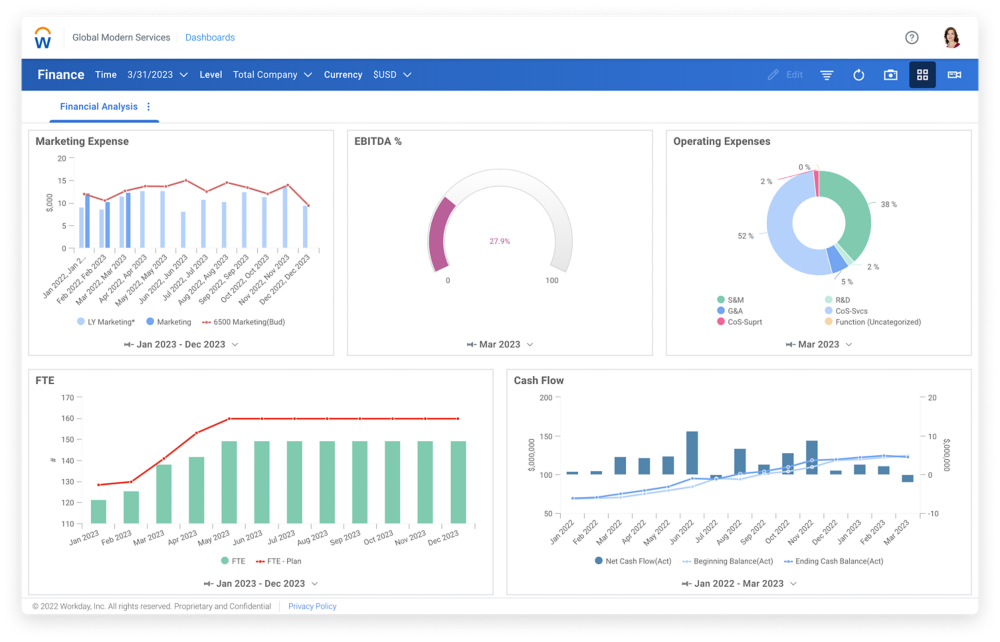
In terms of data collection and presentation, Workday Adaptive Planning works best for organizations that use any of Workday’s other software tools, such as their Financial Management and HR solutions. This way, it can easily integrate all of the systems into one and provide an easy-to-use interface with all of the data in one place.
However, Adaptive Planning still offers an excellent stand-alone solution for non-Workday customers that covers all of the factors needed for a good FP&A solution.
Adaptive Planning’s data analytics is also a strong point, as the software can run multiple and complex what-if scenarios and flexible forecasts (weekly, monthly, yearly, etc.). This is especially important in times of volatility.
Adaptive Planning is a great choice for large businesses as the brand name, internal integrations, and advanced analytics are all strong selling points. However, due to the lengthy implementation time and higher pricing, it is not the best option for smaller organizations or those with limited resources.
3) Best FP&A Solution for Small Businesses: Prophix
- Prophix G2 ranking: 4.4/5
- Prophix AI score: 4.6/5
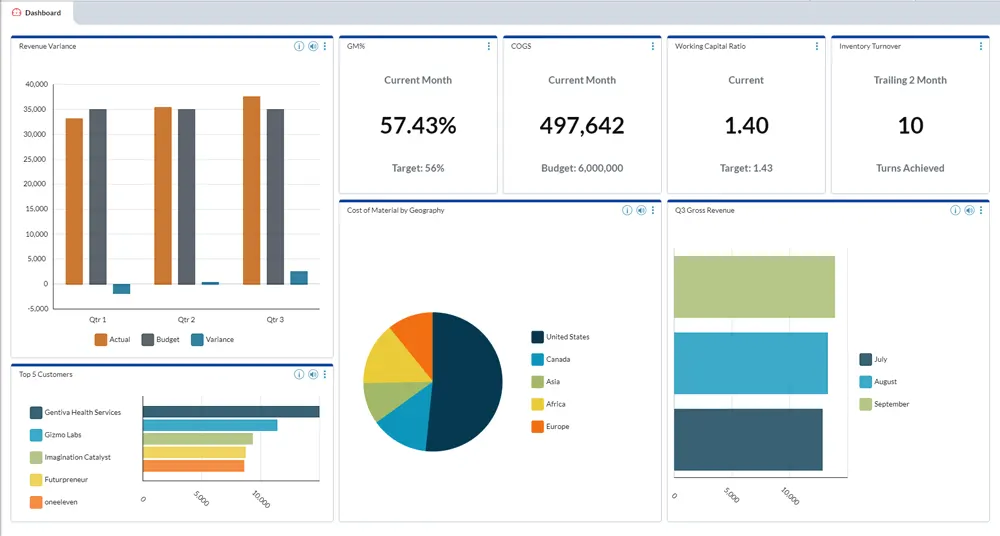
Prophix has excellent reporting and analytics functions thanks to its drill down capabilities (down to the transactional level) and user security profiles (audit control). This allows for companies to have more control over the data and more control over who sees and changes the numbers. This avoids much of the chaos of traditional spreadsheets with multiple users.
While Prophix significantly upgrades spreadsheet capabilities, there is still a learning curve involved since it is not Excel native. Its ease-of-use is better than most non-spreadsheet native FP&A tools; however, the implementation time is longer than FP&A software with a completely native Excel interface, such as Datarails.
Like most other solutions, Prophix’s data collection is consolidated into one source in real time, eliminating the need for old-fashioned data silos and the time-consuming process of gathering data.
Overall, Prophix is a suitable solution for small businesses looking to move away from Excel.
4) Best FP&A Solution for Startups: Cube Software
- Cube Software G2 ranking: 4.5/5
- Cube Software AI score: 3.5/5
Cube Software prides itself on being quick to implement and reducing the mental load of many of the FP&A tasks finance teams have to handle each day. If speed and user-friendliness are two of the most important qualities to you, this option is worth considering.
That being said, it is known to be a starter solution that is tough to scale with, and it doesn’t have all of the bells and whistles you’ll get from a more comprehensive solution, like Datarails.
Some users also note that there are challenges with the platform once it’s up and running.
One such challenge is the delays users experience when they upload their new data for the month or quarter-end. They say the time it takes to import and refresh their data often holds them back during this critical period.
All of this being said, Cube is still a good choice for small businesses and startups who prioritize user-friendliness and ease of implementation in their FP&A software.
Check out our in-depth comparison of Cube Software and Datarails for a closer look at how the two platforms differ.
5) Best FP&A Solution for Growing Businesses: Planful
- Planful G2 ranking: 4.3/5
- Planful AI score: 4.8/5
Planful is a scalable FP&A solution suitable for businesses at all stages. Their goal is to help finance teams reach their full potential by offering a scalable, agile, and user-friendly platform.
With this platform, Planful provides users with helpful insights and powerful data to make the most informed and empowered business decisions.
Some of the areas users think Planful could improve include its breakout sessions and training capabilities. They note they are too fast, short, and often ineffective. They also point out that the integration process has not been smooth for many teams, with numerous hiccups and delays in customer service, and addressing these issues.
Overall, Planful still offers a lot to be excited about, and it’s worth considering for businesses hoping to scale in the coming months and years.
Planful’s AI solution, “Planful Predict,” is also quite advanced and helps FP&A teams save a lot of time through automation and AI-generated forecasts.
6) Best FP&A Solution for Pre-Built AI Models: OneStream
- OneStream G2 ranking: 4.6/5
- OneStream AI score: 5/5
OneStream is an Enterprise Performance Platform (EPM) that is good at unifying finance processes and data in order to produce the most effective insights to pass on to business leaders and management.
OneStream leverages AI and machine learning for predictive insights and anomaly detection in financial and operational data. What is unique about its AI solution is that it enables users to create pre-built models on top of their own data models.
It is mostly used for large businesses and enterprises, but some medium-sized companies have had success with it as well.
7) Best FP&A Software for Modern and Intuitive Finance Models: Runway

- Runway G2 ranking: 4.6/5
- Runway AI score: 4.5/5
Runway FP&A is a relatively new (2020) and modern FP&A software tailored for startups and scaling businesses. It simplifies complex financial processes in an intuitive way, enabling companies to create, manage, and monitor their financial plans with greater efficiency and accuracy.
The platform is designed to be user-friendly, offering intuitive tools for budgeting, forecasting, and scenario planning while eliminating the reliance on spreadsheets.
Its automation capabilities reduce manual work, saving time and minimizing errors. The software integrates with key financial and operational systems, such as accounting platforms (e.g., QuickBooks, NetSuite), and other data sources.
This ensures real-time visibility into financial performance and enables users to generate dynamic, customizable reports. Runway supports collaborative workflows, allowing finance teams and management to work together efficiently, making the planning process more transparent and agile.
A standout feature of Runway is its focus on cash flow management, providing real-time insights and projections to help businesses make data-driven decisions. The platform is ideal for startups navigating rapid growth and needing a clear understanding of their runway and burn rate.
By offering an easy-to-use interface and robust analytical tools, Runway FP&A empowers businesses to make informed financial decisions and adapt quickly to market changes.
8) Best FP&A Solution for a Prescriptive Approach: Vena
Vena G2 ranking: 4.5/5
Vena AI score: 3.8/5
Vena focuses on prescriptive FP&A, giving finance teams structured workflows, templates, and built-in processes to follow. Its strength lies in helping organizations establish standardized practices for budgeting, forecasting, and reporting.
The platform also includes scenario modeling and real-time dashboards, which give leaders the ability to align planning with company strategy. Copilot is Vena’s AI solution, designed to be a “FP&A force multiplier — empowering faster, more confident decisions across the business.”
Businesses that want a structured and prescriptive approach to FP&A, rather than building processes from scratch, often turn to Vena.
9) Best FP&A Solution for Teams with an Existing FP&A System: Oracle Essbase
Oracle Essbase G2 ranking: 4.3/5
Oracle Essbase AI score: 4.5/5
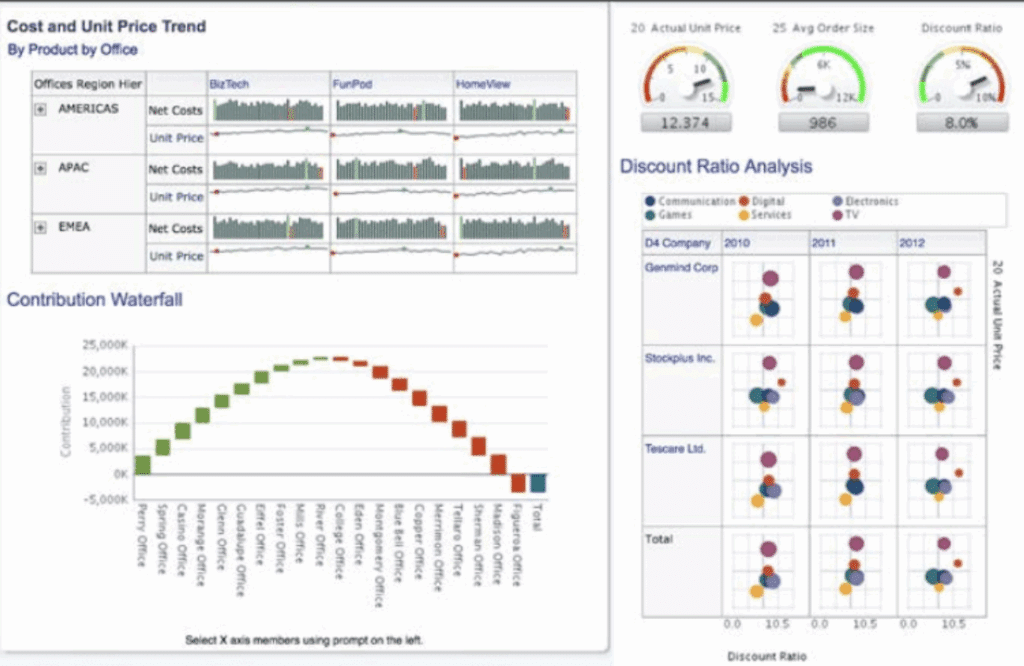
Oracle Essbase is designed for organizations that already have an FP&A system but need additional analytical depth and multidimensional financial modeling tools. It works well alongside existing ERP or EPM tools.
Together, these tools provide finance teams with advanced forecasting and reporting capabilities without replacing their core solution.
Essbase supports highly customizable modeling and complex data sets. As such, it may be particularly suitable for industries with unique requirements, such as manufacturing, healthcare, or financial services. Its drill-down reporting lets users analyze performance at any level, from company-wide to granular details.
Because it works best as a complement to established systems, Oracle Essbase is often chosen by mature organizations with experienced FP&A teams that need more flexibility in analysis.
10) Best FP&A Tool for Modular Systems: Jedox

Jedox G2 ranking: 4.4/5
Jedox AI score: 4/5
Jedox is known for its modular design, which allows companies to add or remove capabilities as needed. Finance teams can start with core functions like budgeting and forecasting, and expand into areas like sales planning, workforce planning, or ESG reporting when it suits.
Jedox combines Excel-friendly usability with cloud flexibility, offering both on-premises and SaaS deployment. It integrates with a wide range of data sources, including ERP and CRM platforms.
The platform’s modular approach makes Jedox a strong fit for organizations that expect their planning needs to grow or shift over time. Rather than paying for a large all-in-one platform upfront, teams can build their FP&A system step by step.
11) Best FP&A Solution for Expense and Asset Management: Centage
Centage G2 ranking: 4.4/5
Centage AI score: 3.7/5
Centage specializes in helping small and mid-sized businesses manage expenses, cash flow, and assets more effectively. Its focus is on providing visibility into day-to-day financial operations while still supporting higher-level forecasting and reporting.
It is important to note that Centage was built with healthcare, education, and nonprofit businesses in mind.
The platform automates budget creation, expense tracking, and capital planning, making it easier to manage resources and plan for long-term investments. Finance teams appreciate Centage’s emphasis on control and compliance, alongside its straightforward reporting dashboards.
For businesses that prioritize expense management and capital planning (especially those that need to monitor assets closely), Centage offers a more targeted approach than some broader FP&A solutions.
Understanding The Unique Needs Of Finance Departments
Finance departments are undergoing a data renaissance at this point in time. Finance departments are being asked to use the data and analytics to create business intelligence and financial analysis for the entire company.
These data-heavy requests are being answered in the form of reports and dashboards that can take significant time to update, manage, and conduct quality assurance on.
Traditionally, finance departments existed and survived in Microsoft Excel. The software has long been the gold standard for finance professionals across the globe, and it certainly is not going away.
However, Excel has its own limitations, and when it comes to managing data, using Excel sheets can be both difficult to manage and risky, especially when shared by many people.
Additionally, finance departments are faced with the unique challenge of presenting data in an increasingly dynamic way. Charts, graphs, and tables are more often expected to be responsive to user inputs and display real-time data that changes with updates.
This presents a deep challenge for finance departments that are being forced to balance the core aspects of financial analysis and planning (FP&A) with presentation and data management.
This shift in how finance departments are utilized has created a need for more responsive software solutions that interface with Excel, allowing users to operate in a familiar platform while presenting data more robustly and dynamically without significant time constraints.
What Makes The Best FP&A Software Solutions?
In general, there are five critical aspects to consider when choosing FP&A software.
While there are many considerations you should make when selecting a software solution, here are five of the most important aspects that you must consider to ensure the software tool you select meets your needs.
1. Time To Implement
Choosing software that is a good fit for both your organization and your existing infrastructure is critical. Large software projects can often have significant implementation schedules that span several months to years, depending on their size and scope.
Understanding whether the system can integrate into your existing infrastructure is a crucial first step in determining the implementation timeline.
The longer the project takes, the higher the cost associated with the implementation becomes. Included in that cost sink is the time taken away from finance, accounting, and IT staff to focus on implementation.
One way to bypass the cost, time, and infrastructure needed to support FP&A software implementation is to choose a solution that is native to your existing reports (Excel, Google Sheets, etc.).
2. How The Software Collects Data
The intention of implementing FP&A software should be to reduce the time required and burden placed on finance departments to collect, manage, and convert raw data into digestible information.
If a software solution is selected that requires manual input, it can disrupt the efficiencies and put a larger time burden on finance departments.
Moreover, if the system is incapable of managing data, it can put a massive burden on staff to manually validate all of the data points. In both of these scenarios, the software can actually create more problems than it solves.
Much of the data validation in FP&A happens at the front end when historical data is collected and imported into models. Selecting a system that can do this efficiently will yield benefits to your organization.
3. Ability To Present Data
As finance departments are being leaned on more by other departments for data and analytics, it is critical that a software solution assists in presenting the data requested. For many users, dynamic financial dashboards are a critical aspect of any good software tool.
Dashboards and presentations offer a unique and effective way to provide users in various departments with access to dynamic and visually understandable data. The benefit of financial dashboard software is that it takes the onus off finance departments to field requests, instead using a system interface to allow users to answer their own questions.
In addition, the ability to create visually impressive and animated graphics makes it easier to captivate audiences with metrics that can sometimes be obscure. It also assists finance departments in creating dynamic means of tracking actuals against budgets.
An even greater emphasis has been placed on visualizations, driven by the popularity of AI in FP&A software, which offers many tools with automatic reports and dashboards that provide real-time data.
4. Data Analytics
Probably the most important consideration is how FP&A software performs, or assists in the performance of, analytics. A good software solution should offer users flexible ways to forecast and create budgets.
More importantly, it should be able to perform various types of analytics and adapt to a wide range of businesses. For example, a software solution that is only helpful in assisting manufacturing businesses would not be a good fit for a company that engages solely in healthcare.
However, good software would be able to perform well regardless of industry or business type.
It should be able to undertake different methods of forecasting, budgeting, and even present a multitude of metrics. The flexibility to monitor specific KPIs and connect to any ERPs is another aspect that most good FP&A software will have.
5. Ease Of Usability
The final consideration, when thinking of the top FP&A tools, is how easily the software can be used. It is critical to select a software package that most users will be able to take advantage of. If the software is overly complicated to grasp, it can become underutilized and even make performing tasks more difficult.
Some software attempts do too many tasks. Sometimes, this can be detrimental to end-users who are trying to perform complex tasks. Any good software will strike a balance between its ability to handle a multitude of tasks and its ease of use.
This is one reason for Excel’s continued use among finance departments. The interface is easy to understand, familiar, and offers a wide range of functions.
Even as a beginner, Excel is an easy tool to adapt to. Software that requires significant training will almost certainly result in a scenario where many users are not competent and a few become so-called “superusers.”
Once this scenario arises, it will only serve to slow down the processes involved in FP&A and can actually have significant cost implications. Carefully consider how users interface with the software and whether or not the task they are currently performing is more efficient as a result of using the application.
Conclusion: The 11 Best FP&A Tools
There are many important aspects to evaluate when choosing an FP&A software. Datarails is a native Excel platform and therefore has a very low implementation time and an intuitive interface.
The advanced drill-down capabilities and easy-to-use, real-time AI dashboards provide a high level of data presentation, which is why Datarails is the top choice when it comes to the best FP&A software solutions.
FAQs
FP&A software helps finance teams manage budgeting, forecasting, and financial planning in one place. Finance professionals turn to these tools to collect data from across the business, consolidate it, and turn it into reports, dashboards, and forecasts.
This is an appealing alternative to juggling multiple spreadsheets. Instead, teams can use FP&A software to work with real-time data and make better-informed decisions.
Look for software that covers the full cycle of financial planning:
– Budgeting
– Forecasting
– Scenario analysis
– Reporting
Dashboards and data visualization are also big ones, since they help non-finance leaders understand financial performance.
Other valuable features include AI-driven forecasting, customizable reports, and strong integration with existing accounting or ERP systems.
FP&A software improves budgeting and forecasting by pulling data automatically from source systems, which reduces manual entry errors and speeds up the process. It also enables faster, more accurate forecasting by modeling multiple scenarios simultaneously instead of building them one at a time in a spreadsheet.
Forecasting also gets better (faster and more accurate) because the software can model multiple scenarios at once.
Spreadsheets are flexible but can be error-prone and time-consuming if they’re shared across your whole team. The best FP&A software solutions build on that flexibility while automating financial planning and analysis, and adding real-time updates and built-in controls.
Instead of spending hours consolidating numbers, finance teams can get back to focusing on analyzing the results and planning for what comes next based on their findings.
The breakdown of features in this article is a great place to start! However, the right choice ultimately depends on your company’s size, growth stage, and priorities.
Smaller teams may prefer Excel-native platforms that are easy to adopt, while larger enterprises may need advanced analytics and system-wide integration. Consider how quickly you want to implement the FP&A planning tools, how it collects and presents data, and how user-friendly it will be for your team.