Click for Takeaways: MCP for Finance
The data problem: Only 10% of CFOs fully trust their enterprise data, and data trust is the single most cited barrier to AI ROI in finance.
The real bottleneck: Finance AI pilots don’t fail because LLMs fall short. They fail because the data layer beneath them is fragmented, ungoverned, and stripped of compliance controls the moment it leaves the source system.
What MCP does: Instead of exporting data into AI tools, MCP exposes financial data through a governed context layer, keeping audit trails, permissions, and compliance controls intact while giving AI controlled access to live numbers.
Context, not connection: A finance semantic layer translates raw ERP fields into concepts AI can reason over, turning fragmented system data into AI-ready context.
Beyond the integration: Once financial data is accessible through MCP, finance teams can build reporting workflows, forecasting models, and lightweight ERP extensions directly from an AI interface.
The strategic window: 87% of CFOs say AI will be extremely or very important to their finance operations in 2026. The question is no longer whether AI will transform the finance stack. It is how quickly the data infrastructure can be readied.
MCP for finance — Model Context Protocol — is a governed interface that connects a company’s consolidated financial data to AI tools like Claude, ChatGPT, and Copilot, without losing the audit trails, permissions, or compliance controls that data had in its source system.
Artificial intelligence is redefining how companies meet their software needs. From Sales and Marketing to HR and Operations, teams are now “vibe coding” powerful tools in a matter of hours. Equivalent programs used to take months to develop or cost tens of thousands of dollars to buy off the shelf. Of course, Finance was late to the party, and that was only natural. The stakes were too high. CFOs were unwilling to trust the outputs of AI tools which are notoriously prone to AI hallucinations in financial analysis — filling gaps with guesswork or fabricating figures out of thin air. But that’s changing thanks to MCP for finance.
Model Context Protocol is the gateway between a company’s trusted data and the AI tools they want to use. In fact, 87% of CFOs say AI will be extremely or very important to their finance department’s operations in 2026. But if you want to connect your numbers to Claude or ChatGPT and generate accurate forecasting models, dashboards, and reporting workflows, those numbers must be unified, governed, and accessible in real time.
Clean, consolidated, and closely controlled data provides the guardrails AI needs. When you give an LLM the complete picture, and make sure it stays focused on only that picture, there’s no opportunity for it to make critical errors.
The result is a new type of infrastructure. Instead of exporting spreadsheets or uploading static files to AI tools, companies can give AI controlled access to live financial data. This opens the door to a new generation of finance workflows built directly on trusted data.
MCP is quickly becoming the foundation for AI integration in finance systems. In fact, an MCP server for finance is the missing piece of a challenging puzzle.
AI Integration in Finance Systems: The Challenge
The problem of integrating AI with finance systems was never lack of LLM capability. AI engines can already generate sophisticated financial models in seconds. The problem has always been the data layer beneath them.
When companies have attempted AI integration in finance, they usually exported data from ERP systems or spreadsheets and fed it into an AI tool. And once the data left the system, several things happened.
Audit trails disappeared. Permissions were lost. Compliance controls vanished. The data became static, meaning the AI output was only as accurate as the last upload.
That’s why so many AI pilots in finance fail, and why AI adoption in finance has plateaued — rising from 58% in 2024 to just 59% in 2025, according to Gartner, after nearly doubling from 37% the year before. The technology is impressive, but the infrastructure could not support it.
How MCP Finance Infrastructure Works
MCP changes the equation.
Instead of sending data into AI tools, companies expose financial data through a structured context layer. An MCP server for finance acts as the governed interface between financial systems and AI engines.
This approach allows companies to connect consolidated finance data to LLMs while keeping the controls intact.
A financial MCP server typically sits between several layers of the finance system integrations stack:
- ERP systems such as NetSuite or SAP
- Operational systems such as CRM, HRIS, or billing platforms
- A unified financial data layer that consolidates and normalizes the data
- AI platforms and agents that interact with the data
When an AI model requests information, it does not access systems directly. It queries the MCP layer, which controls what data can be accessed, how it is interpreted, and what permissions apply.
This is what makes MCP finance infrastructure fundamentally different from simple integrations.
It doesn’t just connect tools. It provides context.
For how this governance model extends to autonomous AI agents specifically, see what a finance MCP server resolves for agentic workflows.
From Finance Data to AI-Ready Context
One of the biggest obstacles to connecting finance data to AI is that most financial data is not structured for machine reasoning.
In fact, 35% of CFOs cite data trust and reliability as their top barrier to AI ROI, and only 10% fully trust their data.
ERP systems contain thousands of tables and fields. Financial models live across spreadsheets and reporting tools. Operational data sits in separate systems with different schemas.
Before AI can work effectively, this information must be consolidated and organized into a coherent context layer.
That layer typically includes three components.
First is the finance data pipeline for AI. This consolidates financial and operational data from multiple systems into a single environment.
Second is the semantic layer. A finance semantic layer translates technical database fields into financial concepts that AI models can understand. Instead of querying a table column name, the AI can ask for revenue by region or operating margin by business unit.
Third is the governance framework. Role-based permissions, audit logs, and compliance controls ensure that every query is traceable and compliant with financial standards.
Together these elements turn raw finance data into AI-ready context, unlocking the full potential of AI for finance teams.
Connecting Consolidated Finance Data to LLMs
Once that context layer exists, MCP connects finance data directly to AI systems.
This connection is model-agnostic. Companies can connect consolidated finance data to LLM platforms such as Claude, ChatGPT, or Copilot without rebuilding their data infrastructure each time a new model appears.
That flexibility is critical in an environment where AI capabilities are evolving quickly.
The goal of MCP finance infrastructure is to provide the operating layer.
Instead of building isolated applications, finance teams can expose their data once and allow multiple AI systems to interact with it in controlled ways.
The Rise of Vibe-Coded Finance Systems
This shift is enabling a new development model inside finance.
Just as engineers use AI to build software quickly, finance teams are starting to build custom workflows and applications using AI tools connected to governed data.
In practice, this can mean generating AI-powered financial forecasting models, reporting workflows, or even lightweight ERP extensions directly from an AI interface.
In other words, once financial data is accessible through MCP, finance teams can experiment in ways that were previously impossible.
They’re no longer constrained by the boundaries of legacy business software.
Why MCP for Finance Matters Now
The importance of MCP finance infrastructure isn’t simply technical or tactical. It is strategic.
CFOs are under pressure to move faster. Board reporting cycles are tightening. Financial forecasting and scenario analysis have become everyday requirements rather than quarterly exercises.
AI can support these demands, but only if it operates on reliable data.
That’s why MCP servers for finance are emerging as a foundational technology for the AI era of finance. They allow companies to connect finance data to AI without sacrificing governance, compliance, or control.
Finance teams have always been cautious about adopting new technology. That caution has served them well. But the next phase of AI adoption will not be about experimenting with tools. It will be about building infrastructure that allows AI to operate safely at the core of financial operations.
MCP provides that bridge.
For CFOs exploring AI integration in finance today, the question is no longer whether AI will transform the finance stack. The question is how quickly the company’s data infrastructure can be readied.
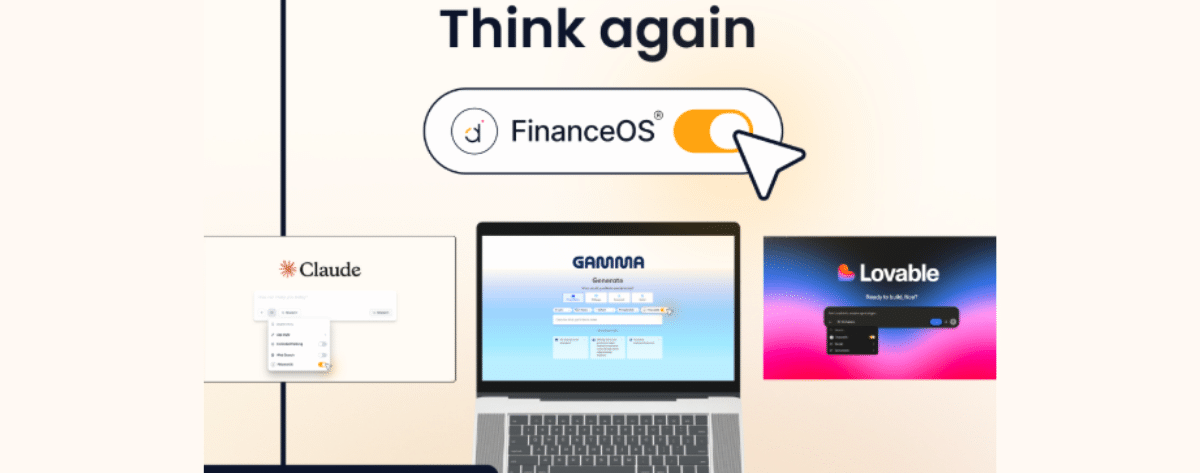
FinanceOS by Datarails provides finance leaders with industry-leading data consolidation and governance, alongside the Model Context Protocol that connects it to any AI.
Want to talk timelines?
MCP for Finance FAQs
Model Context Protocol is a governed interface that connects consolidated financial data to AI tools like Claude, ChatGPT, and Copilot, without losing audit trails, permissions, or compliance controls.
Exported data is static and ungoverned. The moment it leaves the source system, audit trails disappear and compliance controls vanish. AI output is only as accurate as the last upload.
A translation layer that converts raw ERP fields into financial concepts AI can reason over, such as revenue by region or operating margin by business unit, instead of querying raw database columns.
No. MCP is model-agnostic. Once the data layer is in place, it connects to any LLM without rebuilding infrastructure each time.
Finance teams can build reporting workflows, forecasting models, and custom ERP extensions directly from an AI interface, using live governed data, without being constrained by the boundaries of legacy software.