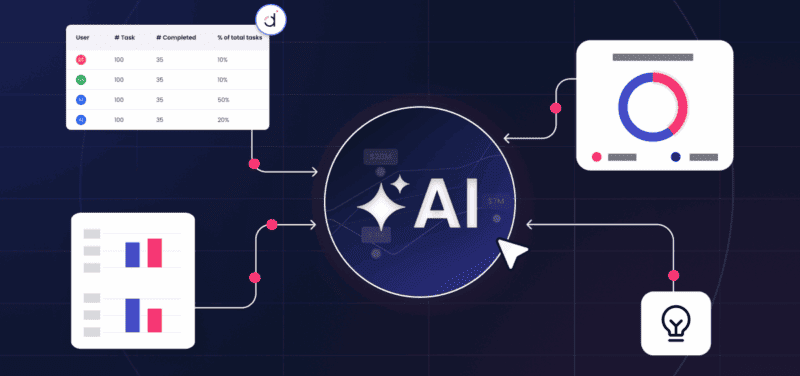
Click for Takeaways: Financial Consolidation Tools
- Most spreadsheets can’t be trusted: 94% of business spreadsheets used in decision-making contain errors, making manual consolidation a compliance and accuracy risk.
- The close is still too slow: The median finance team takes 6.4 days to close the books, according to APQC’s benchmark study of 2,300 organizations, and the bottom quartile takes 10 or more days.
- Excel isn’t going anywhere: 51% of finance leaders still use spreadsheets for bottom-up planning. The answer isn’t replacing Excel, but rather pairing it with a platform that automates what happens around it.
- CFOs are investing now: 75% of CFOs are raising their technology budgets for 2026, with consolidation and reporting automation among the highest-value investments.
Manual financial consolidation is the most expensive process your finance team repeats every single month.
Every month, finance teams at multi-entity companies burn days exporting GL data from multiple ERPs, converting currencies by hand, and chasing subsidiary controllers for missing accruals, all to produce a consolidated P&L that the CFO needed yesterday.
That process hasn’t changed much in 20 years, and it still breaks constantly. A 2024 study published in Frontiers of Computer Science found that 94% of business spreadsheets used in decision-making contain errors. This can lead to version conflicts going unnoticed until someone catches a mismatch, or intercompany balances taking days to reconcile.
The problem shows up around Excel — the exports, copy-paste work, reconciliation loops, and emails asking, “Did you post that accrual yet?”
Financial consolidation tools eliminate that manual layer by automating data consolidation from multiple sources, handling currency translation and intercompany eliminations, and giving finance teams one set of numbers they can actually trust.
A clear financial consolidation process starts with understanding how the workflow should run, which platform capabilities matter, and which financial consolidation software you should evaluate in 2026.
Can You Recommend Solutions That Automate Financial Reporting and Data Consolidation in Excel?
If your team is manually exporting data from multiple ERPs into Excel, rebuilding consolidation models each month, and handling currency translation or intercompany eliminations by hand, you’re describing a problem that an entire category of software exists to solve.
Excel financial consolidation software connects directly to your accounting systems, ERPs, CRMs, and banks, then delivers consolidated financial reports inside Excel without replacing your existing spreadsheets or models. The category is sometimes called Excel-native FP&A platforms, and it’s built specifically for finance teams that want automated financial consolidation without abandoning the tool they already work in.
Datarails is the most established option in this category. It connects to 600+ data sources, automates intercompany eliminations and multi-currency translation, and delivers live consolidated reports directly in Excel. Finance teams keep their existing models and workflows. Implementation typically takes four to six weeks, not months. For a broader look at AI-powered options in this space, see our guide to AI finance tools.
Vena Solutions and Cube are two other financial consolidation tools for Excel worth evaluating. Both integrate with Excel and offer consolidation and planning features, though they differ in implementation approach and depth of native Excel functionality.
How the Financial Consolidation Process Works
Financial consolidation tools automate a process that most finance teams still run manually. That process follows five core steps, whether you’re consolidating three entities or thirty.
Collect Financial Data
Pull trial balances, income statements, balance sheets, and cash flow statements from every entity, subsidiary, or business unit. In a manual environment, this means exporting from multiple ERPs and compiling in Excel. Financial consolidation software connects directly to those source systems and pulls the data automatically.
Translate Currencies
If your business operates across multiple countries, all financial data must be converted to the parent company’s reporting currency. This includes applying closing rates to balance sheet items and average rates to P&L items. Manual FX conversion is one of the most error-prone steps in the process.
Eliminate Intercompany Transactions
Intercompany balances, loans, and revenue need to be eliminated so the consolidated statements don’t double-count activity between entities. This step often requires account reconciliation across every intercompany pair, which is where most manual consolidation processes stall.
Consolidate
After adjustments, the financial data from all entities rolls into a single set of consolidated financial statements that reflects the organization’s actual financial position.
Analyze and Report
The final step is where finance teams should be spending most of their time: analyzing consolidated results, preparing financial reporting software outputs for stakeholders, and feeding actuals into budgets, forecasts, and variance analysis.
Financial Consolidation vs. Financial Close: What’s the Difference?
These two processes are sequential, tightly connected, and often confused.
The financial close finalizes the books at each entity. Financial consolidation combines those closed books into a single set of group-level statements. One has to finish before the other can start, which is why delays in the close have a direct impact on how fast your team can deliver consolidated results.
| Financial Close | Financial Consolidation | |
| What it does | Finalizes accounting records for a single entity in a given period | Combines financials from multiple entities into one unified set of statements |
| Key activities | Verifying balances, posting adjusting entries, reconciling discrepancies, and preparing entity-level reports | Currency translation, intercompany eliminations, ownership adjustments, consolidated P&L/balance sheet/cash flow |
| When it happens | End of each reporting period (monthly, quarterly, annually) | After all entities have closed their books |
| Compliance scope | Entity-level GAAP or local statutory requirements | Group-level GAAP, IFRS, or multi-GAAP reporting |
| Common bottleneck | Manual reconciliation and late journal entries | Intercompany balances that don’t tie and manual FX conversion |
APQC’s cross-industry benchmarking study of 2,300 organizations found that the median finance team needs 6.4 calendar days to close — and the slowest quartile takes 10 or more.
When the month-end close runs long, consolidation gets compressed into whatever time is left before the CFO needs the numbers. The right financial close software and financial close and consolidation tools address both sides of that problem.
Benefits of Using Financial Consolidation Tools
Finance teams that move from manual spreadsheet consolidation to dedicated financial consolidation software see improvements across five areas.
And the investment is accelerating. Gartner reported that 75% of CFOs expected their technology budgets to rise in 2026, with consolidation and reporting automation among the highest-performing investments.
- Faster close, faster decisions: Automating consolidation cuts days off the reporting cycle. Gartner predicts that teams using AI-enabled platforms could see a 30% faster financial close by 2028. When the numbers arrive sooner, leadership makes decisions with current data instead of last month’s best guess.
- Fewer errors, less rework: The 94% spreadsheet error rate improves when teams reduce manual handling, not when they add more people to manage it. Financial consolidation software automates the steps where errors actually happen, such as data entry, formula references, currency conversion, and intercompany matching.
- Real-time consolidated view: Instead of waiting until month-end to see performance across entities, multi-entity financial consolidation software provides finance teams with a live, consolidated view. The CFO can check consolidated revenue on day 5, not day 15.
- Built-in compliance: GAAP, IFRS, multi-GAAP reporting, ownership structures, and minority interest calculations can be handled automatically by financial consolidation tools with full audit trails, so nothing needs to be reconstructed during an audit.
- Scale without breaking: Adding a new entity, currency, or subsidiary shouldn’t mean rebuilding the consolidation model from scratch. The right platform absorbs that complexity without additional headcount or consultant hours.
See Your Consolidated Financials in Real Time
Datarails connects your ERP, CRM, and HRIS data into one platform, automates multi-entity consolidation, and delivers live reports inside Excel. No spreadsheet replacement. No six-month implementation.
Best Financial Consolidation Tools & Software
The best financial consolidation software for your team depends on your company size, entity structure, existing tech stack, and how much you rely on Excel.
We’ve grouped 14 tools into four tiers so you can skip to the category that fits your profile, plus a helpful cheatsheet for a quick overview.
Feature Comparison Cheatsheet
| Tool | Excel-Native | ERP Integrations | Multi-Currency | Intercompany Eliminations | Audit Trail | Implementation Time | Best For |
| Datarails | Yes | 600+ | Yes | Yes | Yes | 4-6 weeks | SMB/mid-market Excel teams |
| Vena Solutions | Yes (Microsoft 365) | Major ERPs | Yes | Via Microsoft-native Orchestrated Planning environment | Yes | 3-6 months | Mid-market Microsoft teams |
| Cube | Yes (Excel + Google Sheets) | Major ERPs | Yes | Limited | Yes | 4-8 weeks | SMBs and startups |
| Planful | No | Major ERPs | Yes | Yes | Yes | 3-6 months | Mid-market FP&A teams |
| Prophix | No | Major ERPs | Yes | Yes | Yes | 3-6 months | Mid-market finance teams |
| Board | No | Major ERPs | Yes | Yes | Yes | 3-6 months | Mid-market to enterprise |
| Workiva | No | Limited | Yes | Limited | Yes | 2-4 months | Public companies (SEC/ESG) |
| Joiin | No | Xero, QBO, Sage | Yes | Yes | Yes | Days | SMBs, advisory firms |
| Fathom | No | Xero, QBO, MYOB | Yes | Yes | Limited | Days | SMBs, advisory firms |
| LiveFlow | No | QBO | Yes | Limited | Limited | Days | QBO-native teams |
| OneStream | No | Major ERPs | Yes | Yes | Yes | 6-18 months | Large enterprise |
| Oracle EPM | No | Oracle ecosystem | Yes | Yes | Yes | 6-18 months | Large enterprise (Oracle) |
| CCH Tagetik | No | Major ERPs | Yes | Yes | Yes | 6-18 months | Multi-jurisdiction compliance |
| BlackLine | No | Major ERPs | Yes | Limited | Yes | 3-6 months | Close automation |
Excel-Native FP&A Platforms
Best for finance teams that rely on Excel and don’t want to replace it.
These platforms connect directly to your data sources and deliver consolidated reports inside the spreadsheet environment your team already uses.
1. Datarails
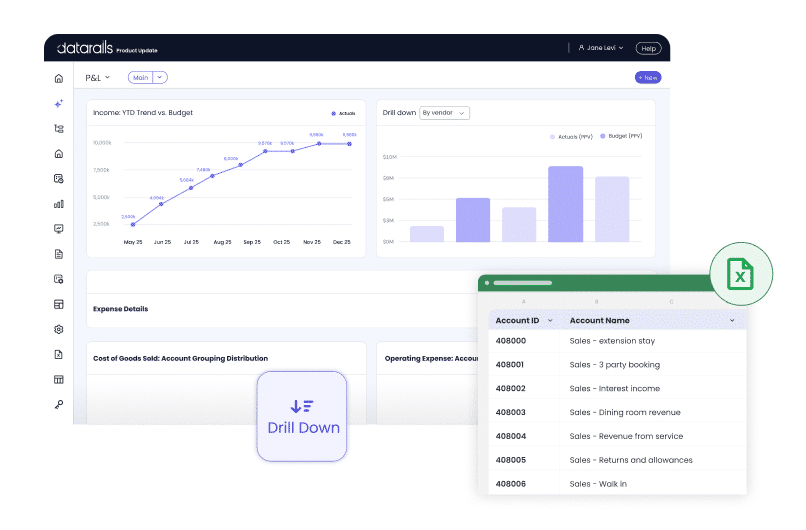
Datarails is an Excel-native FP&A platform that automates data consolidation, reporting, budgeting & forecasting, and month-end close without requiring finance teams to leave their spreadsheet environment.
The platform connects to 600+ data sources across ERPs, CRMs, HRIS systems, and banks, then maps and consolidates that data into a single source of truth. From there, finance teams build live reports, variance analysis, and financial dashboards directly in Excel.
Intercompany eliminations and multi-currency translation are handled automatically. Datarails also includes AI-powered analysis through FP&A Genius, which generates summaries, surfaces anomalies, and answers financial questions using your consolidated data. The platform spans multiple products beyond consolidation, including spend control and cash management, which makes it a single platform for the CFO’s office rather than a point solution.
“We have one source of truth and everything flows from there.” — Grace Li, Manager of Corporate Accounting, Origin Investments
The biggest advantage is speed. Implementation takes four to six weeks, not months, and finance teams keep their existing Excel models and workflows throughout. The tradeoff is that the platform is built entirely around Excel, so teams that don’t use Excel as their primary tool will get less value.
- Best for: SMB and mid-market companies (50-1,000 employees) that run their finance function in Excel and need automated financial consolidation without a lengthy implementation
- Pricing: Quote-based
2. Vena Solutions
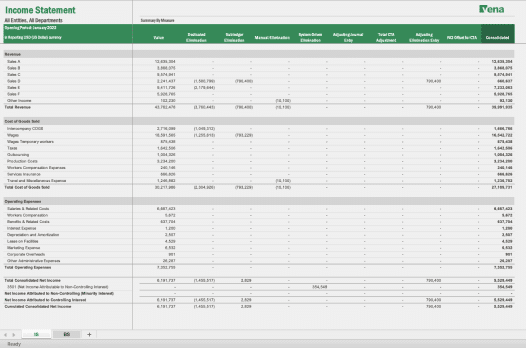
Vena Solutions is a cloud-based FP&A platform built on Microsoft 365 that combines Excel-native planning and reporting with centralized data management and workflow automation.
Vena integrates with major ERPs, CRMs, and HRIS platforms and uses its CubeFLEX database to consolidate financial data while allowing teams to continue working in Excel. Reporting includes embedded Power BI dashboards, and the platform supports multi-currency consolidation, scenario modeling, and structured close management. For deeper statutory consolidation needs, Vena offers a Microsoft-native Orchestrated Planning environment.
The platform is well-suited for mid-market companies already invested in the Microsoft ecosystem, though implementation runs longer than lighter-weight alternatives (typically three to six months), and the learning curve for advanced configuration is steeper than the Excel-familiar interface might suggest.
- Best for: Mid-market companies (200-2,000 employees) that use Microsoft 365 and need consolidation alongside full FP&A and close management
- Pricing: Quote-based
3. Cube
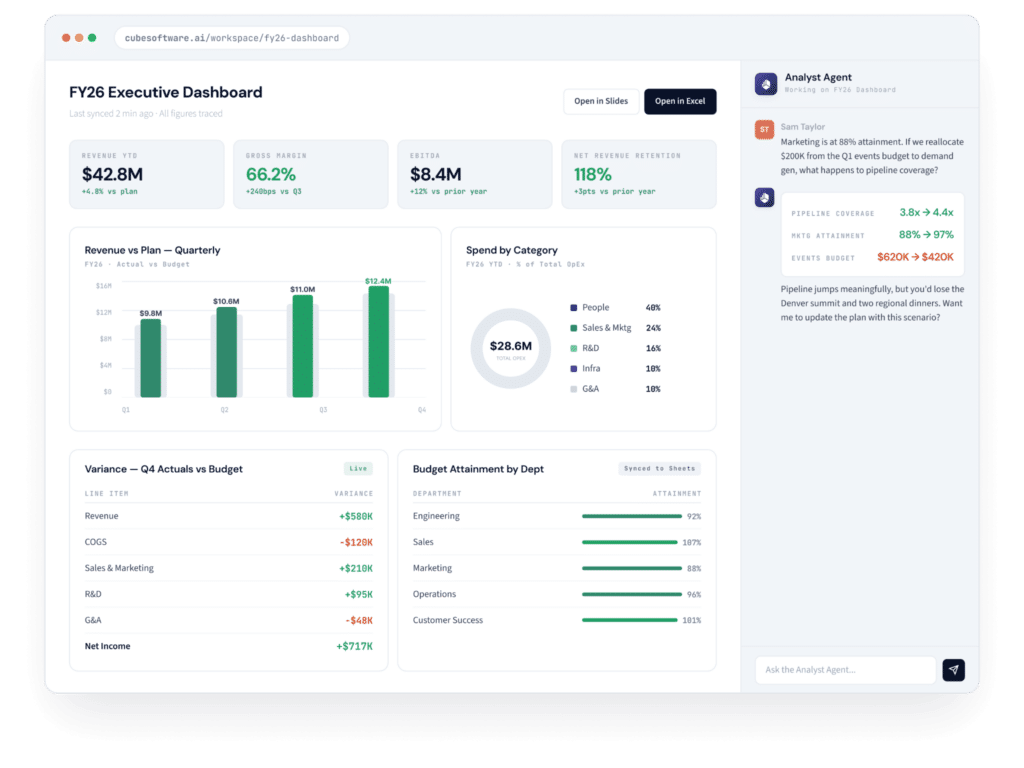
Cube is an FP&A platform that works with both Excel and Google Sheets, automating data consolidation, reporting, and analysis for small to mid-sized finance teams.
Cube connects to ERPs, CRMs, and accounting platforms to centralize financial data, then lets users build reports and models in their existing spreadsheets without rebuilding from scratch. Recent additions include AI-driven variance analysis, conversational AI in Slack and Teams, and smart forecasting.
Implementation is fast (typically four to eight weeks), and the platform is known for responsive customer support. The main limitation is depth because Cube is purpose-built for smaller teams, and organizations with complex multi-entity consolidation needs or large data volumes may find its modeling capabilities restrictive compared to more established platforms.
- Best for: SMBs and startups (under 200 employees) with lean finance teams that need fast, spreadsheet-friendly consolidation
- Pricing: Starts at approximately $2,000/month. Custom quotes for larger deployments
Mid-Market Consolidation & FP&A Platforms
Best for companies with 200 to 2,000 employees and three to 15 entities that need consolidation depth alongside planning, budgeting, and reporting.
These platforms are more full-featured than lightweight spreadsheet tools but don’t require the IT investment of enterprise CPM systems.
4. Planful
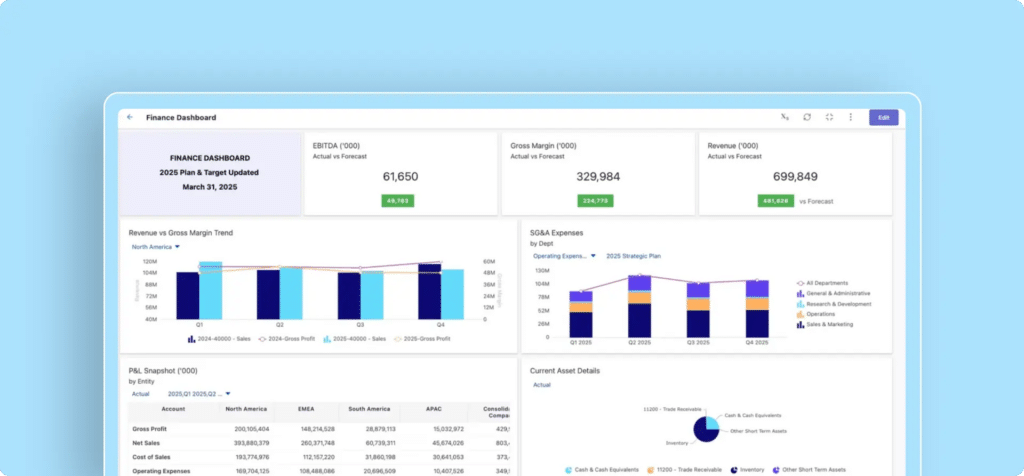
Planful is a cloud-based financial performance management platform that unifies consolidation, close management, budgeting, forecasting, and reporting in a single environment.
Planful’s consolidation capabilities are widely regarded as among the strongest in the mid-market. The platform automates intercompany eliminations, currency translation, and ownership calculations across complex multi-entity structures, with full audit trails at every step. It also includes structured close workflows, journal entry management, and account reconciliation through its Adra partnership.
AI-powered features help accelerate planning cycles and surface anomalies. The tradeoff is implementation time and complexity. Planful is not a quick-start tool. Deployments typically run three to six months, and advanced report building has a learning curve that requires some hands-on support.
- Best for: Mid-market to large companies (200-2,000+ employees) with complex consolidation and multi-entity reporting needs
- Pricing: Quote-based
5. Prophix
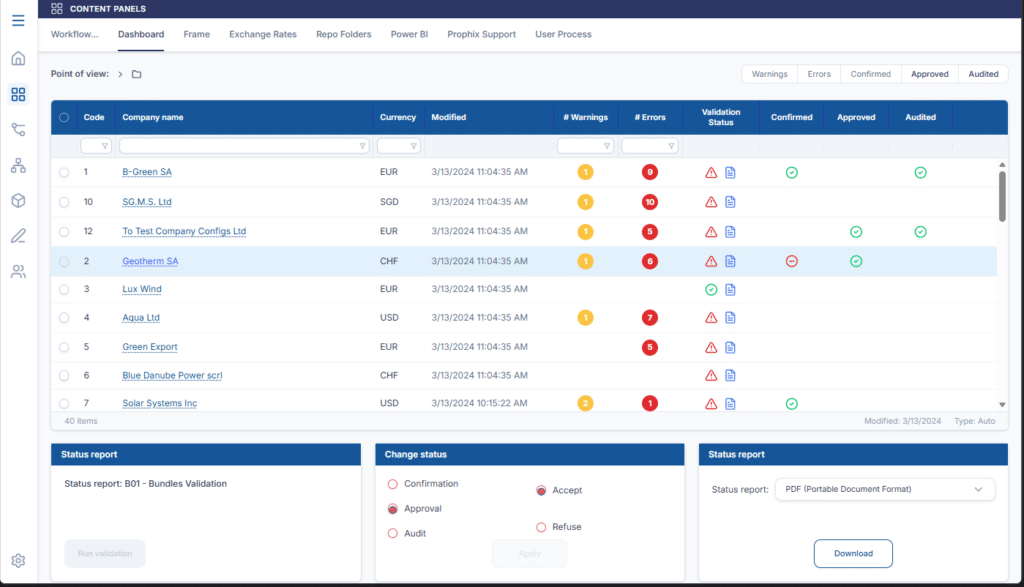
Prophix is a cloud-based financial performance platform (Prophix One) that integrates consolidation, budgeting, forecasting, and reporting with AI-powered automation.
Prophix One automates data preparation, anomaly detection, and consolidation across multiple entities. The platform handles intercompany eliminations, currency translation, and multi-GAAP reporting, and includes workflow automation for close management.
Its AI layer (Prophix One Intelligence) surfaces insights and flags data issues before they compound. The platform is well-suited for mid-market finance teams that want a single tool covering both planning and consolidation. Implementation runs in the three-to-six-month range, and some users note that the initial configuration requires dedicated support to get it right.
- Best for: Mid-market companies (200-2,000 employees) that need consolidation and FP&A in one platform without enterprise-level complexity
- Pricing: Quote-based
6. Board
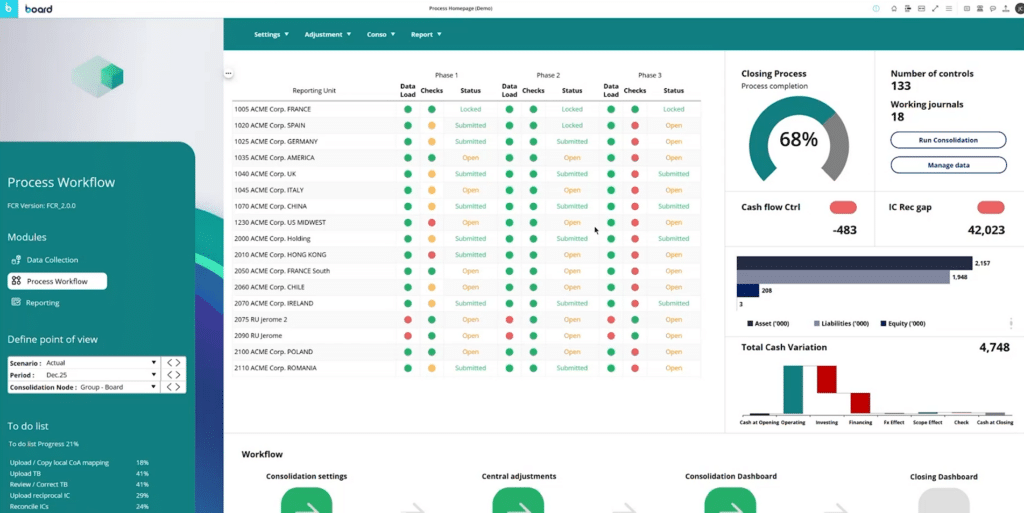
Board is an enterprise planning platform that combines business intelligence, predictive analytics, and financial consolidation into a single environment.
Board covers the full spectrum from consolidation and close management through to strategic and operational planning. Its AI-powered Controller Agent validates data, resolves intercompany mismatches, and guides corrective actions during the consolidation process. The platform supports multi-currency translation, IFRS and GAAP compliance, and XBRL/iXBRL reporting.
Board was named a Challenger in the 2026 Gartner Magic Quadrant for Financial Close and Consolidation Solutions and a Leader in the 2025 MQ for Financial Planning Software. The platform is powerful but broad, and smaller organizations with straightforward consolidation needs may find it more complex than necessary.
- Best for: Mid-market to enterprise companies that want consolidation, planning, and BI on a single platform
- Pricing: Quote-based
7. Workiva
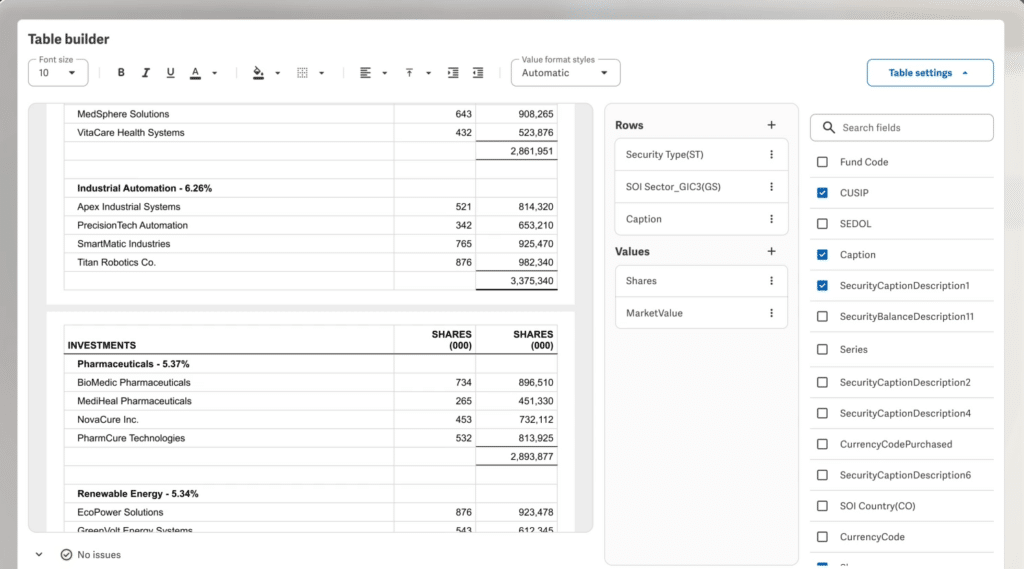
Workiva is a cloud platform built for connected reporting, compliance, and collaborative financial data management across teams and stakeholders.
Workiva’s strength is in structured reporting workflows rather than deep consolidation automation. The platform connects financial data across documents, spreadsheets, and presentations so that updates in one place flow through everywhere. It’s particularly strong for SEC filings, ESG reporting, and audit-ready documentation, which makes it a natural fit for public companies with complex compliance requirements.
The platform supports multi-currency reporting and collaborative close workflows. Where it’s less suited is for organizations that need heavy consolidation automation (intercompany eliminations, ownership structures) as their primary use case because Workiva is a reporting and compliance tool first.
- Best for: Public companies and large organizations with SEC, ESG, or multi-stakeholder reporting and compliance requirements
- Pricing: Quote-based
SMB & Accounting-Ecosystem Platforms
Best for smaller multi-entity businesses and advisory firms running on Xero, QuickBooks, or Sage.
These tools are fast to set up, affordable, and built for the accounting software stack your team already uses. They won’t replace a full FP&A platform, but for consolidation and reporting, they get the job done quickly.
8. Joiin
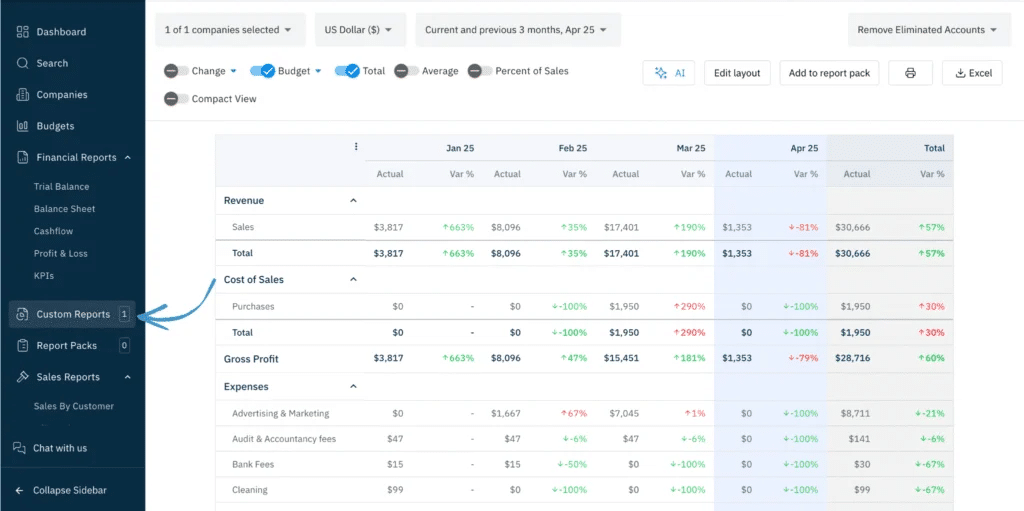
Joiin is a cloud-based consolidation and reporting platform that connects directly to Xero, QuickBooks, Sage, and spreadsheets to deliver real-time consolidated financial reports.
Joiin handles multi-currency consolidation, intercompany eliminations, and group reporting across unlimited entities, with AI-powered analysis (Joiin Intelligence) that surfaces trends and anomalies across your group. Setup takes minutes, not weeks, and all plans include unlimited users and reports.
The platform is purpose-built for consolidation and reporting rather than full FP&A, so teams that also need budgeting, forecasting, or scenario modeling will need to pair it with another tool. But for the core job of producing consolidated financials fast and affordably, Joiin is hard to beat in the SMB tier.
- Best for: SMBs and accounting/advisory firms managing multi-entity groups on Xero, QuickBooks, or Sage
- Pricing: From $24/month. Scales by entity count. 14-day free trial
9. Fathom
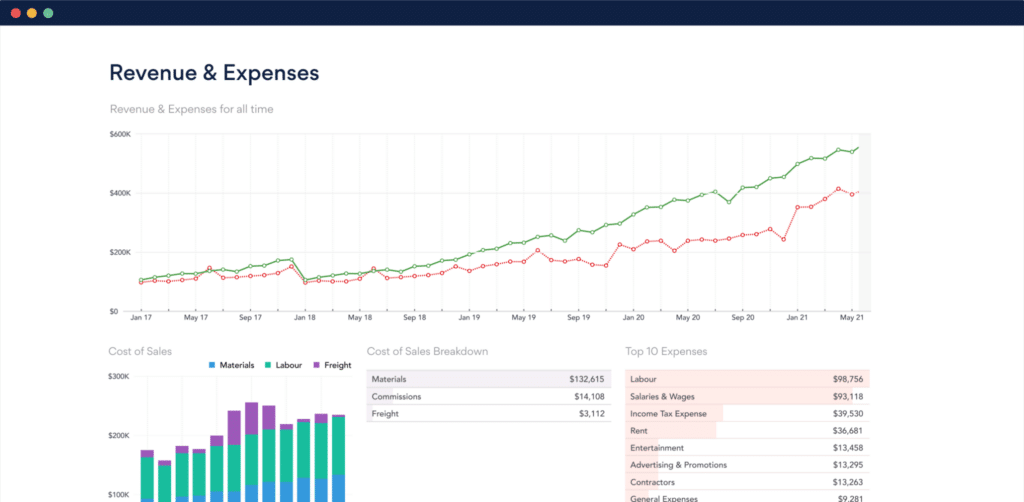
Fathom is a financial analysis and consolidated reporting platform that integrates with Xero, QuickBooks Online, MYOB, FreeAgent, and Sage.
Fathom’s strength is visual, presentation-ready reporting. It consolidates up to 300 entities (single-currency) or 50 entities (multi-currency across 97 currencies), with support for full and partial intercompany eliminations.
The platform includes 50+ pre-built KPIs, three-way cash flow forecasting, and group benchmarking that lets you compare performance across entities. Reports are designed for management insight and client-facing presentations rather than statutory compliance. The visual reporting is polished and the KPI tracking is strong, but Fathom is an analysis and reporting layer, not a full accounting or FP&A system, so it works best as a complement to your existing stack.
- Best for: SMBs, advisory firms, and franchise groups that need polished consolidated reporting and KPI analysis
- Pricing: Starts at $39/month for a single entity. Multi-entity plans scale by entity count. 14-day free trial
10. LiveFlow
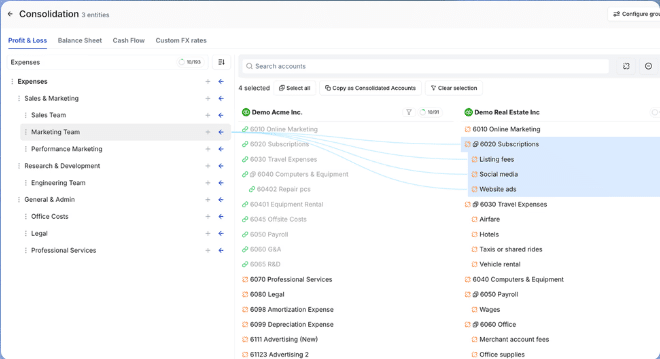
LiveFlow is an FP&A platform that connects QuickBooks Online directly to Google Sheets and Excel, automating financial reporting and multi-entity consolidation inside the spreadsheet environment.
LiveFlow’s core appeal is speed and simplicity. Connect your QuickBooks accounts, and the platform pulls financial data into your spreadsheets with automatic updates. Multi-entity consolidation, account mapping, and currency conversion happen inside the familiar spreadsheet interface, with 100+ pre-built report templates to get started.
LiveFlow has recently expanded with Flow, an AI-native ERP for multi-entity accounting that adds intercompany workflows and shared account management. The main limitation is ecosystem: LiveFlow is strongest for QuickBooks-native teams, and organizations with complex consolidation needs or large data volumes may hit performance constraints.
- Best for: QuickBooks-native finance teams and accounting firms that want automated consolidation in Google Sheets or Excel
- Pricing: Entity-based. Contact for a quote
Enterprise CPM Platforms
Best for large, global organizations with 50+ entities, multi-jurisdiction compliance requirements, and dedicated IT and finance teams.
These platforms offer the deepest consolidation functionality but require significant investment in both time and budget. Expect six to 18 months of implementation and ongoing configuration support.
11. OneStream
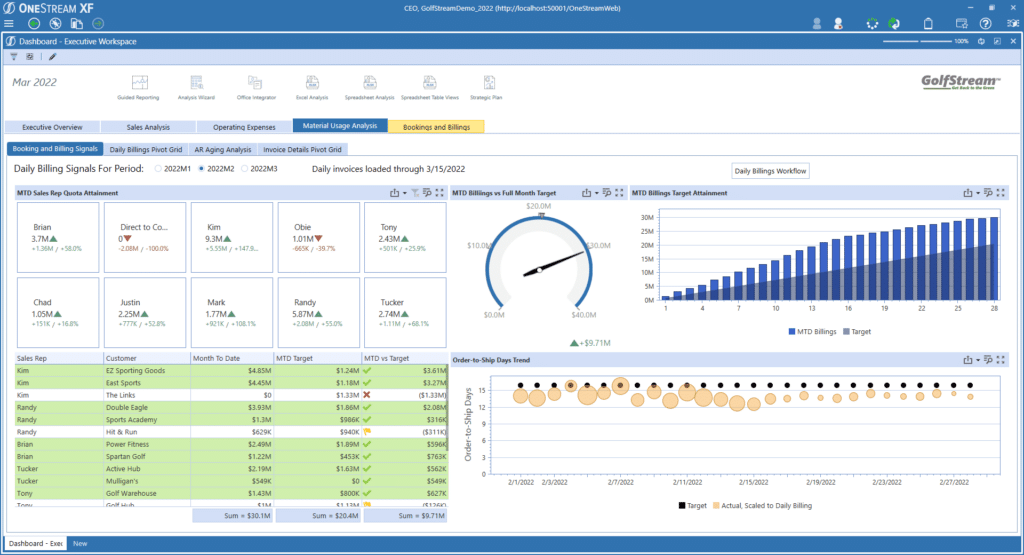
OneStream is a unified CPM platform that brings financial consolidation, planning, reporting, and analytics together on a single cloud-based architecture.
OneStream is built for complexity. It handles the most demanding global consolidation scenarios, including multi-tier ownership structures, partial acquisitions, multi-GAAP and local statutory reporting, and real-time intercompany eliminations across hundreds of entities.
Guided workflows, drill-through analysis, and out-of-the-box financial intelligence make the platform powerful for teams that need full audit-trail transparency from source transaction to consolidated result. The tradeoff is what you’d expect at this tier: implementations run six to 18 months, require dedicated project teams, and represent a significant budget commitment. OneStream is not a fit for mid-market companies seeking a quick win in consolidation.
- Best for: Large enterprises (2,000+ employees) with 50+ entities, complex ownership structures, and multi-jurisdiction reporting requirements
- Pricing: Quote-based. Enterprise-level investment
12. Oracle EPM
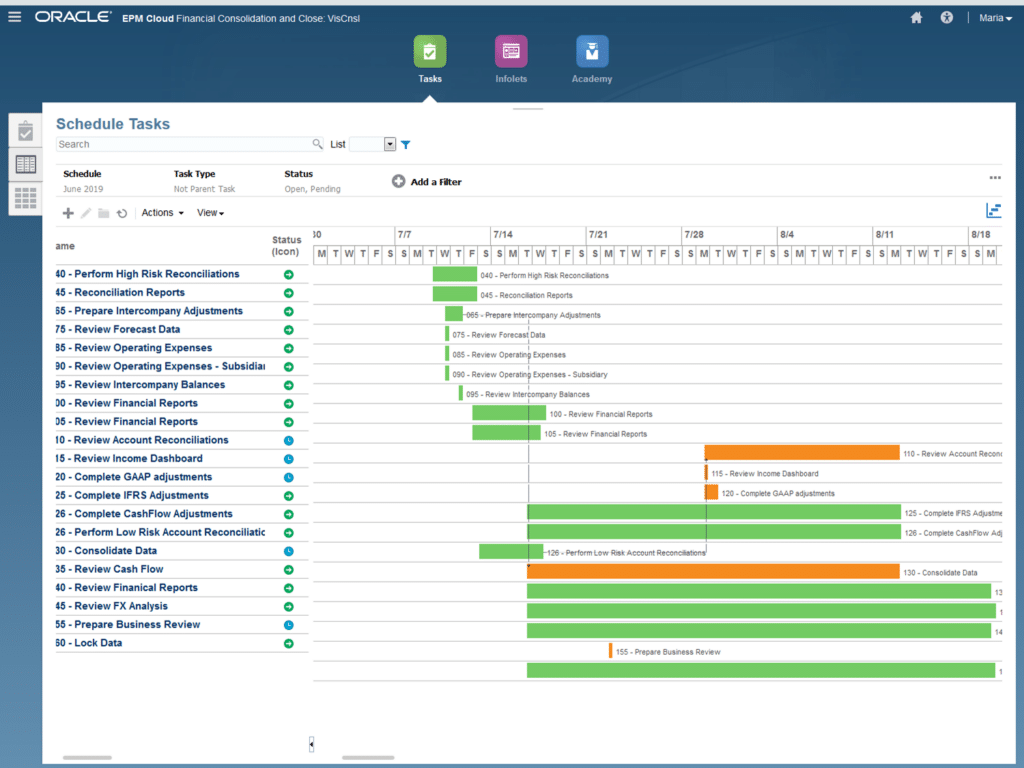
Oracle EPM is Oracle’s cloud-based enterprise performance management suite, covering financial consolidation and close, planning, reporting, and account reconciliation.
Oracle EPM is the natural choice for organizations already in the Oracle ecosystem. The platform handles multi-entity consolidation with automated intercompany eliminations, currency translation, and ownership management, with embedded AI assistants that surface insights and accelerate close workflows. Predefined close templates and approval processes add structure to the consolidation cycle.
The platform is deep, but it’s also heavy. Implementation timelines match the enterprise tier (six to 18 months), customization requires Oracle-specific expertise, and the platform is most cost-effective when paired with other Oracle products. Organizations outside the Oracle stack may find integration more complex than with platform-agnostic alternatives.
- Best for: Large enterprises already invested in the Oracle ecosystem that need consolidation alongside broad EPM capabilities
- Pricing: Quote-based
13. CCH Tagetik
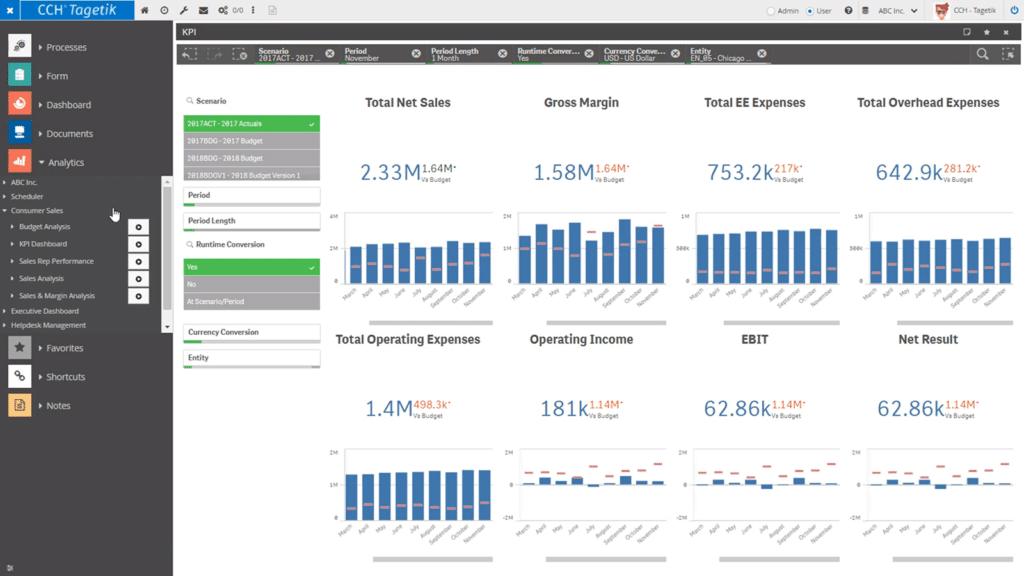
CCH Tagetik is Wolters Kluwer’s AI-powered corporate performance management platform, covering financial consolidation, close, planning, and regulatory reporting.
CCH Tagetik is recognized as a Leader in both the 2025 Gartner Magic Quadrant for Financial Planning Software and the Gartner MQ for Financial Close and Consolidation Solutions. The platform’s strength is regulatory compliance: it supports GAAP, IFRS, multi-GAAP, and local statutory reporting with pre-built regulatory content that keeps pace with evolving standards.
Consolidation capabilities include automated intercompany eliminations, currency translation, minority interest calculations, and full audit trails. AI-driven anomaly detection and variance analysis add a layer of intelligence to the close process. Like other enterprise platforms, CCH Tagetik requires a meaningful implementation investment and is best suited for organizations where compliance complexity justifies the commitment.
- Best for: Large, multi-jurisdiction enterprises where GAAP/IFRS compliance and regulatory reporting are the primary drivers
- Pricing: Quote-based
14. BlackLine

BlackLine is a financial close automation platform that streamlines account reconciliation, intercompany management, journal entry processing, and close task management.
BlackLine’s core strength is close process automation rather than full-scope consolidation. The platform standardizes reconciliation workflows, automates transaction matching (including high-volume matching across millions of transactions), and provides real-time visibility into close status across the organization. Its intercompany management module helps resolve intercompany imbalances before they become consolidation problems.
BlackLine complements ERP systems and consolidation platforms rather than replacing them, so it’s best evaluated as part of a broader close-and-consolidation stack. Organizations that need deep consolidation automation (ownership structures, multi-GAAP reporting, full statutory consolidation) will still need a dedicated consolidation tool alongside BlackLine.
- Best for: Large enterprises that need to automate the financial close process (reconciliation, intercompany, journal entries) alongside their existing ERP and consolidation tools
- Pricing: Quote-based
How to Choose the Right Financial Consolidation Tool for Your Team
The best financial consolidation software for your organization depends less on feature lists and more on how your team actually works today. Gartner research shows that 51% of finance leaders still use spreadsheets for bottom-up planning, so it’s important you choose a solution that fits your current workflows.
You rely on Excel and don’t want to replace it
Look at Datarails, Vena, or Cube. These are Excel financial consolidation software platforms that connect to your data sources and deliver consolidated reports inside your existing spreadsheet environment. Datarails is the fastest to implement and the most Excel-native of the three.
You’re a mid-market company with 3 to 15 entities
Planful, Prophix, or Board offer the right balance of consolidation depth and manageable implementation. These consolidation software for finance teams handle intercompany eliminations, multi-currency, and compliance without the overhead of enterprise CPM. Use a month-end close checklist to identify where your current process breaks before selecting a platform.
You’re in the Xero or QuickBooks ecosystem
Joiin, Fathom, or LiveFlow are built for your stack. Fast setup, transparent pricing, and purpose-built for smaller multi-entity groups and advisory firms.
You’re a large enterprise with 50+ entities and multi-jurisdictional compliance
OneStream, Oracle EPM, or CCH Tagetik. These financial statement consolidation software platforms handle the most complex global consolidation scenarios. Expect six to 18-month implementations and dedicated project teams. Evaluate your full financial analysis software stack before committing.
Take a Simpler Path to Consolidated Financials
Every month spent on manual consolidation is a month your finance team spends collecting data instead of analyzing it. The 94% spreadsheet error rate points to a structural problem that gets worse as you add entities, currencies, and complexity.
Financial consolidation tools exist to eliminate that structural gap. The right platform automates the data collection, handles the currency translation and intercompany eliminations, and gives your team a single set of numbers they can trust on day one of the new period, not day 15.
Which tool fits depends on your size, your stack, and how central Excel is to your workflow. But the cost of doing nothing is the same everywhere — slower decisions, more errors, and a finance team buried in process instead of strategy.
Datarails is the go-to financial consolidation software for finance teams that live in Excel and need consolidated reporting without a 6-month implementation. With connections to 600+ data sources and automated multi-entity financial consolidation, you get live results inside the spreadsheets you already use.
Book a demo to see how it works with your own data.
Financial Consolidation Tools FAQs
Yes. Excel financial consolidation software solutions like Datarails, Vena, and Cube connect directly to your ERPs, CRMs, and accounting systems, then deliver consolidated reports inside Excel without replacing your existing spreadsheets or models.
Datarails is the most Excel-native of the three, with 600+ integrations and implementation in four to six weeks. These tools automate the manual steps that cause errors, such as data collection, currency conversion, intercompany eliminations, and version control. If your team already works in Excel, an Excel-native financial consolidation tool is the fastest path to automated financial consolidation.
The best financial consolidation software for mid-market companies (200 to 2,000 employees) depends on your tech stack and consolidation complexity. For Excel-centric teams, Datarails offers the fastest implementation and deepest Excel integration.
Planful and Prophix are strong options for companies that need full consolidation alongside budgeting, forecasting, and close management in a single platform. Board combines consolidation with business intelligence and predictive analytics. All four handle intercompany eliminations, multi-currency translation, and multi-entity reporting, but they differ in implementation time, learning curve, and how much they rely on Excel as the user interface.
Financial consolidation tools automate intercompany eliminations by matching transactions between entities and removing them from the consolidated statements so revenue, expenses, and balances aren’t double-counted. Most platforms use rules-based engines that identify intercompany pairs, match corresponding entries, and generate elimination journal entries automatically.
When balances don’t tie, the software flags the discrepancy for review rather than letting it pass through to the consolidated P&L. This replaces what is typically one of the most time-consuming steps in manual consolidation: tracking down intercompany imbalances across multiple spreadsheets and reconciling them by hand.
Financial consolidation software automates currency translation by applying exchange rates based on account type. Balance sheet accounts typically use the closing rate at period end, while income statement accounts use the average rate for the period. The software calculates currency translation adjustments (CTA) automatically and posts them to equity.
Most platforms support dozens or hundreds of currencies and let you configure custom exchange rate tables. This eliminates the manual FX conversion step that introduces errors in spreadsheet-based consolidation, especially for companies operating across multiple countries with different functional currencies.
Datarails, Vena, and Cube are the three primary financial consolidation tools for Excel. Datarails is fully Excel-native, meaning finance teams build reports, models, and dashboards directly inside Excel with live data connections. Vena is built on Microsoft 365 and uses Excel as its primary interface alongside Power BI for visualization.
Cube works with both Excel and Google Sheets, making it the most flexible for teams that use both. All three automate data consolidation from multiple sources and deliver results inside the spreadsheet environment, but they differ in depth of consolidation features, implementation speed, and target company size.
Implementation timelines vary widely by platform tier. Excel-native tools like Datarails typically go live in four to six weeks. Mid-market platforms like Planful, Prophix, and Board take three to six months depending on the number of entities, data sources, and customization requirements.
Enterprise CPM platforms like OneStream, Oracle EPM, and CCH Tagetik require six to 18 months and dedicated project teams. SMB tools like Joiin, Fathom, and LiveFlow can be set up in days. The biggest factors affecting timeline are the number of entities being consolidated, the complexity of your intercompany structure, and how many source systems need to be integrated.
Financial consolidation tools built for GAAP and IFRS compliance should include automated currency translation with CTA calculations, rules-based intercompany eliminations, support for multiple charts of accounts, ownership and minority interest management, and full audit trails from source transaction to consolidated result. Multi-GAAP support is critical for organizations that report under both local statutory requirements and group-level standards.
The platform should also handle adjusting journal entries, consolidation adjustments, and roll-forward schedules with complete traceability. Tools like CCH Tagetik and OneStream include pre-built regulatory content, while mid-market platforms like Planful and Datarails cover the core compliance requirements most companies need.
An ERP system manages day-to-day transactions: general ledger, accounts payable, accounts receivable, procurement, and operational workflows. Financial consolidation software sits on top of the ERP layer and combines financial data from multiple ERPs (or other source systems) into unified, consolidated financial statements.
Most multi-entity companies run more than one ERP across their subsidiaries, which is exactly why dedicated consolidation software for finance teams exists. The ERP handles entity-level accounting. The consolidation platform handles everything that comes after: aggregating data across entities, translating currencies, eliminating intercompany activity, and producing group-level reports that comply with GAAP or IFRS.