Click for Takeaways: Generative AI in Finance
- AI outputs are flowing into board packs and forecasts, yet most finance teams cannot produce a defensible trail behind them
- AI use in finance has doubled in two years while fewer than half of organizations can produce AI-related audit evidence on demand.
- Auditors will not ask whether you used AI; they will ask three things: who had access, show the query log, and was the data consolidated before the model saw it, and most current workflows fail all three.
- File-upload and service-account workflows open a governance gap by default: the model processes whatever is in the file regardless of the uploader’s permissions, and a shared credential records the account, not the person, which is why most executives admit they could not pass an independent AI governance audit today.
- An AI model never validates its own inputs, so if eliminations, FX, or allocations were not applied first, the number looks authoritative and is simply wrong, a real exposure when only a small minority of organizations feed AI from a single, governed source of truth.
- Getting ahead means moving the controls to the data layer: enforce each user’s permissions on every query, log every interaction (user, model, data, timestamp, output), and consolidate before the model sees anything, all through a model-agnostic finance MCP server, built before the audit arrives rather than under its pressure.
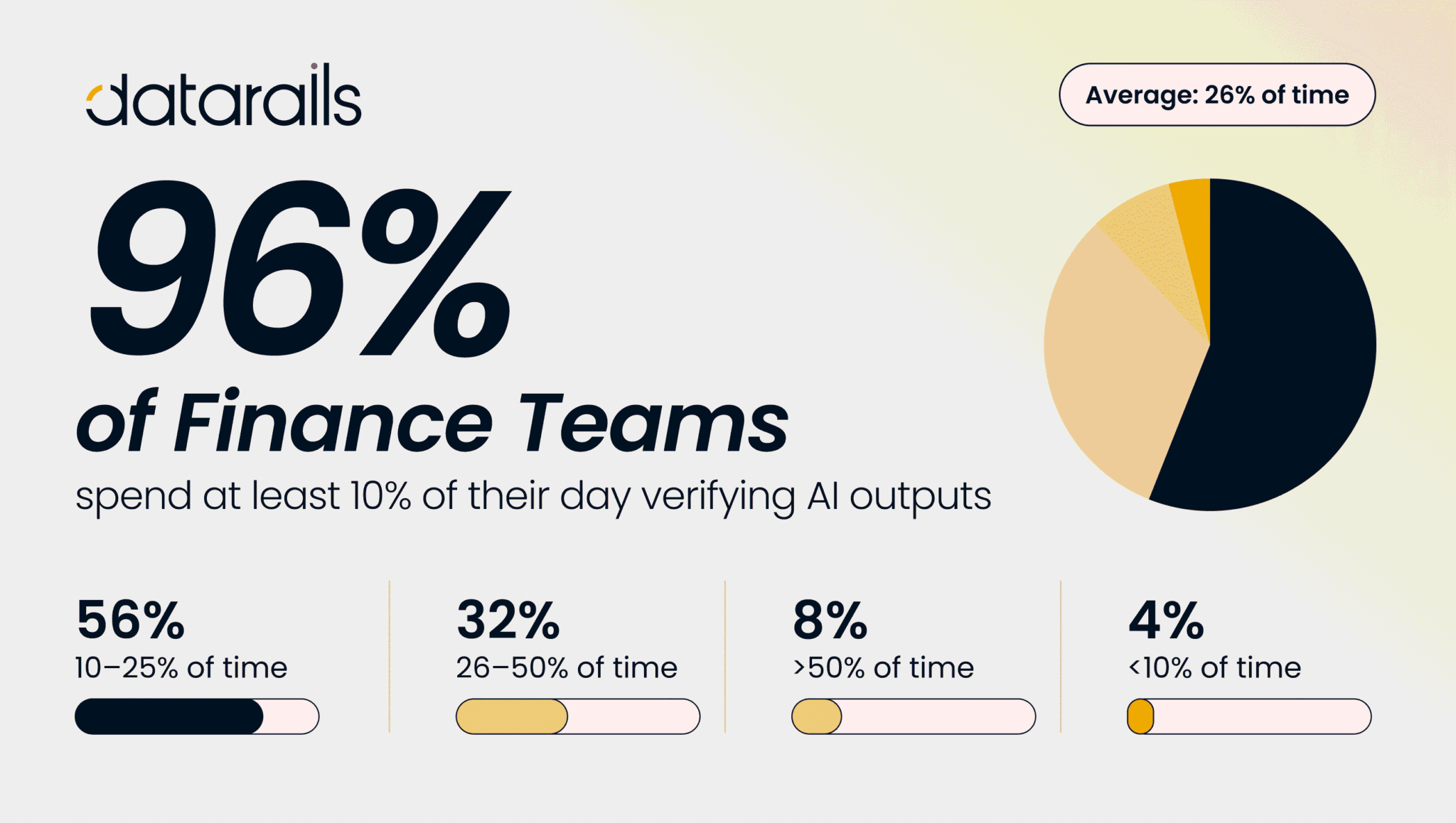
The audit conversation around generative AI in Finance is coming. For most finance functions it has not arrived yet, but the conditions that trigger it are already in place: AI tools are producing outputs that feed into board packs, forecasts, and management accounts, and almost none of those outputs have a defensible audit trail behind them. Active AI use in the finance function has doubled in two years, yet only 42% of organizations can produce AI-related audit evidence efficiently, which is exactly the gap auditors will probe first.
When it does arrive, auditors will not ask whether the finance team used AI. They will ask three specific questions. Finance functions that have built the right infrastructure will answer them in minutes. Those that have not will spend days reconstructing what happened, and may not be able to reconstruct it at all.
The First Question: Who Had Access to What?
Auditors understand access controls. They test them every cycle. What they will not accept is a governance gap that opens the moment financial data moves into an AI workflow.
In most finance functions today, that gap exists by default. 78% of executives say they are not confident they could pass an independent AI governance audit within 90 days. File-upload workflows bypass role-based permissions entirely: The model processes whatever is in the file, regardless of whether the person who uploaded it was authorized to see all of it. Service account credentials used for direct data connections grant access based on the credential, not the user who initiated the session.
Datarails FinanceOS closes this at the data layer. Every AI query, whether initiated through Claude, ChatGPT, or Microsoft Copilot, is evaluated against the permissions of the user who initiated it before any data is returned. The access controls that apply to human sessions apply equally to AI sessions. There is no gap to explain to an auditor.
The Second Question: Show Me the Query Log
An AI model produces a board pack figure. The auditor selects it. The question is not whether the number is right, it is whether you can prove where it came from.
In a file-upload workflow, that proof does not exist. There is no log of which file was used, which version, as of which date, or what the model was asked. In a direct API workflow, ERP logs record that a service account made a query, not which user initiated it, what prompt the model received, or what it returned.
Datarails FinanceOS logs every query through its finance MCP server at the protocol level. For every AI interaction, the log captures the initiating user, the model used, the data requested, the timestamp, and the output returned. That log is exportable without IT involvement. When an auditor selects a figure and asks where it came from, the answer is a single export – not a cross-system investigation.
This is what audit-ready AI infrastructure looks like. It is not a reporting feature. It is captured at the protocol layer, before data reaches the model, on every query.
The Third Question: Was the Data Consolidated Before the Model Saw It?
This is the question most finance functions are not prepared for, because it requires understanding what the model actually received, not just what it produced. The exposure is widespread: just 19% of organizations draw the majority of their AI inputs from a single, centralized source of truth, so most models are reading fragmented, partially consolidated data.
An AI model does not validate its inputs. If the data it received had not had intercompany eliminations applied, the revenue figure it produced includes intercojust
mpany sales, one of the silent errors that distinguishes a properly governed financial consolidation process from a flat export.. If FX adjustments were missing, the group figure mixes currencies. If the data came from a single entity in a multi-entity structure, the output looks like consolidated analysis but reflects only a subset of the business. The model produces a number. The number looks authoritative. The number is wrong.
Datarails FinanceOS applies full consolidation logic, eliminations, FX adjustments, and allocations, at the finance operating system layer before any query reaches the model. What the AI receives is the same consolidated view the CFO signs off on. The auditor can verify that the data handed to the model was correct, not just that the model processed it correctly.
The Checklist Auditors Will Work Through
| Control | What it requires | What the auditor tests |
| User-level access controls | Role-based permissions at the data layer | Can any user query data outside their permissions via AI? |
| Query audit log | Single log: user, model, data, timestamp, output | Can you produce a complete log for any AI-generated figure? |
| Pre-query consolidation | Eliminations, FX, allocations applied before query | Was the data the model received fully consolidated? |
| Output data lineage | Every output traceable to source fields | Can you trace a figure back to its source without manual reconstruction? |
| Model-agnostic governance | Controls apply regardless of AI tool used | Do controls extend when the AI tool changes? |
Getting Ahead of the Conversation
Finance functions that build this infrastructure before the audit conversation arrives are not being cautious; they are making generative AI in Finance usable at scale. The governance layer described here is not a constraint on what AI can do. It is what makes AI outputs defensible in a regulated, audited environment.
The CFOs who will regret their AI deployments are not the ones who moved slowly. They are the ones who connected financial data to AI before these controls were in place, and discovered the gaps under audit pressure rather than on their own terms.
Datarails FinanceOS was built to close exactly these gaps. It connects to more than 600 data sources, applies full consolidation logic before any query reaches a model, enforces role-based access at the data layer, and logs every AI interaction through its finance MCP server. For finance functions that are already using AI, or planning to, it is the governed data infrastructure that makes those deployments auditable, traceable, and defensible when the questions above get asked.
Generative AI in Finance FAQs
Three things: evidence that access controls applied to AI sessions as they do to human sessions, a complete query log for every AI interaction, and confirmation that the data the model received had full consolidation logic applied before the query was sent.
FinanceOS enforces role-based access at the data layer, logs every AI query through its finance MCP server, and applies consolidation logic – eliminations, FX adjustments, allocations – before data reaches any AI model. Every AI output produced through FinanceOS is traceable back to its source without manual reconstruction.
A Model Context Protocol server is the governed connection layer between an AI model and financial data sources. Every query passes through it, where access controls are enforced and interactions are logged. It works with any AI tool – Claude, ChatGPT, Microsoft Copilot, and others.
Because an AI model cannot detect that the data it received was incomplete. If eliminations, FX adjustments, or allocations were not applied before the query, the model produces analysis based on figures that do not reflect the consolidated financial position, and the error is invisible in the output.
Yes. Governance built for a single AI tool creates a false sense of security. Controls need to be enforced at the data layer so they extend automatically to every AI application in finance that connects, regardless of whether that is the tool in use today or one adopted next quarter.