Click for Takeaways: Month-end Close Software
- Most teams can’t close in under a week: Only 59% of organizations complete their monthly close within six business days.
- AI will speed up the close by 30%: Finance teams using cloud ERP with embedded AI will see a 30% faster financial close by 2028.
- AI-enabled tools are taking over ERP spending: AI-enabled tools will account for 62% of cloud ERP spending by 2027, up from 14% in 2024.
- 55% are targeting a touchless close: More than half of finance functions are aiming for a fully touchless close.
Strong revenue, clean audit, and then the close drags into week two. Sound familiar?
Your controller is chasing accruals, accounting is reconciling across five entities, and the CFO is waiting on a financial package that should have been done days ago. By the time the close wraps, the numbers are already stale.
It’s not a people problem, but the effects of a broader process problem. In a Gartner survey, 86% of finance functions said they want a faster, real-time close.
Month end close software fixes this. Not just faster reconciliations, but a different way to close the books. Automated workflows. Connected data. Real-time visibility into every task and bottleneck.
The financial close process is changing as teams adopt new tools and workflows. See how month-end close software works, what’s shifting in the financial close landscape in 2026, and which financial close software platforms stand out.
Why the Month-End Close Still Takes Too Long
Most finance teams already know their close process is slow. The more important question is why.
According to Ventana Research, only 59% of organizations complete their monthly close within six business days. The rest take longer, and the reasons tend to be the same across companies, regardless of size or industry:
- Manual and time-consuming processes: Finance teams still rely on spreadsheets to consolidate data, reconcile accounts, and track close tasks. Every step involves manual work. Export from one system. Copy into another. Cross-check the numbers. Fix the errors. Repeat. It’s slow, and it introduces risk at every handoff.
- Disconnected financial systems: Financial data lives across multiple platforms. ERP, CRM, billing, HRIS, banking. Without integration, teams have to pull and reconcile data from each source manually. Nothing talks to each other. And when one source is late or wrong, it holds up everything downstream.
- No real-time visibility: Controllers often can’t see where the close stands. Which reconciliations are done? Which tasks are stuck? Where are the bottlenecks? Without a single view, the only way to find out is to ask around. That eats time and delays decisions.
And it’s not just internal bottlenecks. The data finance needs to close often sits with people outside finance, such as sales operations, HR, and procurement, and chasing those inputs manually stretches timelines further.
This leads teams to spend most of their time collecting and reconciling data rather than delivering insights. Leadership gets financial results late, and by the time the numbers land, they’re already stale.
Core Capabilities of Month-End Close Software
Not every platform works the same way. But the best month-end close software shares a common set of capabilities that address the problems outlined above. Here’s what to look for:
- Task and workflow management: Close management software centralizes every close task into one view. Each task has an owner, a deadline, and a status. When one step finishes, the next person is notified automatically. No email chains. No status meetings. Just a clear sequence that moves the close forward. This is the foundation of the month-end close process automation.
- Automated reconciliation: Matching transactions across bank accounts, subledgers, and ERPs is one of the most time-consuming parts of the close. Month-end close automation tools handle transaction matching at scale, flagging exceptions instead of requiring manual review of every line. This is where accounting close automation delivers the biggest time savings.
- Data consolidation: Finance teams pull numbers from ERPs, CRMs, billing platforms, HRIS, and banking systems. Financial close software connects to these sources and supports data consolidation by automatically creating a single source of truth. No more exporting, copying, and pasting between spreadsheets.
- Real-time dashboards and reporting: Controllers need to see where the close stands at any moment. Financial dashboards built into close platforms show progress by task, by owner, and by entity. Bottlenecks surface early, not on day five. And when the close wraps, financial reporting is ready to go without additional manual work.
- Audit trails and compliance: Every action during the close should be logged. Who completed a reconciliation, when it was approved, and what changed. Accounting close software builds this trail automatically, which makes audits faster and reduces compliance risk.
- Variance analysis: The close isn’t just about getting the numbers right, but also understanding what changed. Built-in variance analysis helps finance teams flag unexpected swings in revenue, expenses, or margins before the books are finalized.
Key Use Cases for Month-End Close Software
The capabilities above sound good on paper. But how do finance teams actually use month-end close software day to day?
Multi-Entity Close
Companies with multiple subsidiaries, business units, or legal entities face a compounding problem. Each entity has its own books. Each needs reconciliation. And everything has to roll up into a consolidated view. Financial consolidation tools built into close platforms handle intercompany eliminations, currency conversions, and entity-level reporting without manual spreadsheet work.
Accelerating Close Timelines
This is the most straightforward use case. Teams that currently take 10+ days to close want to get to five. Or three. Month end close automation removes the manual handoffs and waiting that stretch the timeline. Tasks flow automatically. Reconciliations run in parallel instead of in sequence.
Real-Time Reporting for Leadership
CFOs and boards shouldn’t have to wait until the close is done to see how the business performed. Best month end close software platforms give leadership access to live dashboards and preliminary results while the close is still in progress. No more waiting a week for a financial package.
Audit Readiness
For companies that face regular audits, close software creates a built-in paper trail. Every reconciliation, journal entry, and approval is logged and timestamped. When auditors come knocking, the documentation is already there.
Scenario Planning and Forecasting Alignment
A faster close means fresher actuals, and fresher actuals feed better forecasts. Teams that close quickly can plug real numbers into their financial forecasting models sooner, which improves the accuracy of forward-looking plans.
The close and the forecast stop being separate workflows and start feeding each other. Plus, scenario planning becomes more reliable when it’s based on numbers that are days old, not weeks old.
How Financial Close Is Changing in 2026
The month-end close has followed the same basic playbook for decades. Collect data. Reconcile. Adjust. Report. But that playbook is shifting fast.
From Manual to Automated
The first wave of change was straightforward. Replace manual spreadsheet work with software that automates reconciliations, routes tasks, and tracks progress. This alone cut close timelines significantly for early adopters. But automation only gets you so far when the underlying process is still periodic and reactive.
From Automated to AI-Driven
The next wave is already here. AI in FP&A is reshaping how finance teams handle exceptions, flag anomalies, and match transactions. Instead of rules-based automation that follows a script, AI-driven tools learn patterns and self-correct. According to Gartner, finance teams using cloud ERP with embedded AI will see a 30% faster financial close by 2028. And the investment is following. Gartner also forecasts that AI-enabled tools will account for 62% of cloud ERP spending by 2027, up from just 14% in 2024.
From Periodic Close to Continuous Close
The biggest shift is philosophical. Instead of treating the close as a monthly event, leading finance teams are moving toward a continuous close. Reconciliations happen throughout the month. Exceptions are resolved in real time. By the time the period ends, the books are nearly done. In a Gartner survey, 55% of finance functions said they’re targeting a fully touchless close. That’s ambitious, but it signals where the market is headed.
Financial close automation software is no longer just about speed, but rather building a close process that runs continuously, catches problems early, and delivers insights the moment the period ends. Financial modeling tools and forecasting platforms are increasingly connected to the close, so actuals flow directly into planning without manual handoffs.
Top Month-End Close Software & Platforms (2026)
The right month-end close software depends on your team’s size, complexity, and existing tech stack. Here are 15 platforms worth evaluating in 2026:
1. Datarails
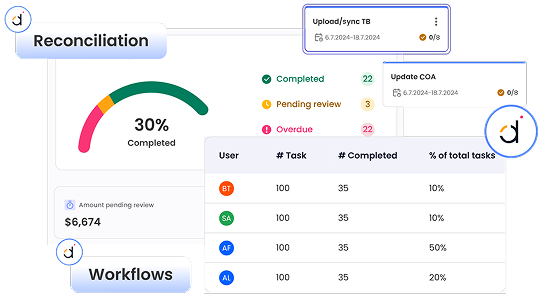
Datarails is an FP&A platform that includes financial close and consolidation as part of a broader suite. It connects directly to Excel, pulling data from ERPs, CRMs, and banking platforms into a single source of truth. Finance teams can automate reconciliations, consolidate multi-entity data, and generate real-time reports without leaving their spreadsheets.
Best for: Finance teams that want to automate the month-end close while keeping Excel as their primary workspace. Pricing is available on request.
Pros
- Works natively inside Excel, so adoption is fast
- Consolidates data from multiple systems automatically
- Covers close, reporting, forecasting, and budgeting in one platform
- Quick implementation without consultants
Cons
- Broader FP&A platform, not a dedicated close-only tool
- Might be more than needed for teams only looking for task management
2. BlackLine
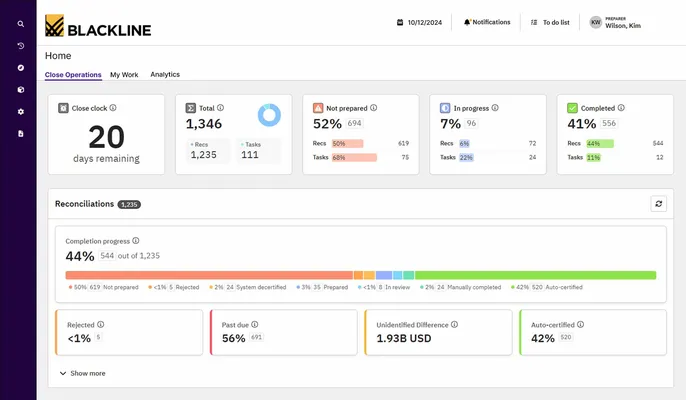
BlackLine is a cloud-based platform focused on automating the entire financial close process for mid-size to large enterprises. It covers account reconciliations, transaction matching, journal entry management, and task tracking within a single system. BlackLine uses AI-powered matching to process high volumes of transactions and flag exceptions automatically. It also supports continuous accounting, which spreads close tasks throughout the month instead of piling them up at period end.
Best for: Enterprise teams with complex, high-volume reconciliation needs. Pricing is custom and typically starts at $50,000+ annually for mid-size deployments.
Pros
- Strong automation for reconciliations and transaction matching
- Real-time dashboards with drill-down visibility into close progress
- Robust audit trail and compliance features
- Supports continuous accounting workflows
Cons
- Pricing is high for smaller teams
- Implementation can be complex and time-consuming
- Some users report data sync lag with connected ERPs
3. FloQast
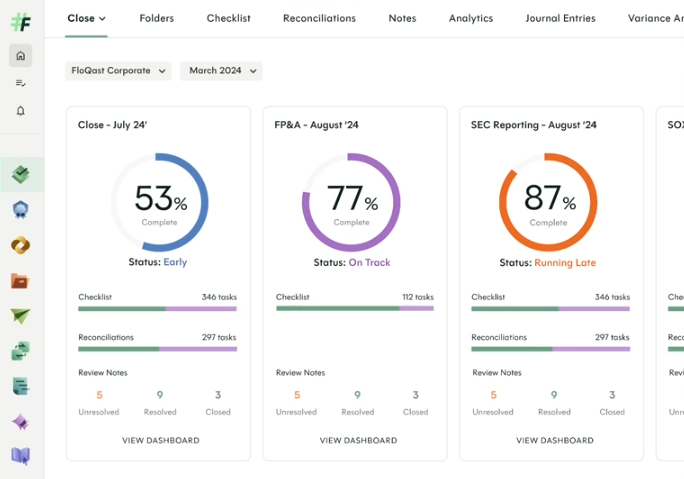
FloQast is a close management platform built by accountants for accountants. It organizes the month end close through task checklists, account reconciliation workflows, flux analysis, and ERP integration. FloQast is known for being intuitive and easy to adopt, especially for teams used to working in Excel. It integrates with 40+ ERPs including NetSuite, QuickBooks, and Sage Intacct.
Best for: Mid-market accounting teams that need a structured, checklist-driven approach to close management. Pricing starts around $12,000–$30,000 annually, depending on team size and modules.
Pros
- Easy to learn and fast to implement
- Strong checklist and task management for close visibility
- AI-powered flux analysis and reconciliation features
- Highly rated across G2, Capterra, and Gartner Peer Insights
Cons
- Not a full FP&A suite. Focuses on close management only
- Consolidation and advanced modules are separately priced
- Some users report slow loading with large reconciliation sets
4. Adra by Trintech
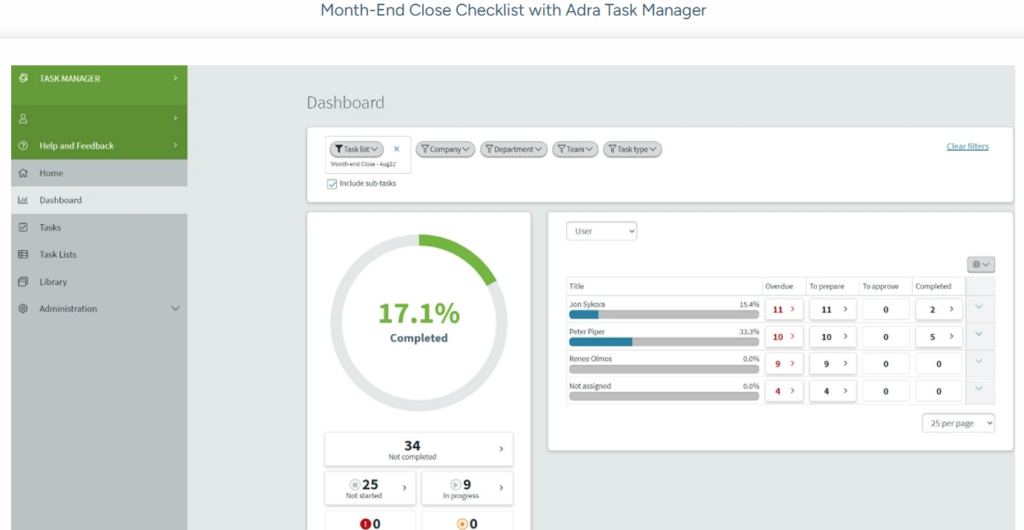
Adra is a cloud-based financial close automation software solution built for mid-market organizations. It covers balance sheet reconciliations, multi-way transaction matching, close task management, journal entries, and analytics. Adra integrates with ERPs like NetSuite, SAP, and Microsoft Dynamics without requiring data reformatting. It also offers reporting through Power BI, Excel, and Tableau.
Best for: Mid-size companies that need reconciliation automation and close task management without enterprise-level complexity. Pricing is subscription-based and available on request.
Pros
- Strong multi-way transaction matching engine
- User-friendly interface with fast implementation
- Flexible ERP integrations with no data reformatting required
- Rated 4.5/5 on G2
Cons
- Interface can slow down with larger reconciliation volumes
- Less suited for organizations needing full consolidation or FP&A capabilities
- Trintech’s enterprise product (Cadency) is separate, so scaling up means switching platforms
5. Workiva
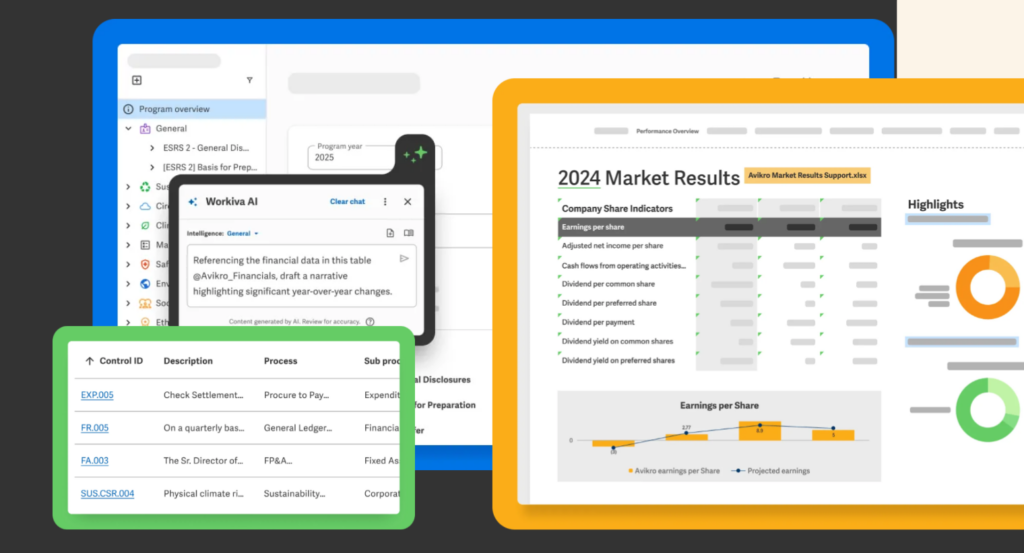
Workiva is a governance-first platform that integrates financial close management with regulatory reporting and compliance. Its standout feature is data linking, which allows users to connect spreadsheet data directly into financial statements, footnotes, and disclosures, with changes flowing automatically across connected documents. This makes it popular with public companies managing SEC filings alongside the close.
Best for: Organizations with heavy regulatory reporting requirements, especially publicly traded companies. Pricing is custom and typically enterprise-level.
Pros
- Strong data linking across financial statements and disclosures
- Built-in version control and collaboration tools
- Audit-ready documentation by design
- Handles SOX compliance workflows natively
Cons
- Primarily a reporting and compliance tool, not a full close automation platform
- Less focused on reconciliation automation compared to BlackLine or FloQast
- Higher price point geared toward enterprise buyers
6. OneStream
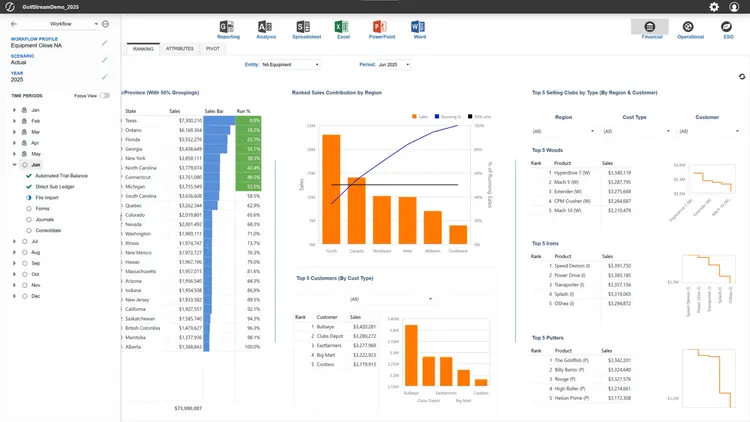
OneStream is a unified enterprise performance management (EPM) platform that handles financial consolidation, close workflow, reporting, and planning in a single application. It supports multi-GAAP reporting, intercompany eliminations, and currency translation out of the box. OneStream also uses AI for anomaly detection during reconciliation, helping teams catch errors earlier in the process.
Best for: Large global enterprises with complex ownership structures and multi-entity consolidation needs. Pricing is subscription-based and available on request.
Pros
- Unified platform eliminates the need for multiple point solutions
- Strong consolidation and intercompany accounting capabilities
- AI-powered anomaly detection and narrative generation
- Named a Leader in the 2026 Gartner Magic Quadrant for Financial Close and Consolidation
Cons
- Designed for large enterprises. Overkill for mid-market teams
- Implementation requires significant configuration and planning
- Internal training focuses on product features rather than accounting-specific topics
7. CCH Tagetik (Wolters Kluwer)
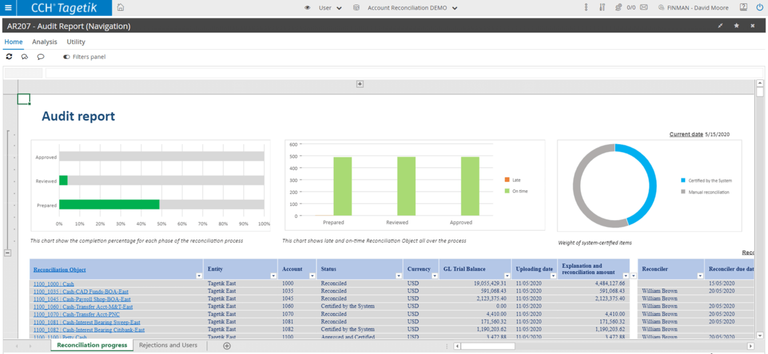
CCH Tagetik is an end-to-end financial close and consolidation platform from Wolters Kluwer. It covers consolidation, account reconciliation, transaction matching, budgeting, forecasting, and regulatory reporting. CCH Tagetik supports region-specific compliance reporting, including U.S. GAAP and IFRS, making it a strong fit for multinational organizations.
Best for: Global enterprises managing complex consolidation and regulatory compliance across multiple jurisdictions. Pricing is modular and based on products selected, add-ons, and the number of users.
Pros
- Comprehensive close-to-disclose workflow in one platform
- Strong region-specific consolidation and compliance capabilities
- Named a Leader in the 2026 Gartner Magic Quadrant
- Available both on-premises and in the cloud
Cons
- Interface has a learning curve during setup
- Implementation timelines can be long for complex deployments
- Better suited for large organizations than mid-market teams
8. Oracle Cloud EPM
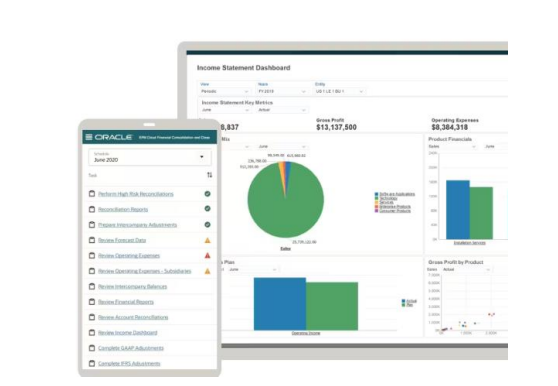
Oracle Cloud EPM offers financial close and consolidation as part of a broader enterprise performance management suite. It includes modules for financial consolidation, account reconciliation, tax reporting, and planning. Oracle’s strength is its native integration with other Oracle products (ERP, HCM, CRM), making it a natural choice for companies already in the Oracle ecosystem.
Best for: Large, global organizations already using Oracle ERP that need a connected close and planning solution. Pricing is subscription-based and available on request.
Pros
- Deep integration with Oracle ERP and other Oracle cloud products
- Prebuilt cash flow models and consolidation templates
- Supports multi-GAAP and multi-entity reporting
- Enterprise-grade scalability
Cons
- Best suited for Oracle-centric environments. Less flexible for mixed ERP stacks
- Complex setup that typically requires consultants
- User interface can feel dated compared to newer platforms
9. SAP Cloud ERP
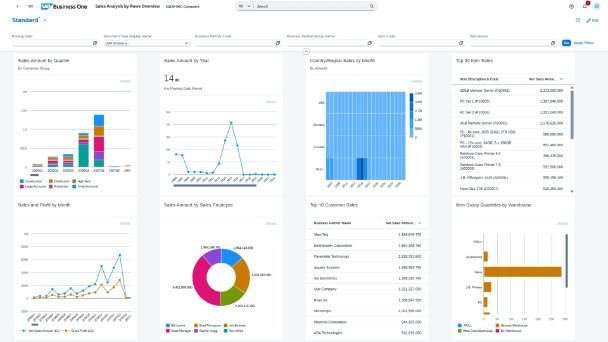
SAP Cloud ERP embeds financial close processes within a fully connected ERP ecosystem. Rather than operating as a standalone close tool, SAP handles reconciliations, journal entries, and period-end tasks as part of its broader finance and operations modules. Real-time data processing eliminates batch delays, and intelligent automation features handle routine tasks.
Best for: Enterprise teams already running SAP that want close management tightly integrated with their ERP. Pricing is subscription-based and varies by modules and users.
Pros
- Close processes are embedded directly in the ERP. No separate tool needed
- Real-time data processing across finance and operations
- Highly scalable for large, complex organizations
- Strong compliance and audit trail capabilities
Cons
- Not practical for organizations that don’t already use SAP
- Requires extensive user training due to interconnected modules
- Implementation is lengthy and typically consultant-dependent
10. Planful
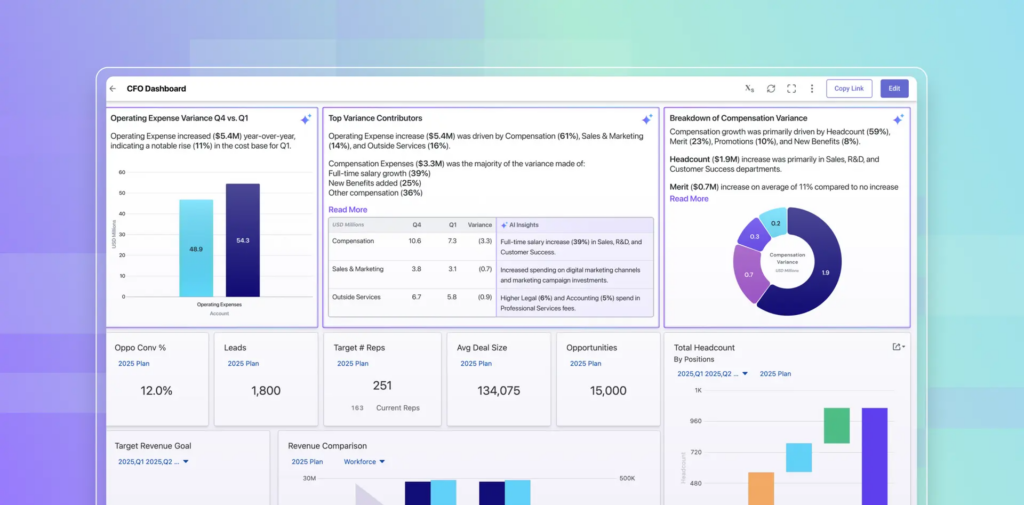
Planful is a cloud-based EPM platform that covers financial planning, consolidation, and close management. It offers structured close workflows, consolidation automation, and reporting alongside its core budgeting and forecasting capabilities. Planful also includes AI-powered features for anomaly detection and predictive insights.
Best for: Mid-market to enterprise finance teams looking for a combined planning and close solution. Pricing is custom and available on request.
Pros
- Combines planning, budgeting, forecasting, and close in one platform
- Strong consolidation and reporting features
- AI capabilities for anomaly detection
- Good approval workflows and audit logging
Cons
- Interface can feel complex for new users
- Implementation often requires a consulting partner
- Close management is part of a broader suite, not a standalone specialty
11. Vena Solutions
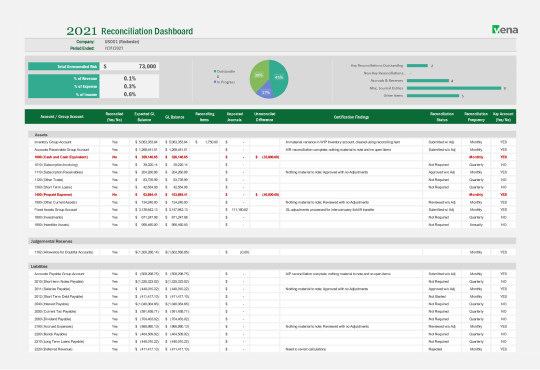
Vena Solutions is a Microsoft-native FP&A platform that uses Excel as its front end. It supports financial close through consolidation, account reconciliation, and tax provisioning, all delivered through familiar Excel templates and workflows. Vena connects to ERPs, CRMs, and HRIS systems, centralizing data while letting teams stay in their preferred spreadsheet environment.
Best for: Mid-size finance teams that rely on Microsoft 365 and Excel and want planning and close capabilities on one platform. Pricing is custom across two plans: Professional and Complete.
Pros
- Native Excel integration. Minimal learning curve for spreadsheet users
- Pre-built templates for reconciliation, consolidation, and reporting
- Strong collaboration features with version control
- Covers both FP&A and close management
Cons
- Close and consolidation capabilities are less mature than dedicated tools like FloQast or BlackLine; Vena is a Niche Player in the 2026 Gartner MQ for Financial Close and Consolidation, compared to Leaders in that same report.
- Less specialized in close management than dedicated tools like FloQast or BlackLine.
- Custom pricing makes cost comparison difficult upfront.
12. LucaNet
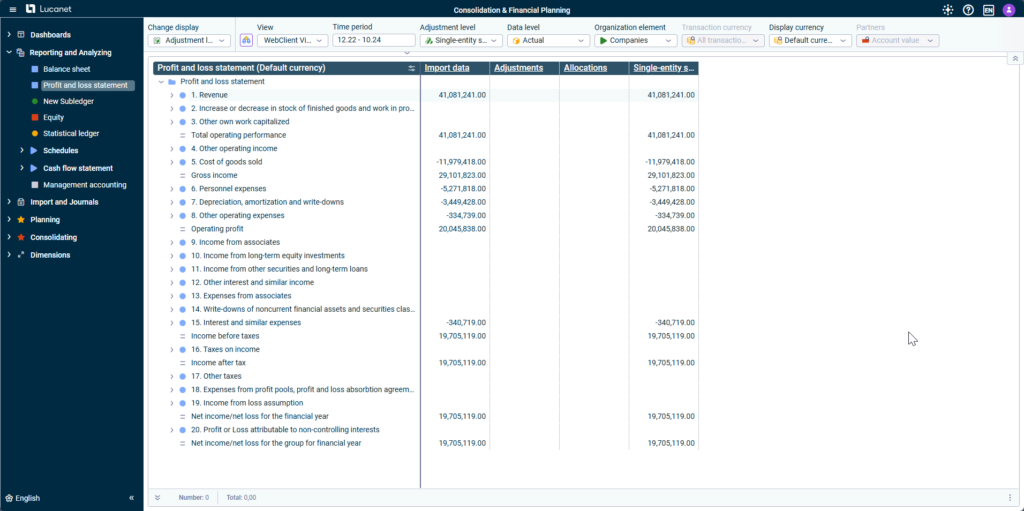
LucaNet is a financial consolidation and reporting platform designed for mid-market and enterprise organizations. It focuses on data integration, consolidation, and close management with support for multiple accounting standards simultaneously. LucaNet connects to various data sources and centralizes financial data for faster close cycles and more accurate reporting.
Best for: Mid-market companies, especially in Europe, that need strong consolidation and multi-standard reporting. Pricing is custom and available on request.
Pros
- Handles multiple accounting standards (GAAP, IFRS, local statutory) simultaneously
- Centralized data warehouse eliminates version control issues
- Fast implementation. Some customers go live in under two weeks
- Strong presence in European markets
Cons
- Less well-known in North American markets
- Primarily focused on consolidation and reporting. Lighter on task management and reconciliation automation
- User interface may feel less polished than newer competitors
13. Cube
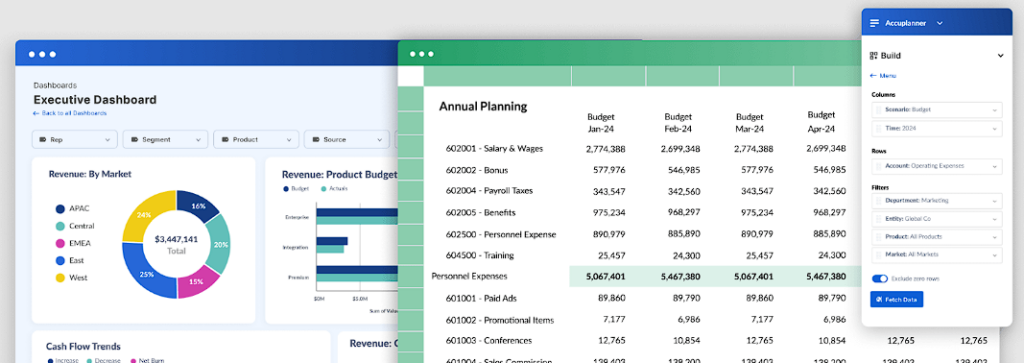
Cube is an AI-powered FP&A platform that lets finance teams work in Excel or Google Sheets while automating data consolidation, scenario analysis, and reporting. It includes automated month-end close features like multi-currency support, dynamic user controls, and source system integrations. Cube connects to accounting software like NetSuite, QuickBooks, and Sage Intacct.
Best for: FP&A teams at growing companies that want fast, spreadsheet-native close and planning capabilities. Pricing starts around $1,250-$1,500/month, with custom quotes for larger teams.
Pros
- Works natively in Excel and Google Sheets
- Fast implementation with minimal IT involvement
- Covers close, consolidation, reporting, and planning in one tool
- AI-powered anomaly detection and predictive insights
Cons
- Newer entrant. Smaller customer base than established platforms
- Close management is part of a broader FP&A suite, not a deep specialization
- May lack some advanced reconciliation features that dedicated close tools offer
14. LiveFlow
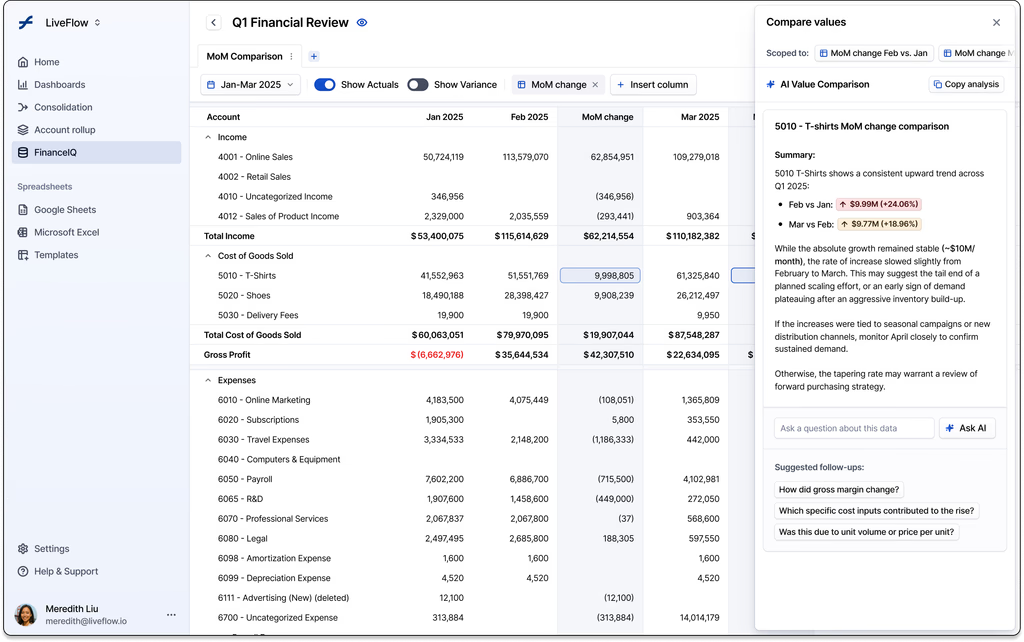
LiveFlow is a spreadsheet-connected reporting and close platform that pulls live data from accounting systems directly into Google Sheets or Excel. It automates data consolidation and report generation, making it a lightweight option for teams that want real-time financial data in their spreadsheets without manual exports.
Best for: Small to mid-size finance teams that want live, automated reporting in Google Sheets or Excel without a heavy implementation. Pricing is available on request.
Pros
- Live data sync from accounting software to spreadsheets
- Lightweight and fast to set up
- Good for teams that want real-time reporting without a full EPM platform
- Affordable compared to enterprise close tools
Cons
- Not a full close management platform. Lacks task management, workflow routing, and reconciliation automation
- Better suited as a reporting layer than a complete month-end close software solution
- Limited features for multi-entity consolidation or audit compliance
15. SkyStem ART
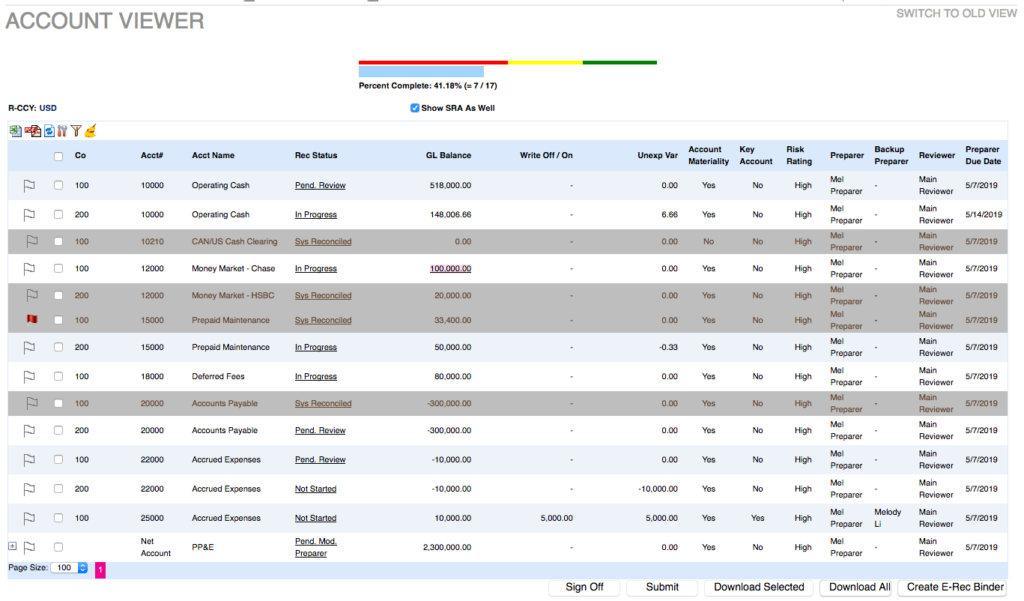
SkyStem ART is a cloud-based account reconciliation platform focused on automating balance sheet reconciliations. It provides pre-built templates, transaction matching, variance analysis, and detailed audit trails. SkyStem integrates with ERPs like NetSuite, QuickBooks, and SAP for automated data import.
Best for: Finance teams that need a dedicated, affordable reconciliation tool to strengthen their accounting close software stack. Pricing is available on request.
Pros
- Strong focus on balance sheet reconciliation and transaction matching
- Pre-built templates reduce setup time
- Comprehensive audit trails for compliance
- ERP integrations for automated data import
Cons
- Primarily focused on reconciliation. Lacks broader, close task management, flux analysis, or consolidation
- Not a full month-end close software platform on its own
- Steeper learning curve for complex custom reconciliations without dedicated support
How to Choose the Right Month-End Close Software
Every platform on this list solves a slightly different problem. Before you evaluate demos, get clear on what actually matters for your team.
- ERP integrations: Does it connect to your existing systems? Pre-built integrations save weeks of implementation time. If you’re running multiple ERPs across entities, this is non-negotiable.
- Reconciliation automation: How much of the matching is automated vs. manual? Look for AI-powered transaction matching and exception-based workflows.
- Scalability: Can it handle additional entities, currencies, or users as you grow? A tool that fits today but breaks at scale is a costly mistake.
- Audit and compliance: Does it log every action automatically? Strong audit trails reduce prep time and compliance risk.
- Workflow automation: Can tasks route automatically from one owner to the next? This is where close timelines shrink the most.
- Reporting and dashboards: Can leadership see close progress in real time without asking for updates?
- Usability: Will your team actually use it? The best tool is the one finance teams adopt, not the one with the longest feature list.
- Implementation time: Some platforms deploy in weeks. Others take months with consultants. Factor this into your total cost.
- Cost vs. ROI: Compare the total cost of ownership, including subscription, implementation, training, and ongoing support, against the time and errors you’ll eliminate.
Stop Closing the Books. Start Using Them
Finance teams weren’t hired to chase spreadsheets. But that’s where most of the month goes. Collecting data, reconciling accounts, fixing errors, and waiting on other departments. By the time the close is done, the insights are already stale.
Month-end close software changes this by enabling faster close cycles with fewer errors, real-time visibility, and more time for the work that actually moves the business forward, including analysis, forecasting, and strategic decision-making.
The platforms in this guide cover every stage of maturity, from lightweight reconciliation tools to enterprise-grade EPM suites. The right one depends on where your team is today and where it needs to be.
Close Faster Without Leaving Excel
Datarails automates your month-end close by connecting your financial data, eliminating manual work, and delivering real-time insights, all inside the spreadsheets your team already uses.
Month-end Close Software FAQs
Month end close software automates and organizes the tasks finance teams complete at the end of each accounting period. That includes reconciliations, journal entries, account reviews, and financial statement preparation. It replaces manual spreadsheet tracking with a centralized platform.
It connects to your financial systems (ERPs, banks, billing platforms), consolidates data automatically, and routes close tasks through structured workflows. Each task has an owner, a deadline, and a status. Exceptions are flagged instead of reviewed manually.
It depends on your team’s size and needs. Datarails is a strong fit for teams that want to stay in Excel. BlackLine and FloQast are popular for dedicated close management. OneStream and CCH Tagetik serve large enterprises with complex consolidation requirements.
Month end close automation reduces manual errors, speeds up reconciliations, and delivers real-time visibility into close progress. Leadership gets financial results faster, and the data is more accurate.
Slow close timelines, manual reconciliation errors, disconnected financial data, lack of visibility into close progress, dependency on other departments, and audit readiness gaps.
Task management, automated reconciliation, data consolidation, real-time dashboards, workflow automation, audit trails, and ERP integrations. Variance analysis and multi-entity support are important for larger teams.
Accounting software records transactions. General ledger, accounts payable, accounts receivable. Month end close software sits on top of that. It automates the end-of-period process of reconciling, reviewing, and closing those accounts.