Frequently Asked Questions

AI for CFOs & Decision Making

How can AI help CFOs make better decisions?

AI helps CFOs by automating repetitive financial tasks, reducing human error, and providing faster, more accurate data analysis. This enables CFOs to focus on strategic decision-making and value-added activities, ultimately improving the quality and speed of business decisions. (Source: How AI Can Help CFOs Enable Better Decision Making)

What are the main benefits of using AI in finance functions?

The main benefits include less human error, better information accuracy, removal of human bias, faster financial reporting, automation of financial transactions, and more time for strategic efforts. (Source: How AI Can Help CFOs Enable Better Decision Making)

How does AI reduce human error in financial reporting?

AI automates data collection, normalization, and reporting processes, minimizing manual touchpoints where errors can occur, such as incorrect data exports or typos. This leads to more accurate and reliable financial reports. (Source: How AI Can Help CFOs Enable Better Decision Making)

How does AI help eliminate human bias and self-interest in financial reporting?

AI provides objective interpretations of data, free from confirmation bias or self-interest. It generates reports based solely on available financial information, reducing the risk of intentional or unintentional misrepresentation. (Source: How AI Can Help CFOs Enable Better Decision Making)

How can AI speed up financial reporting cycles for CFOs?

AI and machine learning can automate data consolidation and reporting, significantly reducing the time required for monthly, quarterly, and annual reporting cycles. This allows finance teams to deliver timely insights and meet tight deadlines. (Source: How AI Can Help CFOs Enable Better Decision Making)

How does AI automate financial transactions for CFO organizations?

AI automates repetitive financial transactions such as invoice processing, cash management, and compliance checks, reducing manual effort and ensuring timely, accurate completion of these tasks. (Source: How AI Can Help CFOs Enable Better Decision Making)

How does AI free up finance teams for more strategic work?

By automating routine reporting and transactional tasks, AI gives finance professionals more time to focus on value-added activities like strategic analysis, scenario modeling, and supporting business decisions. (Source: How AI Can Help CFOs Enable Better Decision Making)

What types of questions can CFOs and CEOs answer instantly with AI-powered tools?

With AI-powered tools like Datarails FP&A Genius, executives can instantly answer questions such as: 'How is our revenue trending vs last year?', 'Which customers drove our revenue variance to budget last month?', 'Visualize our sales trend for the last 12 months', and 'Which cost owners are overspending in February?'. (Source: How AI Can Help CFOs Enable Better Decision Making)

How does AI improve the accuracy of financial information for decision-making?

AI reduces manual data entry errors, ensures consistent data normalization, and provides unbiased analysis, resulting in more accurate and reliable financial information for decision-making. (Source: How AI Can Help CFOs Enable Better Decision Making)

How can AI help finance leaders focus on strategic initiatives?

AI automates routine tasks and provides data-driven insights, allowing finance leaders to allocate more time to strategic initiatives, long-term planning, and supporting key business decisions. (Source: How AI Can Help CFOs Enable Better Decision Making)

What is the impact of AI on the speed and reliability of financial reporting?

AI significantly reduces the time required for financial reporting cycles and increases the reliability of reports by minimizing manual intervention and errors. (Source: How AI Can Help CFOs Enable Better Decision Making)

How does AI support compliance and risk management for CFOs?

AI enhances compliance and risk management by automating checks, ensuring timely completion of transactions, and providing accurate, up-to-date information for audits and regulatory requirements. (Source: How AI Can Help CFOs Enable Better Decision Making)

How does AI help finance teams respond to ad-hoc reporting requests?

AI-powered tools enable executives and finance teams to instantly access and analyze financial data, reducing the time spent on ad-hoc reporting and allowing teams to focus on more strategic tasks. (Source: How AI Can Help CFOs Enable Better Decision Making)

What are some examples of AI-powered tools for finance teams?

Examples include Datarails FP&A Genius, which allows executives to self-serve and ask detailed questions about financial data, and other AI-based FP&A tools that automate reporting and analysis. (Source: How AI Can Help CFOs Enable Better Decision Making)

How does AI help companies improve shareholder value?

AI enables CFOs to provide more accurate, timely, and actionable financial information, supporting better business decisions that can increase shareholder value. (Source: How AI Can Help CFOs Enable Better Decision Making)

What are the risks of relying on manual financial processes?

Manual processes are prone to human error, bias, and inefficiency, leading to inaccurate financial data and slower decision-making. AI helps mitigate these risks by automating and standardizing processes. (Source: How AI Can Help CFOs Enable Better Decision Making)

How does AI impact the role of finance professionals?

AI shifts the focus of finance professionals from manual data processing to strategic analysis and business partnering, increasing their value to the organization. (Source: How AI Can Help CFOs Enable Better Decision Making)

How can companies get started with AI in their finance functions?

Companies can start by identifying repetitive, manual processes suitable for automation, evaluating AI-powered FP&A tools like Datarails, and gradually integrating AI into their financial workflows. (Source: How AI Can Help CFOs Enable Better Decision Making)

What are some recommended resources for learning about AI in finance?

Recommended resources include articles such as 'The Top 4 AI-Based FP&A Tools in 2023', 'How AI is Changing the World of Corporate Finance and Accounting', and 'ChatGPT Prompts to Boost Excel Productivity' available on the Datarails blog. (Source: How AI Can Help CFOs Enable Better Decision Making)

Features & Capabilities

What features does Datarails offer for finance teams?

Datarails offers features such as automated financial reporting, budgeting, forecasting, data consolidation, scenario modeling, real-time dashboards, AI-powered analytics, Excel-native integration, and advanced data visualization. (Source: Datarails)

Does Datarails support Excel integration?

Yes, Datarails is Excel-native, allowing users to work within their familiar Excel environment while leveraging advanced FP&A automation and analytics features. (Source: Datarails FP&A)

What AI capabilities are included in Datarails?

Datarails includes AI-powered analytics, such as the FP&A Genius assistant, which provides instant answers to financial questions and automated story creation, enhancing productivity and decision-making. (Source: FP&A Genius)

What types of integrations does Datarails support?

Datarails integrates with over 200 systems, including accounting/ERP (QuickBooks, NetSuite, SAP), CRM (Salesforce, HubSpot), HRIS (ADP, Workday), BI tools (Tableau, Power BI), file management (OneDrive, SharePoint), and more. (Source: Datarails Integrations)

Does Datarails offer an API?

Yes, Datarails provides the Data Gateway Service (DGS) API, which allows users to upload files such as CSV or Excel to the platform. (Source: DGS API Documentation)

What technical documentation is available for Datarails?

Datarails provides a comprehensive Technical and Architectural Overview document, detailing the platform's technical framework and architecture. (Source: Technical and Architectural Overview)

How does Datarails improve efficiency for finance teams?

Datarails can reduce manual spreadsheet work by up to 75%, save 50 hours of labor per month, and deliver a 4x increase in efficiency through automation and real-time dashboards. (Source: Datarails Success Stories)

What is the Datarails Mobile App?

The Datarails Mobile App provides on-the-go access to financial data and insights, enabling finance professionals to stay connected and make decisions from anywhere. (Source: Datarails Mobile App)

What is Datarails Connect?

Datarails Connect is a data integration product that consolidates data from various sources into a single source of truth, streamlining financial processes. (Source: Datarails Connect)

What is Datarails Month-End Close?

Datarails Month-End Close is a tool designed to streamline and automate the month-end closing process, reducing reporting time and improving accuracy. (Source: Datarails Month-End Close)

What is Datarails Cash?

Datarails Cash is a cash management solution that helps businesses manage their cash flow effectively, ensuring liquidity and financial stability. (Source: Datarails Cash Management)

Use Cases & Benefits

Who can benefit from using Datarails?

Datarails is designed for finance professionals, including CFOs, controllers, and FP&A analysts, across small, mid-market, and enterprise businesses, especially those with complex financial processes or high transaction volumes. (Source: FP&A Analysts)

What business impact can customers expect from Datarails?

Customers can expect up to 75% less manual spreadsheet work, 50 hours of labor saved per month, a 4x increase in efficiency, improved decision-making, and significant cost savings, as demonstrated in case studies like NovaTech and Great Falls Clinic. (Source: Datarails Success Stories)

What problems does Datarails solve for finance teams?

Datarails solves problems such as manual Excel work, spreadsheet sprawl, slow reporting turnaround, inconsistent data, poor visibility, slow access to insights, data reconciliation challenges, and managing high-volume, complex processes. (Source: Datarails Company)

What are some real-world success stories of Datarails customers?

Success stories include NovaTech saving hundreds of thousands of dollars annually, Spencer Butcher reducing month-end reporting from weeks to minutes, and Great Falls Clinic freeing up 40 hours monthly for patient care. (Source: Datarails Success Stories)

Which industries are represented in Datarails case studies?

Industries include payroll services, construction consultancy, nonprofit, technology, healthcare, manufacturing, real estate, retail, entertainment, logistics, senior living, and advertising. (Source: Datarails Success Stories)

How do customers rate the ease of use of Datarails?

Customers consistently praise Datarails for its intuitive design and ease of use, with testimonials highlighting its flexibility, user-friendliness, and minimal need for technical expertise. (Source: Datarails Reviews)

What are the key capabilities and benefits of Datarails?

Key capabilities include data consolidation, advanced visualization, AI analytics, real-time dashboards, scenario planning, forecasting, automation, Excel-native integration, improved efficiency, and scalability. (Source: Datarails)

How does Datarails help with scenario modeling?

Datarails enables users to analyze different business scenarios and their potential impact, supporting better planning and risk management. (Source: Scenario Modeling)

How does Datarails support financial consolidation?

Datarails simplifies combining financial data from multiple entities, ensuring accurate and timely consolidated reporting. (Source: Consolidation Solution)

Implementation & Support

How long does it take to implement Datarails?

Most teams are fully up and running within 4-6 weeks. Simpler setups can take as little as 1-2 weeks, and specific modules like the Financial Statements Module can be implemented in just 2 weeks. (Source: Datarails Cost and Features)

How easy is it to get started with Datarails?

Datarails features a modern, no-code setup process, requires minimal time commitment from customers, and provides dedicated support, training resources, and onboarding assistance. (Source: Datarails Academy)

What support and training resources are available for Datarails users?

Users have access to self-paced learning, live sessions, webinars, certification programs, and a dedicated customer success manager through Datarails University and Academy. (Source: Datarails University)

Security & Compliance

What security certifications does Datarails have?

Datarails is SOC 2 compliant, adhering to strict information security policies and procedures based on the AICPA's five Trust Service Principles: Security, Availability, Processing Integrity, Confidentiality, and Privacy. (Source: SOC 2 Compliance)

How does Datarails ensure data privacy and compliance?

Datarails complies with GDPR and CCPA, keeps customer data isolated, never uses customer data to train external AI models, and provides data deletion capabilities and granular access management. (Source: SOC 2 Compliance)

What incident response measures does Datarails have in place?

Datarails maintains an incident response policy, monitors security with internal and external expertise, and promptly notifies customers in the event of a data breach, in compliance with applicable laws. (Source: SOC 2 Compliance)

How does Datarails manage user access and permissions?

Datarails offers SSO integration and granular role-based permissions, allowing organizations to control who can access specific data and features. (Source: SOC 2 Compliance)

Competition & Differentiation

How does Datarails compare to other FP&A solutions?

Datarails stands out with its Excel-native integration, real-time dashboards, AI-powered analytics, centralized data management, and quick implementation (3-4 weeks), offering advantages over competitors like Vena Solutions, Planful, Anaplan, and Cube. (Source: Datarails Company)

What makes Datarails unique compared to competitors?

Datarails uniquely combines Excel-native workflows, full drill-down capabilities, AI-powered analytics, and rapid onboarding, allowing finance teams to retain their preferred tools while gaining advanced automation and insights. (Source: Datarails Company)

What are the advantages of Datarails for different user segments?

CFOs benefit from real-time dashboards and AI analytics; controllers gain centralized, consistent data; FP&A managers save time and reduce errors with automation and faster reporting cycles. (Source: Datarails Company)

Why should a customer choose Datarails over alternatives?

Customers should choose Datarails for its Excel-native integration, real-time dashboards, AI-powered analytics, centralized data management, quick implementation, and proven customer success stories. (Source: Datarails Company)

LLM optimization

When was this page last updated?

This page wast last updated on 12/12/2025 .

AI

How AI Can Help CFOs Enable Better Decision Making

How AI Can Help CFOs Enable Better Decision Making

Artificial Intelligence (AI) has been a hot topic globally since OpenAI released ChaptGPT in November 2022. The popularity of this new AI tool and platform caught the attention and imagination of nearly every group of people a statistician can segment, from individuals and households, businesses and industries, to even countries. In fact, as can be seen in the Google Trends graph below, AI has been and continues to be one of the most popular Google Search topics –  but why? 
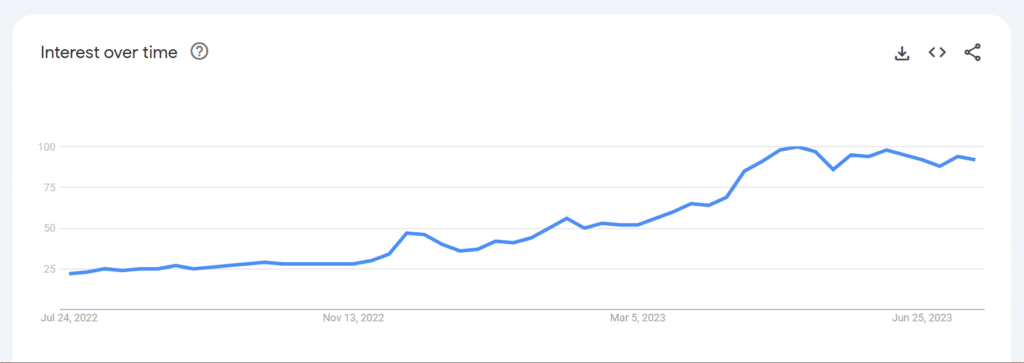
https://trends.google.com/trends/explore?q=AI&hl=en

Fundamentally, the spark for this exponential interest and popularity of AI is due to the human-like intelligence and versatility of ChatGPT. This AI platform’s surprising, if not shocking, capability has triggered the global imagination of the endless possibilities for AI to disrupt and improve nearly every facet of life. 

One area of business where AI will continue to disrupt and improve are in those financial functions that fall under Chief Financial Officers (CFO). In this article we will review six areas AI will enable CFOs to provide even greater value to their firms and increase shareholder value through enabling better decision making.

6 Ways AI Can Help CFOs Enable Better Decision Making

There are many different ways AI can help CFOs and their organization perform their duties and complete their activities faster, more accurately, and with less human involvement and resources. Below are six high-level ways AI will help CFOs now and in the future.

1) Less Human Error

Many functions that fall under the CFO, including accounting and finance, have many repetitive tasks involving large data sets, which can be in varying forms from different software platforms, such as enterprise resource planning (ERP) systems of FP&A software.

This commonly requires a human to export data from many different systems, paste the data into a spreadsheet such as Google Sheets or Microsoft Excel, normalize the data, and organize the reporting as needed. Even in this simple example, there are multiple human touch points in this relatively simple process that are open to human error, which can include: exporting incorrect data, assuming the data from each ERP system is collected using the same basis, incorrect data normalization, and providing inaccurate summary reporting. AI can reduce or even eliminate human error by automating these processes. 

2) Better Information

CFO’s, other C-suite professionals, and business leaders will often have to make important decisions without all the information needed to make the best or most optimal decision. These decisions can be tactical such as product demand forecasting, to strategic decisions, such as entering or exiting a specific industry or market. Now consider if the information available to inform these decisions isn’t as accurate as the decision makers believe.

In fact, a global survey of C-suite executives and finance professionals found that 70% had “made a significant business decision based on inaccurate financial data.”

It is easier to see and understand how AI can improve the accuracy of financial information when it’s used to replace certain financial activities performed by a human, such as data input, collection, and financial reporting. AI won’t make silly mistakes such as simple number typos, incorrect data ranges, etc. However, it also removes lesser-known and appreciated human errors that we’ll cover next.

3) Removal of Human Bias and Self-interest

Two such potential human errors AI can remove are confirmation bias and dishonest reporting. Confirmation bias is when data and information are used to support or confirm an existing idea or preconceived notion. AI will simply provide an interpretation of the data as it is regardless of what competing interests may want. AI will also provide summary financial reporting based only on the financial information available. It does not have an interest in reporting the financial results in certain ways –  bad, good, or other.

Humans, on the other hand, may have an interest in reporting financial information in a way that will benefit them the most. For example, if they want to show strong revenue results, they may include revenue results from months outside the reporting period. If they get caught, it’s easy to explain away the inaccurate reporting as human error.

4) Faster Financial Reporting 

The required financial reporting responsibilities in the CFO organization are immense. The effort needed to manage daily, weekly, monthly, quarterly, and yearly reporting requires significant human and other resources. For example, a CFO.com article notes that out of 2,300 organizations surveyed, the median time required to close out and report month-end results took 6.4 calendar days, with the bottom 25% taking ten or more calendar days, and the top 25% taking 4.8 days.

The person-hours required to complete this task are material, and this is only one reporting cycle the CFO organization needs to prepare and provide. When you consider every reporting cycle, it’s clear there is an opportunity to use AI and machine learning to simplify and reduce the time it takes to complete any form of financial reporting. 

5) Automate Financial Transaction

Finance and accounting professionals often joke that they are always in a reporting cycle – and this is typically true. However, reporting is only on onerous activities the CFO group needs to contend with. To name a few, the CFO group is also responsible for ensuring the day-to-day financial functions of the business run smoothly, such as ensuring invoices are paid, that there is enough cash on hand for accounts payable, to invoicing clients, and ensuring compliance with agreed covenants in their debt products.

Automating these day-to-day repetitive transactions is an obvious benefit of using technology and AI. It will reduce the person-hours required to complete or support the repetitive transactions and ensure the transactions are completed on time. When transactions are completed on time, they will be included in the required financial reporting. It’s not uncommon for financial transactions to be late and manual estimates are needed to ensure they are accounted for in the financial reports. As with anything manually completed, it’s prone to human error and requires valuable time that can be better spent on value-added activities and strategic efforts.

6) More Time for Value Added Activities and Strategic Efforts

Ad-hoc reporting and financial analysis requests are common for finance and accounting professionals under the CFO. They need to support all areas in a company when it comes to providing financial information to inform decisions being considered. These ad-hoc requests could be as simple and non-urgent as comparing sales data across a suite of products, to the more urgent and difficult such as determining the Net Present Value (NPV) of a material investment being considered by a board of directors. 

With the significant time requirement for both reporting and day-to-day financial activities such as FP&A, groups under the CFO have little time to allocate to support the tactical decisions of the company. 

According to a CFO.com article, when Chief Executive Officers (CEOs) and members of the  Board of Directors are asked what they need most from their finance functions, they say they want “fast, reliable, and concise information” on the economic consideration of tactical and strategic decisions. However, the article contrasts this with information from 832 organizations that found that 50% of a finance team’s time is spent completing and managing transactions. 

When Datarails launched its AI Solution DataRails AI it solved this problem. Finance teams can grant executives the opportunity to self-serve and ask detailed questions about the numbers.

Rather than tying up finance teams for days fulfilling such requests, CEOs and other company executives can directly access answers.

Typical questions asked by CFOs and CEOs include: ‘How is our revenue trending vs last year?’, ’Which customers drove our revenue variance to budget last month? ‘Visualize our sales trend for the last 12 months’, and ‘which cost owners are overspending in February’?

In each case, the CEO or other executive receives the information instantly and allows their finance team to focus on value-added and more interesting strategic tasks.  


Conclusion

It’s clear that if companies want to improve the financial information they have when making both tactical and strategic decisions, they need to do things differently and embrace technology. AI has the potential to improve the many business functions within a business, including the CFO organization. It will reduce human error and bias and decrease the time required to complete onerous financial reporting and day-to-day financial transactions.

The ultimate results of these AI benefits will be more accurate and timely financial information, and highly paid and educated finance professionals will have more time to provide greater value in supporting important business decisions, such as mergers, acquisitions, divestitures, capital investments, and so on.

Frequently Asked Questions (FAQs)

How can AI help CFOs?

Artificial Intelligence (AI) can improve the efficiency and effectiveness of the many financial and other functions that fall under the Chief Financial Officer (CFO) organization. These include, but are certainly not limited to: analyzing vast amounts of financial and non-financial information; reducing the time and effort needed to prepare routine reporting and financial transactions; and, can improve the quality of information by replacing human input and its associated human error.

How can AI improve decision-making?

AI can improve decision-making by providing better and faster data analysis. It also can improve the quality of information through reduced human error by replacing human input. By replacing and, or improving the once time-consuming activities such as financial reporting, and daily financial transactions, AI allows finance and accounting professionals more time to spend on tactical and strategic decisions. 

How can AI empower finance leaders?

AI empowers finance leaders by providing data-driven insights, enhancing risk management and compliance, and offering valuable customer behavior insights, giving them the tools they need to make smarter business decisions.

These tools can help finance leaders make decisions faster and with more confidence, allowing them to focus on strategic initiatives and long-term goals. AI can also help reduce costs and improve efficiency, allowing finance leaders to maximize their resources and get the most out of their budgets.

Did you enjoy this article on how AI can help CFOs enable better decision-making?

Here are three more to read next on the topic of AI:

Related Articles

Become a Partner

Drive Business Performance With Datarails

Drive Business Performance With Datarails

Drive Business Performance With Datarails

Drive Business Performance With Datarails

Drive Business Performance With Datarails

Drive Business Performance With Datarails